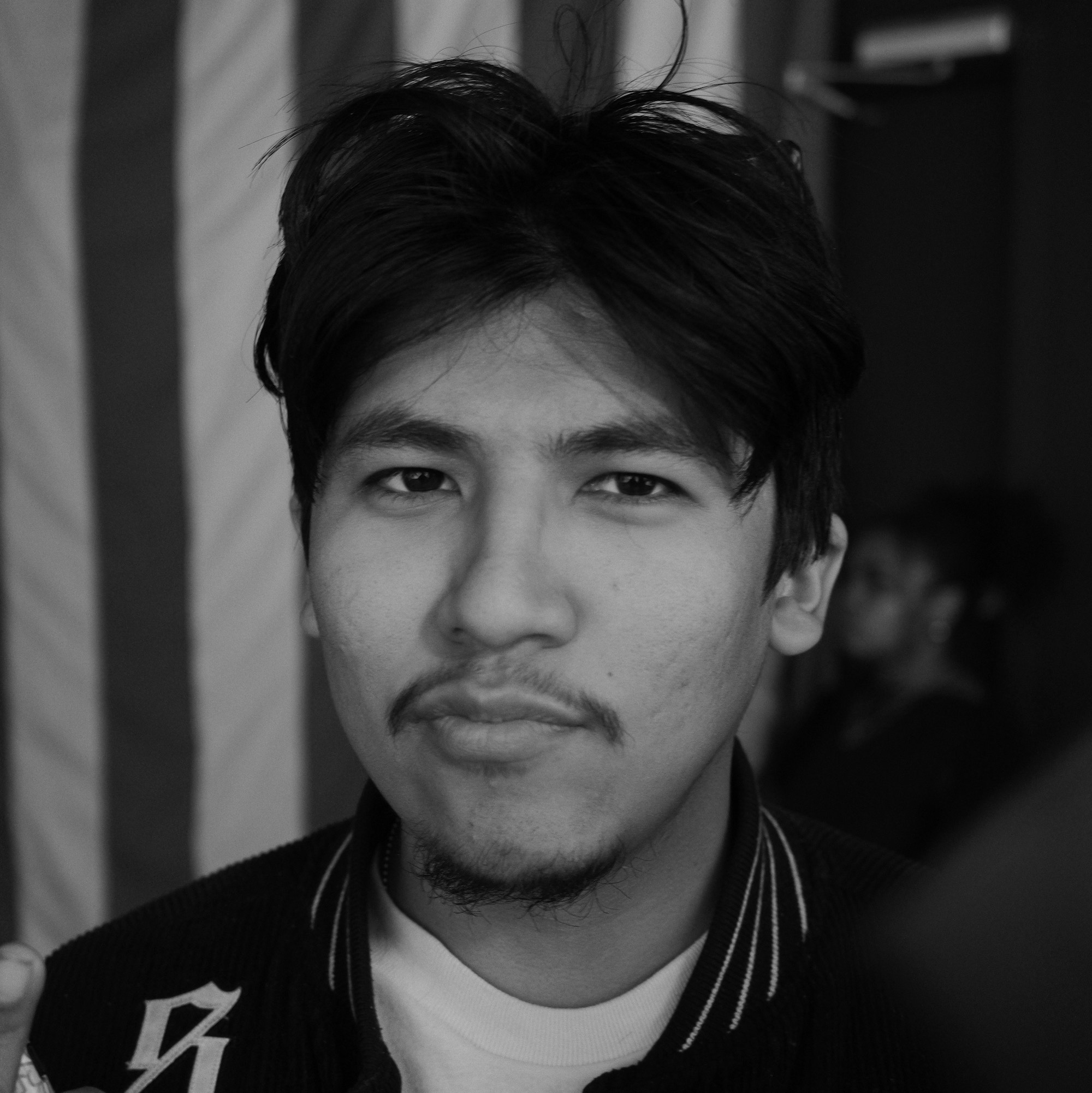
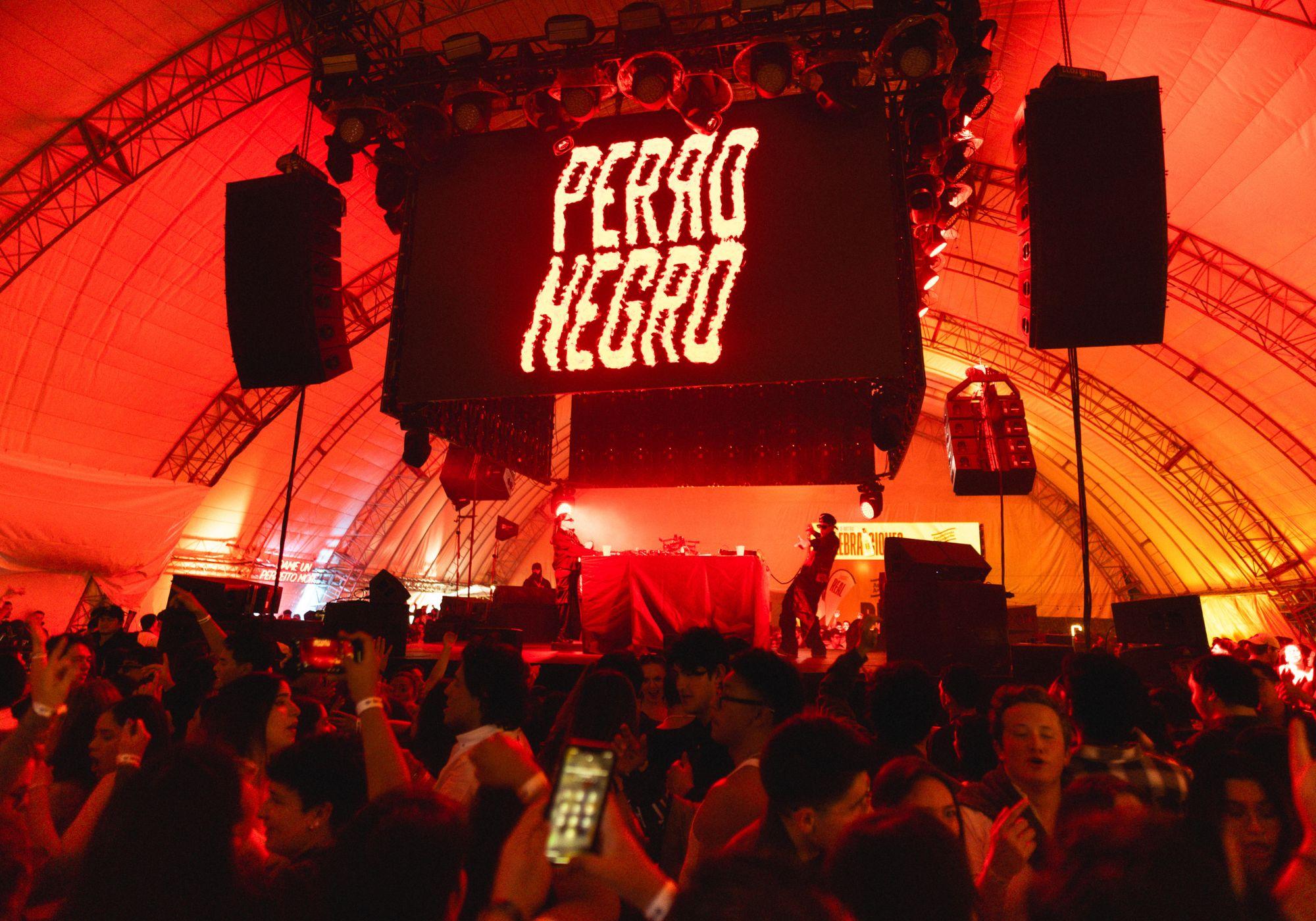
Perro Negro photo

Audio By Carbonatix
Long before Medellín became one of the genre’s undisputed capitals, before tourists lined up outside clubs in Provenza hoping to catch a glimpse of their favorite artist, Perro Negro was betting on perreo. Today, with locations in Medellín, Miami, and Madrid, the brand has become one of the most recognizable institutions in Latin urban culture. It’s a place where Bad Bunny and Feid’s Perro Negro track feels sacred and where every DJ set doubles as a history lesson.
Now, Perro Negro is taking its biggest leap yet.
With the launch of Perro Negro Label and its first project, Dale Duro Vol. 1, the company is evolving from nightclub operator to cultural architect, partnering with Rimas Entertainment in an effort to preserve reggaetón’s past while shaping its future.
“Perro Negro has always had songs from every era,” Alejandro Cardona, part-owner of Perro Negro, tells New Times. “We specialize in reggaetón, real reggaetón.”
For Cardona, the club has never simply been about nightlife. “It’s almost like a museum of reggaetón,” he says. “Everything we do, from the music the DJs play to the release parties, is curated.”
That curatorial approach is what transformed Perro Negro from Medellín’s first club dedicated exclusively to reggaetón into a global brand. And according to Cardona, creating music was always the inevitable next step.
“During years we were the place where reggaetón anthems were played,” reads Perro Negro’s official bio. “Now we are the place where they are born.”
The idea didn’t emerge overnight. Cardona, whose background is rooted in electronic music, spent years studying institutions like Ministry of Sound, Circoloco, and the club scenes of Berlin, Barcelona, and Manchester, all of which are places where nightlife extends far beyond the dance floor.
“Many electronic music clubs have their own record labels,” he says. “We looked at that and thought, ‘Why can’t we do that with reggaetón?'”
In many ways, Perro Negro Label feels overdue. Electronic music has long benefited from institutions that preserve and expand its culture. Reggaetón, despite becoming one of the world’s most dominant genres, has largely relied on artists themselves to carry its legacy. Perro Negro wants to change that.
“We’re Latinos. We have reggaetón,” Cardona says. “We’re creating something that’s ours.”
The timing feels intentional. Regional Mexican music is enjoying a global renaissance. Latin trap continues to evolve. But Cardona believes reggaetón remains the connective tissue of Latin music’s mainstream moment. “Everyone is participating in the conversation,” he says. “But the genre that continues to dominate the mainstream is reggaetón.”
That dominance, however, wasn’t guaranteed. Cardona lights up when discussing the genre’s origins, speaking about DJ Playero, Daddy Yankee, and Tego Calderón with the reverence usually reserved for rock legends. He recalls stories of authorities shutting down parties and attempting to stop a movement that refused to disappear.
“One of my favorite things about reggaetón is that it was truly underground,” he says. “The police used to shut down parties. They tried to stop the movement, but it always survived.”
Those roots continue to inform Perro Negro’s philosophy. Rather than chasing whatever is currently trending on TikTok, Cardona says the label wants to contribute something new. “We want to propose something different, not just trap, not just the same paths people have already taken.”
That philosophy manifests itself in Dale Duro Vol. 1, Perro Negro Label’s debut EP. The project is built around an unexpectedly ambitious concept: It’s the year 2026, perreo has died, streaming algorithms dictate culture, and a scientist accidentally opens an interdimensional portal connecting the last three places where reggaetón still exists: Medellín, Miami, and Madrid. From the accident emerges a song trafficker tasked with bringing perreo back to humanity.
It’s equal parts comic book, cyberpunk fever dream, and love letter to the genre. “The project has been in development for many years,” Cardona says. “We went through several negotiations, and ultimately Rimas felt like the best fit.”
That partnership may prove to be Perro Negro’s biggest advantage. Rimas Entertainment, the home of Bad Bunny, Mora, Omar Courtz, and countless other stars, has built a reputation for identifying talent before the rest of the industry catches on. Cardona says aligning with the company wasn’t simply a business decision; it was a cultural one.
“Rimas has always felt authentic,” he says. “They’ve always been real when it comes to the culture.”
Authenticity is a word that repeatedly surfaces throughout our conversation. For Cardona, reggaetón’s future depends on embracing the fact that it no longer belongs to one place. While Puerto Rico remains the genre’s birthplace, its evolution has become increasingly global.
“Reggaetón isn’t just Puerto Rico anymore,” he says. “It’s everywhere.”
He points to emerging scenes in Mexico, Colombia, Chile, Argentina, Spain, and Latino communities throughout the United States. “Reggaetón doesn’t have just one sound anymore,” he says. “Every place has its own version of it.”
Perhaps nowhere is that more evident than Colombia. Over the past decade, Medellín has transformed into one of the world’s most influential music cities, producing artists across genres while simultaneously redefining what reggaetón can sound like. Cardona notes that even within Colombia, there are distinctions: trap from Cali doesn’t sound like trap from Bogotá, and neither resembles what’s coming out of Medellín.
“Trap in Cali sounds different from trap in Medellín. Trap in Bogotá sounds different too.”
Perro Negro hopes to become a bridge between those worlds, connecting emerging Colombian artists with established Puerto Rican figures while fostering a more interconnected Latin music ecosystem. “We’re connecting Colombian artists with more established Puerto Rican figures.”
That mission feels especially fitting given Perro Negro’s own trajectory. When the club opened in Medellín in 2017, Cardona says few people anticipated what would happen next.
“Nobody expected what would happen. Suddenly there was a boom, and everyone wanted to come.”
Ironically, that success arrived after years of watching reggaetón struggle for legitimacy. “A lot of clubs wouldn’t even call it reggaetón,” Cardona recalls. “They’d call it ‘hot music’ or ‘Caribbean music.'”
There was a time, he says, when people loved perreo but were hesitant to admit it. Today, that hesitation feels almost unimaginable. Reggaetón doesn’t need to fight for acceptance anymore; it’s defining popular culture. And as Perro Negro approaches its tenth anniversary, the company finds itself in a position few could have predicted: stewarding a genre it helped champion.
“We’ve spent almost ten years doing reggaetón parties and building this culture,” Cardona says. The slogan attached to Perro Negro Label’s launch says everything one needs to know about its ambitions: “Perreamos para que el futuro nos recuerde” (We grind so we are remembered in the future).
For a club that once fought simply to have reggaetón taken seriously, it’s a fitting mission statement. And if Alejandro Cardona has his way, Perro Negro won’t just be remembered as the place where the world’s biggest reggaetón songs were played.
It’ll be remembered as the place where the next generation was born.