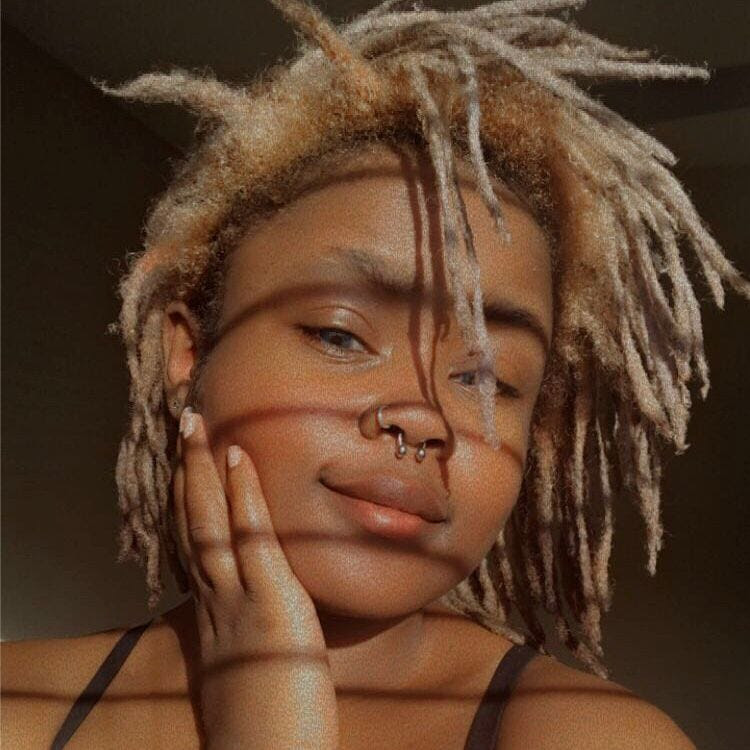
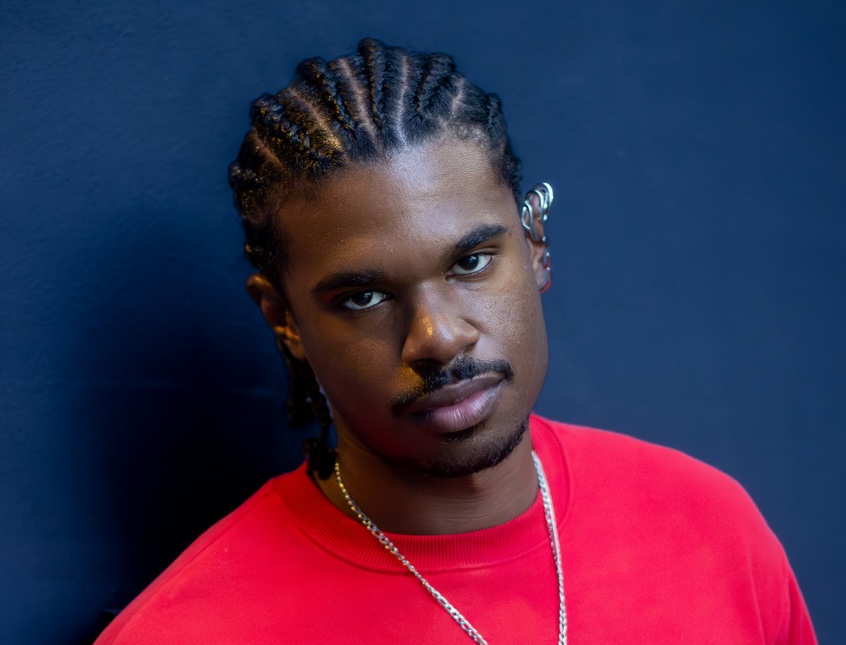
Photo by Elisabeth Campbell.

Audio By Carbonatix
If mainstream music is the hard reality, underground is the esoteric pipe dream. What the underground scene may lack in popular commercial success, it makes up for in avant-garde, anti-establishment, counter-culture authenticity. Mix that with the dynamic diversity of the Haitian diaspora and get the unique Miami sound of the Haitian underground.
Haitian Heritage Month is celebrated every May to honor Haitian history. Haiti’s sovereignty challenged colonialism and slavery globally, but its movement for freedom didn’t stop with its independence in 1804. The culture of Haiti is one of self-determination, and that ethos bleeds into its music. Haitian-American artists like Conrad Prophete, Jay Innocent, and Akia Dorsainvil — also known as Pressure Point — embody the underground movement, redefining music culture from the inside out.
“I believe that all of these genres we listen to are sourced from minorities,” said Conrad Prophete, a Haitian-American DJ known on the scene as Gumthewrapper. “I like to focus on underground EDM. When people think of EDM, usually they think of white music. I play Black music; I play Haitian music. There’s a fine line between underground and mainstream EDM, and I like to bring it back to minority culture.”
Prophete was introduced to the Miami creative scene through the dance community before he began to expand his musical tastes, drawing inspiration from rave culture.
“Through my DJing, through my exploration of all these genres that I represent — footwork, hardcore jungle, sometimes UK garage, jazz, kompa, you name it — I usually like to bring it back to hip-hop,” said Prophete. “Miami is not always so welcoming of Black culture… I always felt a bit alienated, but at the same time, I know it’s where I belong.”
Masisi radio as a music and culture hub
Recently, Prophete began DJing on Masisi Radio, a platform presented by a queer diasporic collective that encourages community and independence through self-expression. The mission of the collaborative space is to empower the Black musicians, DJs, thinkers, and artists of Miami with a for-us-by-us mentality.
Haitian-American alt musician Jay Innocent, known artistically as OGNeilJay, describes the Masisi collective as a “pillar” in his life and music career.
“It’s one thing to have a community, but it’s another thing to be surrounded by people who make music like mine,” said Innocent. “They’re some of the coolest people that I know, people who have given me opportunities. I feel like these are my people, not only musically but blood-wise.”
At only 21, Innocent has been making music for nearly a decade. His heritage is Bahamian, Dominican, Cuban, and Haitian, and he keeps his sound as diverse as his cultural history. He moves from R&B to alternative to hip-hop to indie to hyperpop, depending on what speaks to him as an artist.
“I’ve always been the type of person where I really feel as though I’m chosen to do this,” said Innocent. “I’ve been in so many groups before, and when everybody stops, I’m still standing. Everything only holds you back for the moment. I have really good people around me that help me follow through, and it’s always better on the other side.”
For Akia Dorsainvil, founder of Masisi, it’s all about community. Known popularly as Pressure Point, he pushes the boundaries of comfort to create a space where everybody has a sense of ownership.
“Masisi is a derogatory term in Haitian Creole that represents a masculine person who embraces more feminine qualities,” said Dorsainvil. “As someone who grew up visibly queer for most of their life, I had a lot of experiences with being called a masisi. It was an intimate trauma bond, and it felt nice to embrace it and repurpose it.”
As someone who is deeply inspired by Black music as a whole, Dorsainvil takes the history of Black music and traces its legacy to current genres. Because Haitian history does not exist in a vacuum, neither does the Haitian underground.
“Black music teaches you so much,” said Dorsainvil. “A lot of Black music is storytelling. My friend describes DJing as making two songs kiss. That’s exactly what I’m trying to do: find ways to make Black music diasporically fall in love with each other.”
In Miami, that romance between genres is what keeps the heart of the Black music scene beating. “People tell you all the things they don’t like about Miami, but I want to talk about the things that I love,” said Dorsainvil. “It’s the people and artists that live here that make the fabric of Miami great.”
As an independent artist, Innocent credits Masisi with changing the trajectory of his musical path. “The energy and love was unmatched,” said Innocent. “It was something so different, something so accepting. When people are standing for something that’s right, it’s about the energy. It’s something that you can’t even explain in words.”
As a DJ, Prophete credits Masisi for bringing music back to its source. “We look out for each other,” said Prophete. “It’s about representation.”
The Haitian underground breaks stereotypes and rewrites the narrative. Through groups like Masisi, Haitian artists and other members of the African diaspora find their footing in a shifting industry. Miami’s music scene is constantly changing, but if there’s one thing the Haitian underground won’t be, it’s left behind.