
Photo by Chris Hill

Audio By Carbonatix
Typically, the pendulum swings. This time it spins: Vinyl sales surpassed $1 billion for the first time since 1983 — a year in which Michael Jackson, Men at Work, Lionel Richie, and Quiet Riot topped the charts. Or, to put it another way, for our readers without PhDs in pop-rock paleontology, a full six years before the birth of Taylor Swift, whose 2025 album Life of a Showgirl moved well over 1.5 million slabs of wax last year.
Yes, it appears at least one of the physical media empires of yore has struck back. And, paradoxically, we might have the overwhelming triumph of streaming to thank for this reversal of fortune: The disembodying digitization of culture, particularly acute in music, has turned a format once so wobbly it barely won a scrap against 8-track tapes before dropping marketplace title fights to cassette tapes and CDs — though, in its 7-inch format, steadily remaining a prized medium in hardcore and punk — is now, once again, a prestige format; a totem signaling corporeal devotion to a particular artist or album in much the same way a cinephile purchases the Criterion or Arrow reissue. In a cascade of artifice, some of us are reaching out for the real. And that “real” often comes in collectible splatter variants.
Does that mean the tide has turned against the zeros-and-ones cheapening of art via AI and streaming? Will Record Store Day replace Columbus Day as a national holiday? Spoiler alert: Nope! In fact, that Magic 8 Ball is laughing at you right now, son: the World Economic Forum estimates between 2001 and 2010 “physical music sales declined by more than 60 percent, wiping out $14 billion in annual revenue.” And of the $11.5 billion in recorded music revenue last year, streaming, at $9.5 billion, owned north of eighty percent of it. And, not to get geopolitical, but the last time there was a major disruption in global petroleum markets it was a near-disaster for vinyl.
Still, every great battle requires a beachhead. Here is how three Miamians see the state of play.
Running a Record Store in Miami Today
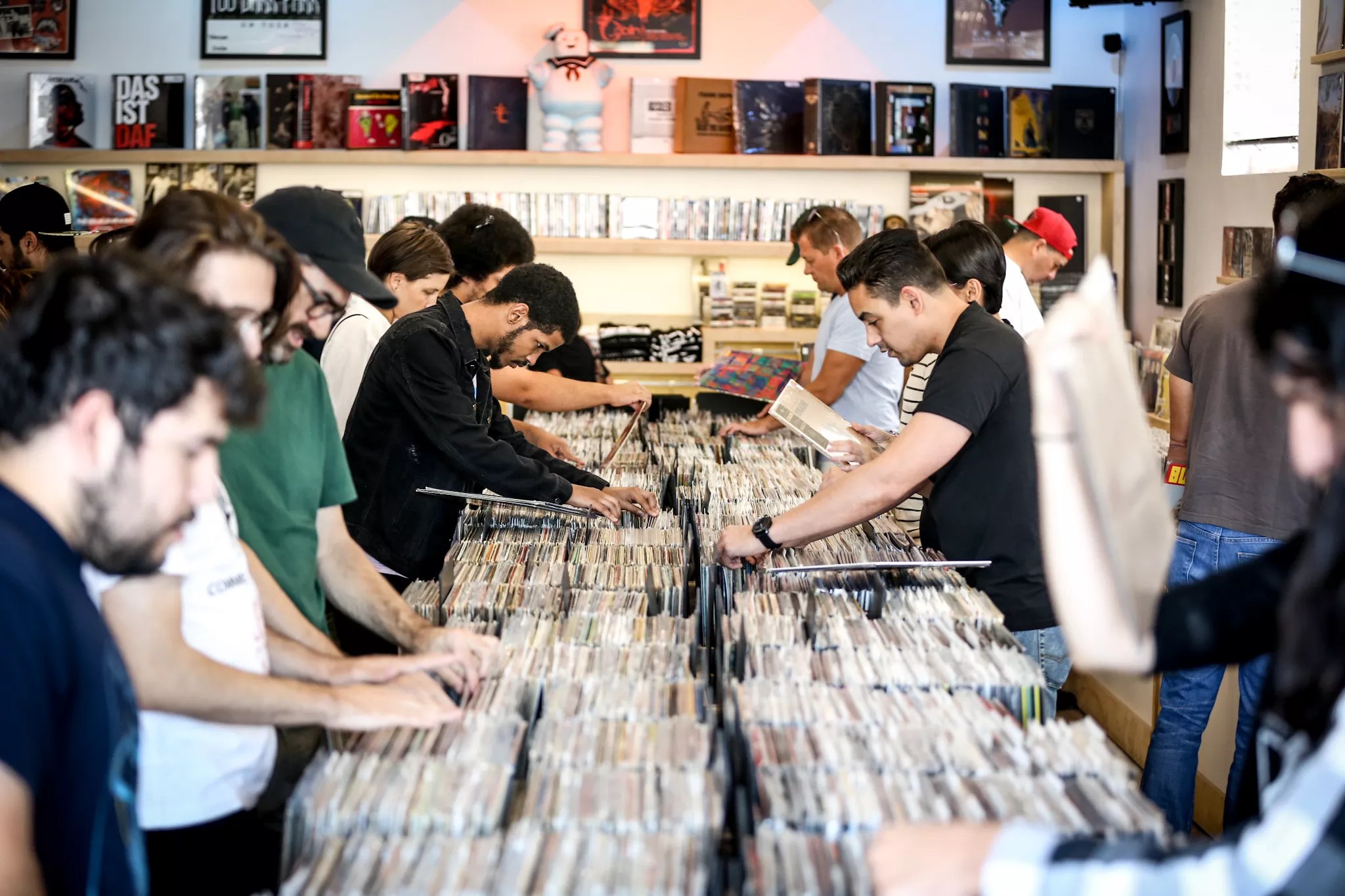
Mikey Ramirez was raised in record stores. Every day after school he would hop into his shitty, rusted out Toyota Corolla and make the rounds — Sid’s Records & Tapes, Blue Note, the Record Bar, Peaches — for expeditions that were as much about finding his tribe as about picking up records based on a wish list, album art, the latest release from a trusted niche label, or recommendation from a knowledgeable clerk manning the counter. (Yes, that last bit is foreshadowing.) “I played sports for a little while — and that went nowhere fast,” Ramirez tells New Times. “What moved me was music, movies, and books. That’s what I cared about. And chasing that gave me everything.”
Those afternoons have echoed throughout Ramirez’s life — from a long stretch at Fort Lauderdale’s Radio-Active Records to his current perch as a leading light at the cultural mecca of Technique Records. And while Ramirez is grateful his business has grown every year, his personal cut of that billion-dollar vinyl haul is so thin a stiff breeze might rend it — he’s still carrying boxes of records to offsite events, not doing Scrooge McDuck swan dives into pools of coin. “That number is so astronomical, it’s almost salacious,” he says. “It’s about as far from our day-to-day reality as you can get — especially here in Miami, where it’s so expensive it feels like it costs money just to wake up and take the first breath of the day.” (Not to mention the wholesale price of some of these new release records can sometimes rocket north of $30 — before anyone in the retail food chain has made a penny.)
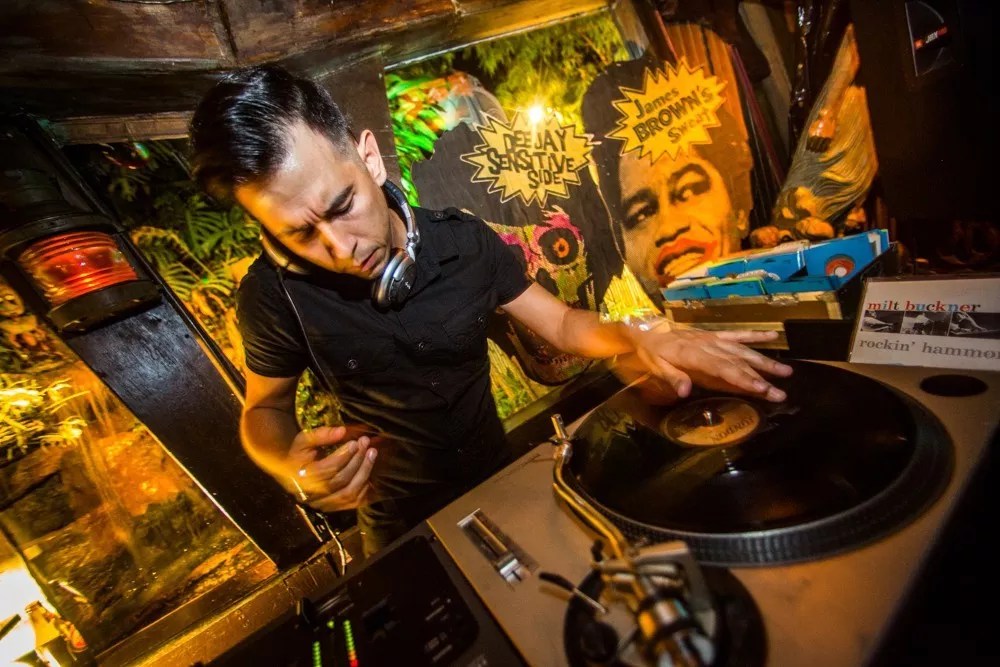
Photo by Ian Witlen / TheCameraClicks.com
Ramirez is quick to add, however, that value is not calculated only in mere cold, hard cash. “A good record store isn’t just a place to buy stuff,” Ramirez says. “It’s also a third place” — a term coined by the late urban sociologist Ray Oldenburg to describe a spot that hosts “regular, voluntary, informal, and happily anticipated gatherings of individuals beyond the realms of home and work” — “where like-minded people can congregate and meet one another. Under that roof, everyone has a common interest. That’s important, always, but in a very polarized time such as ours, it becomes even more important.”
Ramirez also sees how a younger generation coming into the vinyl and physical media cultural folds is helping to nurture and bolster a social consciousness that has been a bit dormant over the last couple of decades. “People seem to be increasingly aware of the reality of the economics of these streaming services for artists, which are essentially criminal and devalue art,” he says. “A lot of young people are showing up at the shop searching for something in a more human way. They don’t want to have their decisions dictated by an algorithm that just serves up a constant stream of things they didn’t ask for anymore. It’s an invasion of privacy, in a way, and there’s no human connection there anymore.”
To see that rejected in favor of a more organic, symbiotic, social give and take, Ramirez says, is “a very healthy full circle moment.”
Why Miami Artists Are Still Pressing Vinyl
Though all indie artists face ever-tighter budgets these days — see the aforementioned art devaluing streaming revenue split — when it came time to release his latest album, the lush and affecting aptly-titled Miami-centric full-length The Cost of Living, singer-songwriter Dave Daniels felt a vinyl pressing was essential. “I think people want to hold something tangible,” he says. “I think music lovers miss going to shops and walking out with something in their hands and building a collection… There’s also this notion of listening to old albums the way they were intended to be heard: It’s like watching a movie in IMAX vs on your phone. The Oppenheimer explosion sure hits you harder when you’re watching it on the big screen.”
There is, Daniels adds, something communal and substantive about having physical merch at shows. “Artists and music lovers have this need to have something that’s theirs — something that connects on a very human level,” he says. “While the vinyl boom began before the pandemic, I think something happened a year or so after the lockdowns. Do you remember the first hug you gave your friends and family members? They meant more ‚ to be able to touch. We need these human elements in our art, too — to listen and to hold our art more intimately.”
Where Vinyl Is Pressed in South Florida
Though a vinyl evangelist today of the highest order, Tim Thrush only came to the format four or five years ago: Back as late as 2021, he was doing software project management and data governance for Amazon Web Services. Yet despite this background in digital, streaming never held much appeal for him outside of convenience. But he didn’t quite see a viable alternative now that his beloved cassettes and CDs had gone the way of the dinosaur.
Can’t fight (intentional scare quotes!) “progress,” right?
Or can you?
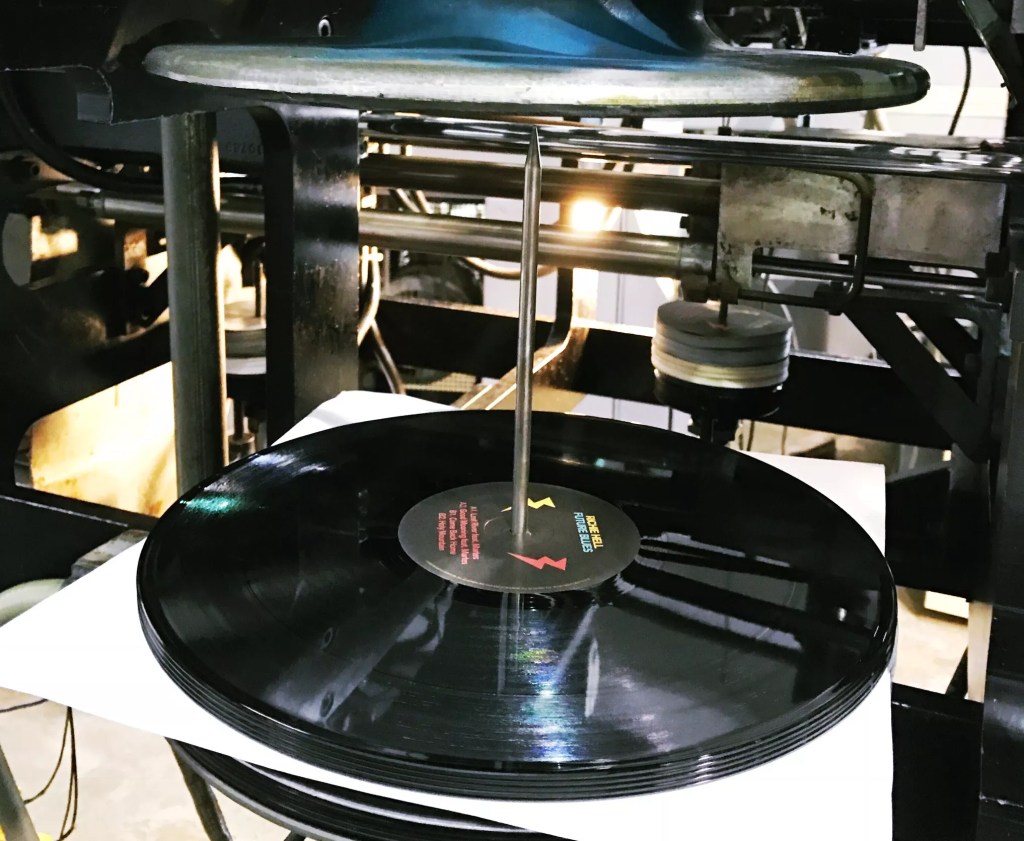
A fateful reconnection with an old friend changed everything for Thrush: Enrique Abeyta had left the Wall Street capital markets for the music business, and exciting new frontiers were opening up…in vinyl? The revelation proved a road-to-Damascus moment for Thrush. “I don’t think the vinyl resurgence is just about the audio aspect — which, when manufactured correctly, is definitely superior,” Thrush says. “There’s also the visual, aesthetic component. I look at this format as a visual expression of the art, too.” Thrush became determined to bring the lessons he learned as a self-described “corporate animal” to elevate the “phygital” presentation of music. Abeyta and Thrush went into business together at New Press Vinyl — as founder/CEO and President/Creative Lead, respectively — pressing high-end “next-generation digitally enabled music collectibles and merchandise with a focus on specialty vinyl” in an Opa Locka plant for artists ranging from Crosses and Pucifer to Ice Nine Kills and Ryan Adams. “It was a leap of faith,” he says, “but it has been all blue skies and green fields for me — just a totally freeing creative environment.”
Courtesy of SunPress Vinyl
When news of the billion-dollar vinyl year broke, Thrush called it “a fantastic milestone for the industry” in a LinkedIn post. “The market is tilting toward variants and premium collectability — the exact space where NPV is pioneering the next chapter,” he continued. “From premium vinyl and digital enablement to ultra-rare collectibles, we’re enabling deeper IP maximization for artists and labels.”
“I don’t think the one billion mark is a ceiling, but I can’t say growth is going to be exponential, either,” Thrush tells New Times. He worries about mass-produced albums by mainstream artists flooding and diluting the market. “A cheaply produced vinyl record that sells a couple hundred thousand copies but is not of the premium caliber or interesting aesthetically does not do vinyl as a format any favors,” he says. “People want to get some value for their money. You don’t want to see the greed of the music industry kill the golden goose. We have to protect this format with real care and quality releases.”
From his mouth to God’s turntable.