
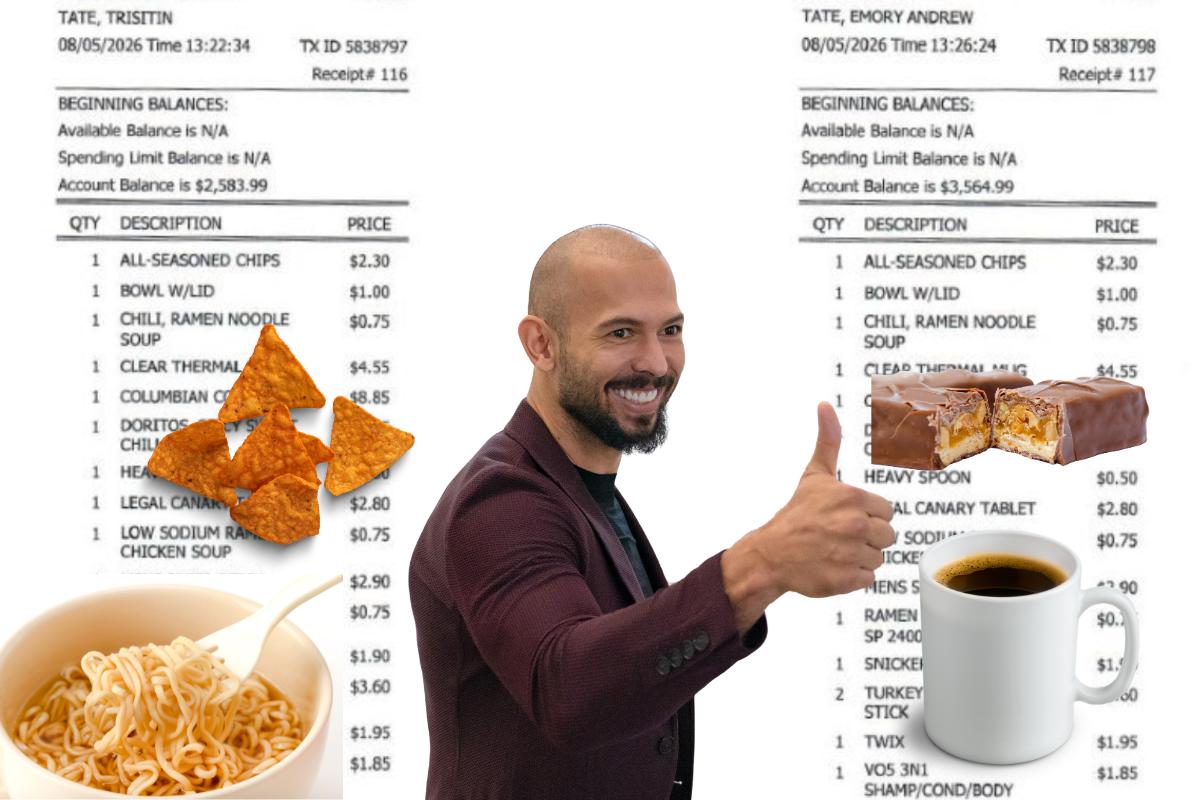
Tate Photo by Andrei Pungovschi/Getty Images. Commissary receipt via DOJ. Miami New Times illustration.

Audio By Carbonatix
If you indulge Joe McBride, Andrew and Tristan Tate’s attorney, you might actually feel bad for the conditions the brothers are experiencing in jail: chemical spray seeping into their special housing units, cameras in meeting rooms that listen to and transcribe every word exchanged.
“They’re being punished cruel and unusually,” McBride said during a podcast. “They’re not eating right, drinking right, or sleeping right.”
But newly released U.S. Department of Justice commissary receipts tell a different story — at least when it comes to the eating part.
Records from Miami’s Federal Detention Center show the influencer brothers have maintained healthy commissary balances since their July 18 arrests, stocking up on snacks and other food while they fight extradition to the United Kingdom.
As of Aug. 5, Tristan had a $2,583 account balance, while Andrew had $3,564. The receipts are particularly notable because Andrew previously claimed from behind bars that he had no access to the commissary at all.
“I am being held in SHU, the highest level of security which exists,” Tate’s X account posted July 23. “No commissary. No visits. No contact with the outside world.”
He added that his neighbor was “a cannibal who screams throughout the night.”
Yet the newly released records show the brothers are eating less like deprived detainees and more like college freshmen with a stocked dorm room. On Aug. 5, Andrew and Tristan purchased identical commissary hauls, including ramen noodles (in chili, roasted chicken, and low sodium chicken flavors), Snickers and Twix bars, turkey and Swiss combo sticks, spicy sweet chili Doritos, and of course, Colombian coffee (to undoubtedly fuel those late-night tweets). Altogether, the brothers spent approximately $75 at the commissary, according to the records.
The receipts don’t necessarily mean the brothers are eating well — federal commissary fare is hardly fine dining — nor do they disprove their other allegations about conditions inside FDC Miami. But they complicate a narrative Andrew and his legal team have pushed publicly since the brothers were taken into custody.
Andrew has repeatedly complained about food and water inside the jail. In another post from his X account, which his attorney says is being operated by his team while he’s incarcerated, he claimed a broken faucet left him without clean drinking water and forced him to drink warm water from his shower.
McBride has amplified those complaints during media appearances, including on Miami-based manosphere podcast Fresh and Fit.
“They’re not eating right, drinking right, or sleeping right,” McBride said.
The Bureau of Prisons (BOP), meanwhile, has pushed back on several of the claims.
In a previous statement to New Times, BOP spokesperson Emery Nelson said inmates at FDC Miami (including those housed in the Special Housing Unit, or SHU) have access to potable water, commissary, phone calls, recreation, social visits, mail, and legal counsel. The agency declined to discuss the Tates’ individual housing arrangements, citing privacy and security concerns.
That doesn’t mean FDC Miami has a spotless record; the federal lockup has faced years of complaints about overcrowding, unsafe conditions, and mistreatment that long predate the Tates’ arrival.
In 2024, an FDC Miami correctional officer was charged with sexually abusing an incarcerated person. Last year, an incarcerated woman told the Guardian that an influx of immigration detainees had worsened already poor conditions, with women packed into overcrowded units where toilets were broken and plumbing leaked.
Just two days before the Tates’ arrests, family members and immigration advocates gathered outside the facility to protest what they described as “inhumane” conditions. One woman told WLRN that her incarcerated husband had reported cockroaches in the food, broken bathrooms, and a lack of clean drinking water.
BOP has disputed claims that the facility lacks potable water, saying FDC Miami receives annual certification from Miami-Dade County that its drinking water is safe.
Still, the Tates’ allegations have become a rallying cry for their massive online following.
McBride joined Fresh and Fit hosts Walter Weekes and Myron Gaines late last month to encourage supporters to demonstrate outside the detention center ahead of the brothers’ Aug. 13 detention hearing.
“Come out Aug. 13,” McBride said. “There’s a crowd right there formulating.”
McBride did not respond to a New Times inquiry for comment via telephone by the time of this reporting.
Gaines subsequently promoted an Aug. 13 protest outside the jail, while Tate supporters have already gathered near the detention center holding signs visible from the building.
The brothers have been detained since U.S. Marshals arrested them in downtown Miami on July 18 as the British government seeks their extradition over allegations involving multiple women.
Federal complaints filed in the Southern District of Florida allege Andrew raped and assaulted a woman in England in 2015, including repeatedly choking her until she lost consciousness while sexually assaulting her. A separate complaint accuses Tristan of raping another woman and assaulting a third. The allegations span incidents between 2012 and 2015.
British prosecutors have since announced an expanded slate of charges. Andrew faces seven additional rape counts, three counts of arranging or facilitating trafficking for sexual exploitation, three assault charges, and 19 charges involving indecent images of a child and extreme pornography. Tristan faces additional rape, sexual assault, trafficking, and other charges but is not accused of child-image offenses.
Both brothers have denied wrongdoing.
Their attorneys are asking a federal judge to release them while they fight extradition, arguing in part that their detention conditions constitute “special circumstances” warranting release. Prosecutors oppose the request, arguing the brothers pose a flight risk.
A federal judge is scheduled to consider their detention on Aug. 13, the same day supporters are planning to protest outside FDC Miami.
And while the brothers’ broader complaints about conditions inside the troubled federal lockup aren’t so easily dismissed, the government’s own receipts appear to settle at least one question.
The commissary, it seems, is open.