Photo by Federal Bureau of Prisons

Audio By Carbonatix
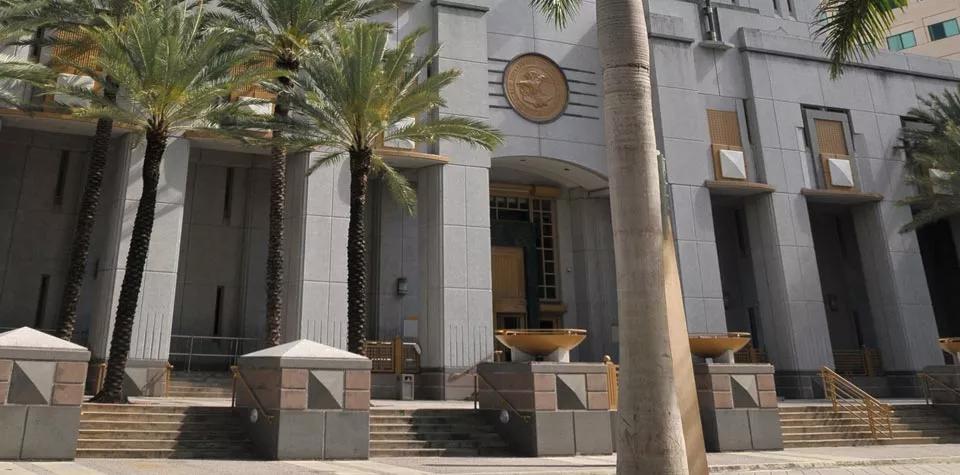
On the afternoon of July 18, manosphere influencers Andrew and Tristan Tate were on their way to a bare-knuckle fight at the James L. Knight Center in downtown Miami when they were arrested by federal agents on charges of rape, assault, and facilitating trafficking for sexual exploitation. Britain’s Crown Prosecution Service said it had brought new charges against the brothers relating to alleged offenses involving four alleged victims between July 2010 and August 2017. They’re currently being held at the Federal Detention Center (FDC) in downtown Miami as they fight the British government’s efforts to extradite them to face the charges.
In the meantime, someone has been posting to social media platform X on Andrew’s behalf about the facility’s conditions, claiming he’s being held in solitary confinement with no phone calls, no yard time, no commissary, no visits, and no contact with the outside world — and, they say, a cannibal for a neighbor. Perhaps most notably, they’ve said that the water in his cell is dirty, comes only from the shower, and that he’s “being forced to drink poisoned water.”
But although the claims about his cannibal neighbor are, perhaps, exaggerated — the Bureau of Prisons (BOP), which manages FDC, wouldn’t comment — there could be some truth to Tate’s other complaints about the facility.
The facility has faced years of complaints over abuse, overcrowding, and unsafe conditions. As recently as 2024, an FDC Miami officer was charged with sexually abusing an incarcerated person. Last summer, when the jail began quietly doubling as an immigration detention center, The Guardian spoke to an incarcerated woman who said the arrival of immigration detainees at FDC Miami worsened conditions for existing prisoners. To accommodate the influx, she said women were crammed into overcrowded housing units, with some placed in areas with broken toilets and leaks.
“It’s as if we’re animals,” she told the Guardian. “This prison already wasn’t livable, and now they’re adding more people into a place that’s so unsafe and inhumane.”
More than a year later, similar allegations about conditions at the facility have continued. On July 16, family members and immigrant advocates protested what they’ve called an “overcrowded” facility operating under “inhumane” conditions. One woman told WLRN that her husband, who is being held there, has told her that the facility’s food supply is infested with cockroaches and that dozens of detainees have no access to clean, potable water or medications.
“There’s no potable water. They have to drink out of their sinks,” she said. “Their bathrooms don’t work. There’s no hygiene at all. It’s just inhumane.”
In an email to New Times, Emery Nelson, a BOP spokesperson, said the water at the facility is just fine.
“While we do not comment on anecdotal allegations, we can tell you that FDC Miami receives an annual water certification from Miami-Dade Water and Sewer concerning the quality of the drinking water supply. Currently, the drinking water at FDC Miami is certified safe to drink,” Nelson wrote in an email. “All inmates at FDC Miami, including inmates in the Special Housing Unit, have ample access to potable water, a sink, toilet, and shower.”
Nelson declined to confirm whether the Tates are being held in the Special Housing Unit, citing privacy, safety, and security reasons. However, he explained that inmates can be placed there for disciplinary reasons or for “administrative detention, which is non-punitive,” and that most placements are administrative. Reasons for administrative detention, he said, include inmates who are awaiting classification or under review for reclassification, inmates being transferred to another facility, inmates under investigation for misconduct or criminal behavior, and inmates whose presence in the general population poses a threat to their own safety or others’.
In response to Tate’s claims about other conditions at the facility, Nelson said inmates at the detention center have access to commissary, phone calls, recreation, social visitation, and legal counsel, including visits and phone calls. He said they can also communicate with loved ones through the U.S. Postal Service.
Nelson declined to answer questions about Tate’s claim that his neighbor is a cannibal.