Photo by Michele Eve Sandberg

Audio By Carbonatix
At a sold-out Amerant Bank Arena of nearly 18,000 people, the energy was immediate and overwhelming from the moment the show began. I shot the first three songs from the soundboard, and the first impression was almost surreal — it felt like standing under a clear night sky inside the arena. I was surrounded by a sky of people, like stars all around me. When the lights dropped, the first sound that came up from the darkness was the roar of “Bruuuuce,” echoing through the building before a single note was played.
The crowd reflected the reach of Bruce Springsteen’s music, with generations of fans all in the same room. People of all ages were there — longtime followers and younger fans alike — sharing the same experience, the same energy, and the same space.
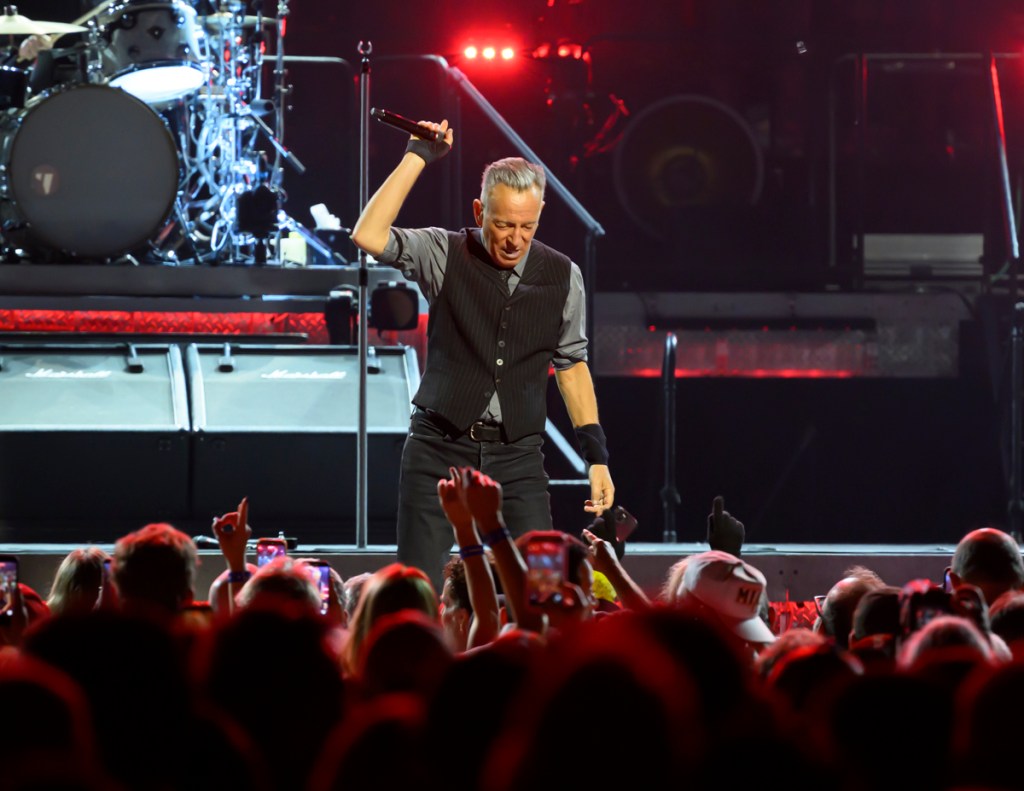
Photo by Michele Eve Sandberg
At 8:08 p.m., Bruce Springsteen stepped onto the stage in near darkness and spoke directly to the crowd before the opening song, “War.” In a brief but pointed address, he set the tone for the night, urging fans to choose hope over fear and democracy over authoritarianism, warning about the strain on democratic institutions in the United States. In his speech, which was broken throughout the night, Springsteen returned to a consistent set of broader themes that have run through the tour, including pointed political criticism of the current administration and concerns about authority, democracy, and the country’s direction. The tone at these moments stayed direct and urgent, but remained woven into the flow of the performance rather than separate from it. Across each of these speeches, the arena remained completely still — no movement, no noise — just full attention. As the opening speech ended, the silence broke instantly as the lights exploded across the stage and the full band hit, launching into a forceful opening that set the tone for everything that followed.
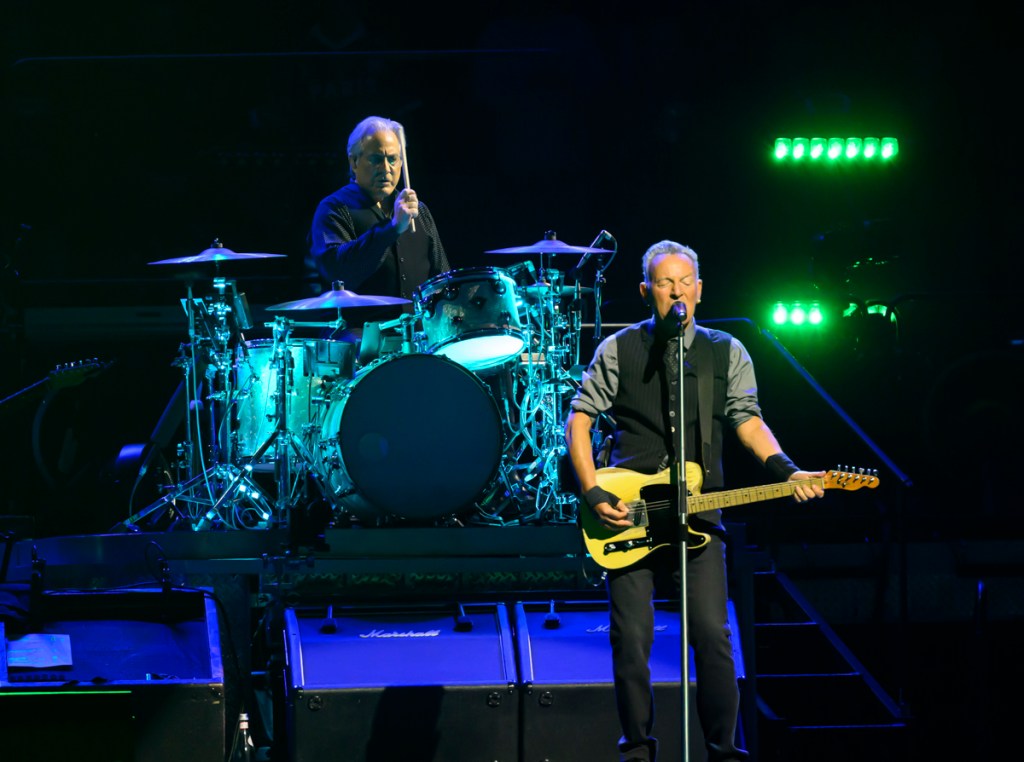
Photo by Michele Eve Sandberg
It was the seventh show on a tour with 20 stops, a run that began earlier in the year and is now heading toward its final stretch in Washington, D.C. There is a clear sense of direction to this tour. That narrative weight is felt inside the performances themselves.
From the opening moments, the audience was fully locked in, and the band matched that energy without hesitation. There’s an athlete-like rhythm to the way Bruce works the room —feeding off the crowd’s energy the way a competitor feeds off a home stadium, using it to drive the performance forward and lift the entire arena with him.
The show ran close to three hours, and considering Bruce Springsteen is 76 years old, the endurance he sustained throughout was remarkable. There was no dip in energy, no break in focus — just a steady, driving commitment from beginning to end. His voice carried that familiar urgency, at times breaking into a rough, weathered roar that cut through the arena with force and emotion.
Audience participation defined the night in multiple moments. During “Hungry Heart,” Bruce stepped back and let the arena take over, with thousands of voices carrying nearly every word. It wasn’t just sing-along energy — it became the performance itself for a few minutes.
The audience reflected the reach of Springsteen’s music throughout the night, with generations of fans sharing the same space and energy — longtime followers alongside younger fans experiencing it in real time.
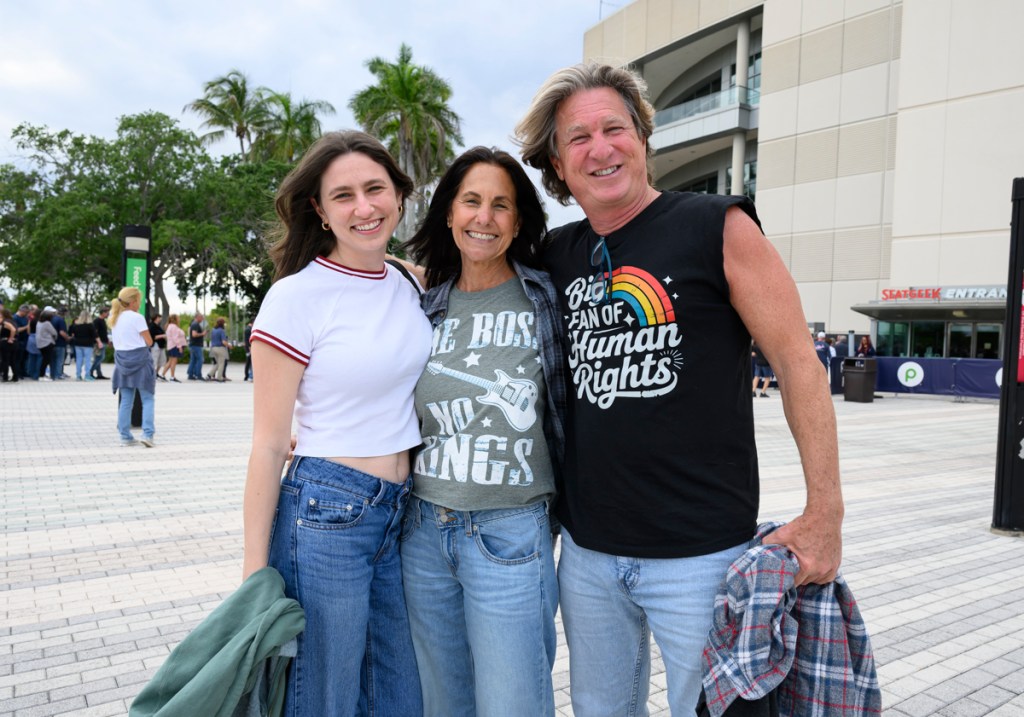
Photo by Michele Eve Sandberg
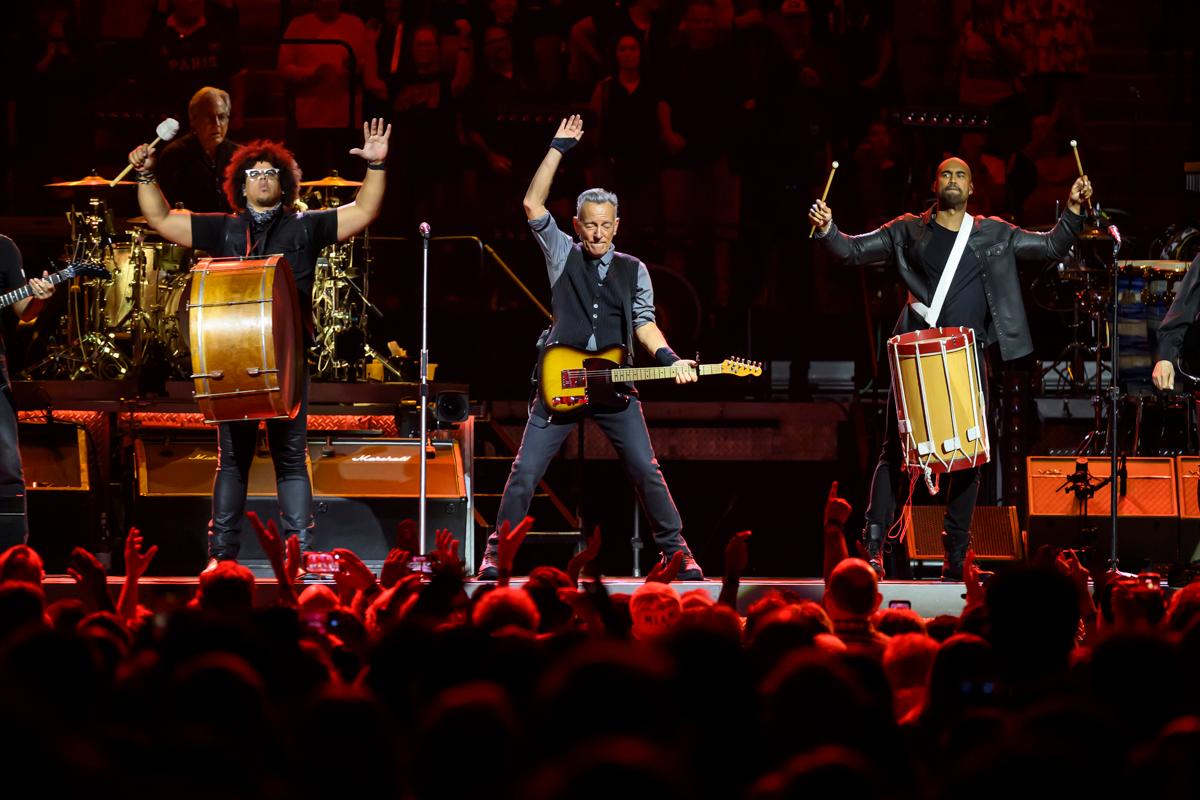
“Death to My Hometown” brought a completely different physical energy. The band locked into a heavy, march-like rhythm, driven by booming drums and tight coordination across the stage. It had the feel of a parade in motion — rhythmic, forceful, and visually unified.
One of the early peaks came during “Born in the U.S.A.,” where the rhythm section opened up into a powerful extended drum break by Max Weinberg. The arena energy spiked instantly as the percussion took over the space.
On “Two Hearts,” Steven Van Zandt stepped forward on vocals alongside Bruce, adding a celebratory lift to the performance. Their shared vocals, especially through the “It Takes Two” ending, gave the song a loose, joyful energy that contrasted with some of the heavier moments in the set.
During “Long Walk Home,” Soozie Tyrell joined in from the side of the stage, singing in the background. Her presence didn’t dominate the moment, but added a quiet emotional layer that softened the song’s edge as it continued to build.
Instrumentally, Bruce Springsteen constantly shifted between multiple electric guitars throughout the night, also moving into acoustic guitar and harmonica when the set called for it. These changes weren’t decorative — they helped shape the pacing and emotional texture of the show in real time.
On “Because the Night,” Nils Lofgren stepped into a clear spotlight moment. His guitar solo stretched the song outward, lifting it into one of the strongest peaks of the night. The band underneath stayed tight and responsive, giving him space while never losing momentum.
“My City of Ruins” became one of the emotional centers of the performance. Bruce moved onto the short front riser and, during the lyric “with these hands,” raised his arms with the crowd. The audience followed, swaying together in unison. When the call of “rise up” came, it turned into a full arena response, with “hands up in the air” echoed back across the building. It felt less like a performance and more like a shared physical moment.
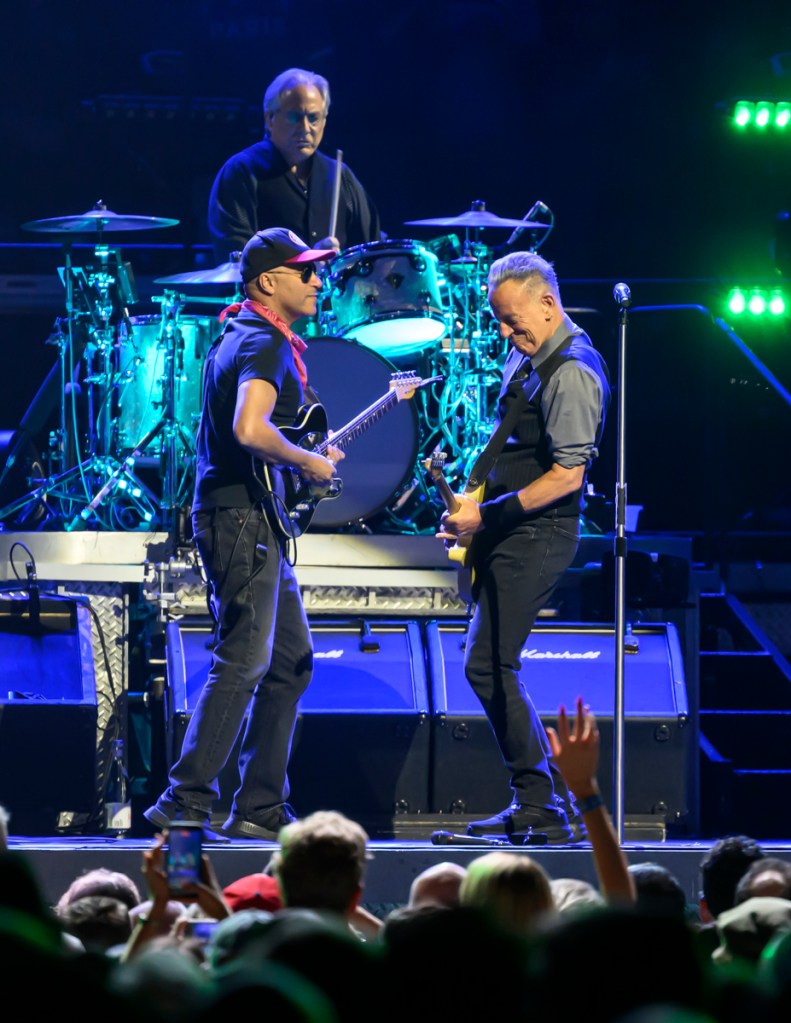
Tom Morello brought a different sonic identity to the night whenever he appeared — sharper, more aggressive, and cutting through the mix with a distinct edge that immediately shifted the energy of the stage.
Jake Clemons continued to carry the saxophone role with natural ease, stepping into the legacy of his uncle while making the space his own within the band’s sound. Max Weinberg, as always, anchored everything with precision and consistency, driving the entire performance forward without excess.
Nothing on stage works without the E Street Band. They remain the engine of the night — tight, responsive, and constantly pushing the energy forward behind Bruce.
The set itself moved fluidly between high-intensity anthems and quieter, reflective stretches, with moments providing contrast within the larger flow of the night.
Rather than following a strict rise-and-fall structure, the show flowed in waves — balancing explosive full-band moments with quieter, reflective passages without ever losing momentum.