KennyOPhoto/AdobeStock

Audio By Carbonatix
Florida’s national parks are rolling out the metaphorical welcome mat. National Park Week, running through Sunday, Aug. 30, celebrates 110 years of the National Park Service and the 250th anniversary of American independence. On Tuesday, Aug. 25, U.S. citizens and residents can enter every National Park Service site that typically charges admission without paying an entrance fee.
Worth noting: The deal does not cover extras such as camping, reservations, ferries, boat tours or special permits. Still, the savings can add up big-time. Everglades National Park ordinarily charges $35 per vehicle, while Canaveral National Seashore and select Gulf Islands National Seashore areas charge $25.
National Park Week offers a fine excuse to get reacquainted with Florida’s wild swamps, centuries-old forts, coral reefs and white-sand beaches. Here are all the natural sites you can visit across the state for free over the coming days.
Jaimie Peterson/AdobeStock
Big Cypress National Preserve
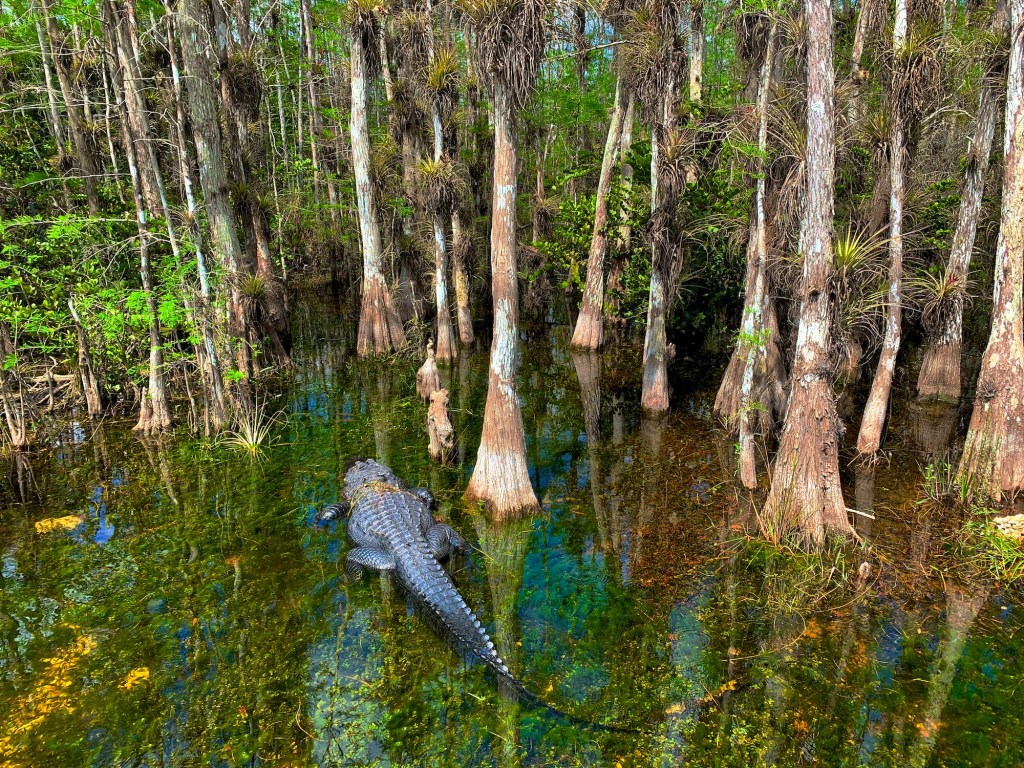
Big Cypress protects more than 729,000 acres of swamp stretching across South Florida. Hiking, cycling and paddling trails run through habitats occupied by American gators, black bears and the endangered Florida panther. The preserve charges no entrance fee throughout the year, though campgrounds and off-road vehicle permits cost extra. Stick around after sunset as Big Cypress is a designated International Dark Sky Place.
Biscayne National Park
Approximately 95 percent of Biscayne National Park is water, making a boat, canoe, kayak or snorkel mask the preferred exploration gear around these parts. Guided excursions leave from the Dante Fascell Visitor Center in Homestead, while the self-guided Convoy Point Jetty Walk is a nice dry-land alternative. The park has no general entrance charge, but island docking and camping fees may apply.
Canaveral National Seashore
Canaveral National Seashore has undeveloped Atlantic shoreline, dunes, coastal hammocks and the 28-mile-long Mosquito Lagoon, a haven for fishermen. Visitors can fish, paddle, hike or watch rocket launches from designated areas when conditions cooperate. Its Apollo Beach and Playalinda Beach districts each offer a distinct route into the preserve. Standard admission is $25 per vehicle, $20 per motorcycle or $15 for pedestrians and cyclists.
SeanPavonePhoto/AdobeStock
Castillo de San Marcos National Monument
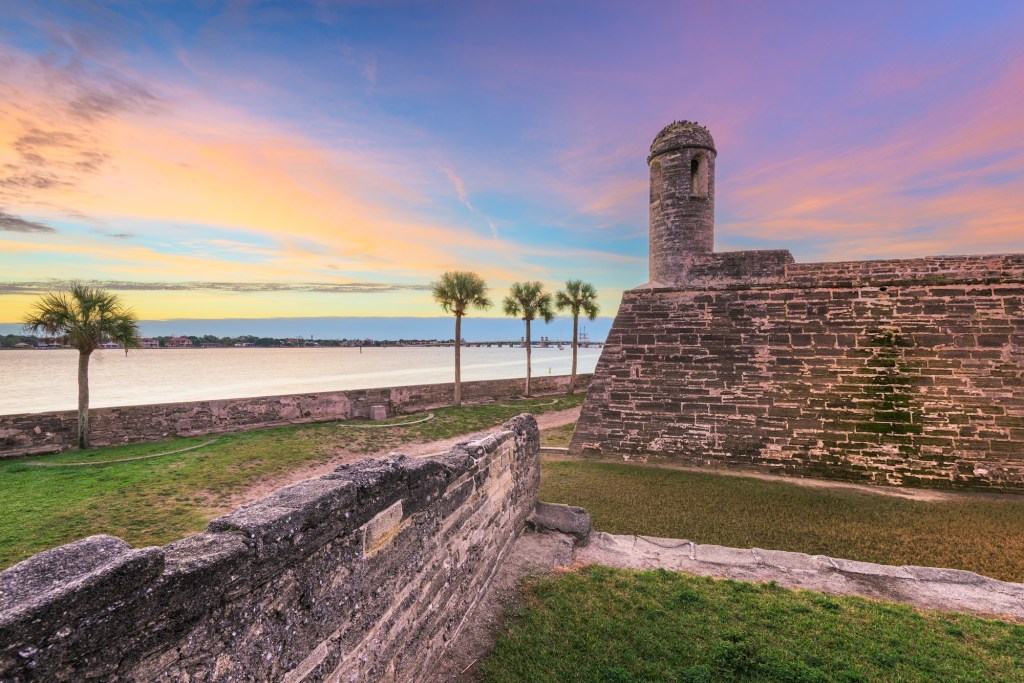
St. Augustine’s hulking coquina fortress is the oldest masonry fortification in the continental United States. Visitors can explore its casements, study exhibits and see musket or cannon demonstrations on select dates. Rangers and volunteers also bring its history to life through interpretive programs. Castillo de San Marcos ordinarily charges $15 for each visitor age 16 and up.
De Soto National Memorial
This Bradenton memorial examines Hernando de Soto’s 1539 landing and the expedition’s violent encounters with Indigenous communities. A shoreline nature trail winds through mangroves and several native ecosystems. Small beaches face the Manatee River and Tampa Bay, while hand-carried canoes and kayaks may launch from the shore. Admission is free year-round.
Dry Tortugas National Park
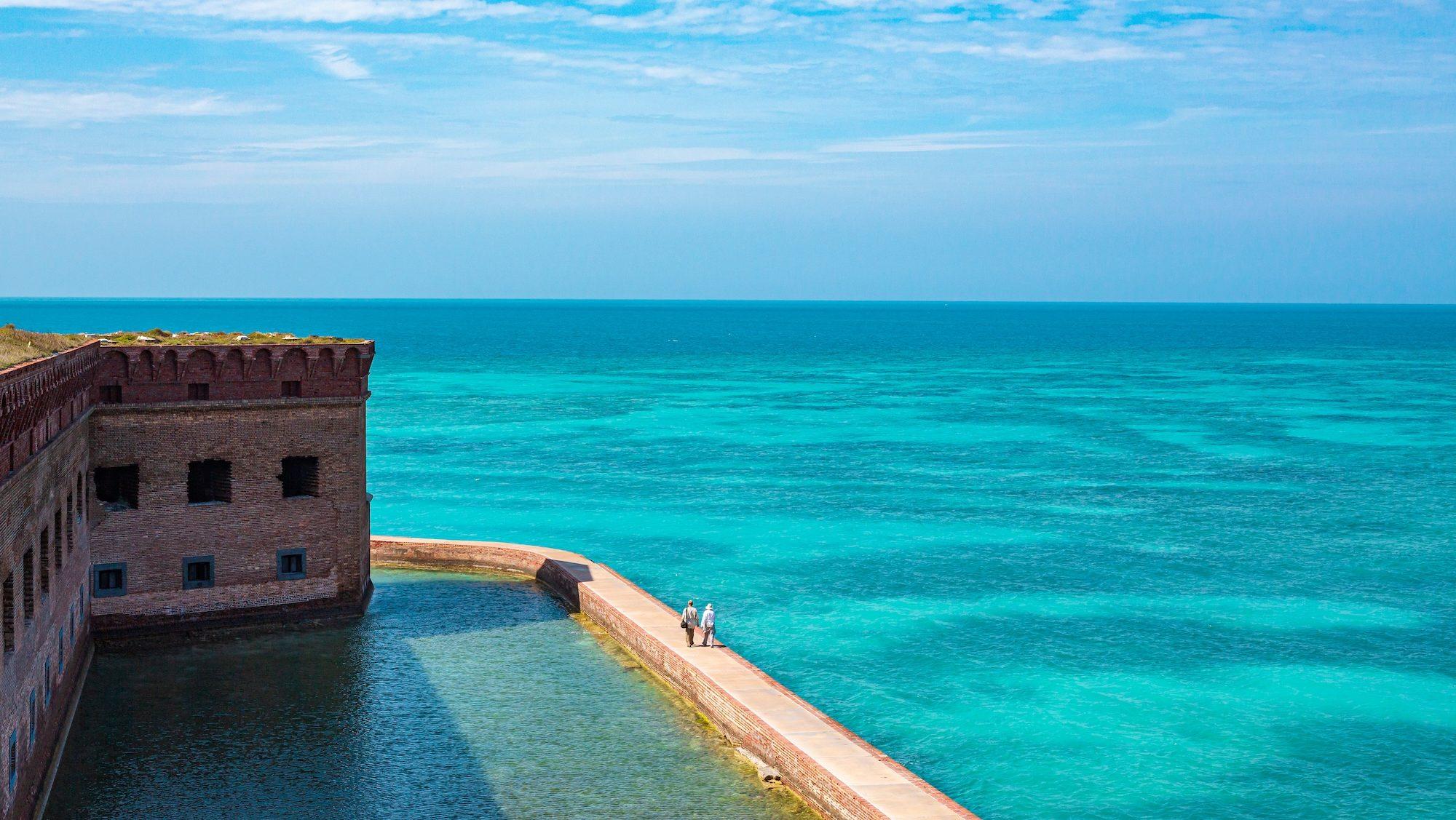
Reaching Dry Tortugas requires major commitment. The park sits nearly 70 miles west of Key West and is accessible only by boat or seaplane. The big payoff includes Fort Jefferson, clear water, coral reefs, snorkeling and primitive camping beneath starry skies. Admission typically costs $15 per visitor age 16 and older. Transportation and camping add extra costs, even on the fee-free date.
Everglades National Park
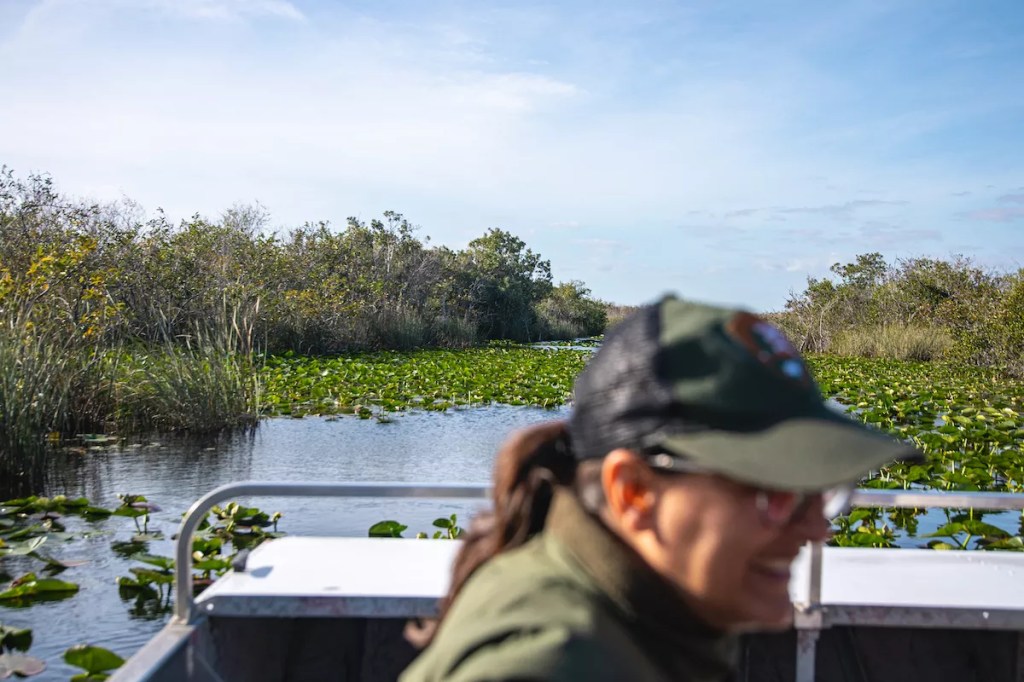
Florida’s sprawling headliner of a National Park protects 1.5 million acres of wetlands, forests and marine habitat. Visitors can pedal the 15-mile Shark Valley loop, paddle into the backcountry, spot wildlife along the Anhinga Trail or book a boat tour from the Gulf Coast. The regular seven-day entrance fee costs $35 per vehicle, $30 per motorcycle or $20 per pedestrian and cyclist, so Free National Park Day is an ideal day to visit.
Fort Caroline National Memorial
More than 50 years before the Mayflower Pilgrims landed on Plymouth Rock, 300 French colonists attempted to establish a settlement on the banks of the St. Johns River in modern-day Jacksonville. It didn’t go so well. The settlers clashed with the Spanish, who destroyed the Fort and built their own on the same site before the French retaliated and burned it down for good. The Spanish rebuilt but abandoned the site the following year, and today, its exact location is unknown. Fort Caroline memorializes the failed settlement, while its visitors’ center’s “Where the Waters Meet” exhibition explores the area’s history of human interaction with the local environment.
Fort Matanzas National Monument
Roughly 15 miles south of downtown St. Augustine, Fort Matanzas preserves a coquina watchtower completed in 1742 to guard the city’s southern approach. A free passenger ferry carries visitors across the Matanzas River Thursday through Monday. Boarding passes are first come, first served and can disappear quite quickly. No ferry operates Tuesdays or Wednesdays, meaning August 25 visitors should explore the marsh trail, nature trail and waterfront instead.
Gulf Islands National Seashore
Florida’s Panhandle lures with sugar-white sand and emerald water at Gulf Islands National Seashore. The Florida district includes Fort Pickens, Perdido Key, Naval Live Oaks and Santa Rosa Island, with all kinds of cycling, snorkeling, fishing and camping fun. Admission at Fort Pickens, Opal Beach and Johnson Beach typically costs $25 per vehicle.
Timucuan Ecological and Historic Preserve
Jacksonville’s Timucuan Preserve encompasses salt marshes, coastal dunes, hardwood hammocks and 6,000 years of human history. Visitors can hike, paddle and tour Kingsley Plantation, where surviving structures tell of the lives and times of enslaved people. The preserve also includes American Beach, founded in 1935 as a seaside destination for Black travelers barred from many Florida beaches during segregation.