Sheets and Pillows photo

Audio By Carbonatix
There is a moment that happens at every great R&B party. The DJ drops the opening notes of Keisha Cole’s “Love.” Someone screams. A dozen voices become a hundred. Suddenly, strangers are singing heartbreak lyrics as they wrote them themselves. Drinks are raised. Arms wrap around shoulders. The dance floor transforms into a group therapy session set to a soundtrack everyone somehow knows by heart.
In a city often defined by EDM festivals, velvet ropes, bottle service, and exclusivity, Miami’s growing network of R&B and Afrobeats parties is proving that community can be a bigger draw than status. Many longtime Miami music lovers still remember Chocolate Sundays at Purdy Lounge and The Love Below at multiple locations, two cherished parties curated by tastemaker Pancho de Pablo. Long before R&B sing-alongs became trendy again, those nights offered refuge for people who wanted something different from South Beach’s image-driven nightlife scene.
Today, a new generation of gatherings is carrying that torch. Whether it’s I Love R&B Saturdays in Hallandale Beach, Sheets & Pillows at Dante’s HiFi, or Stamped: AYA X Friends and the upcoming Aura party at Arlo Wynwood, these events have evolved beyond nightlife.
They’re part sing-along, part reunion, and part cultural gathering. While the soundtrack is rooted in R&B and Afrobeats, what draws people back is a sense of community that can be difficult to find elsewhere in Miami’s nightlife ecosystem.
I Love R&B Saturdays photo
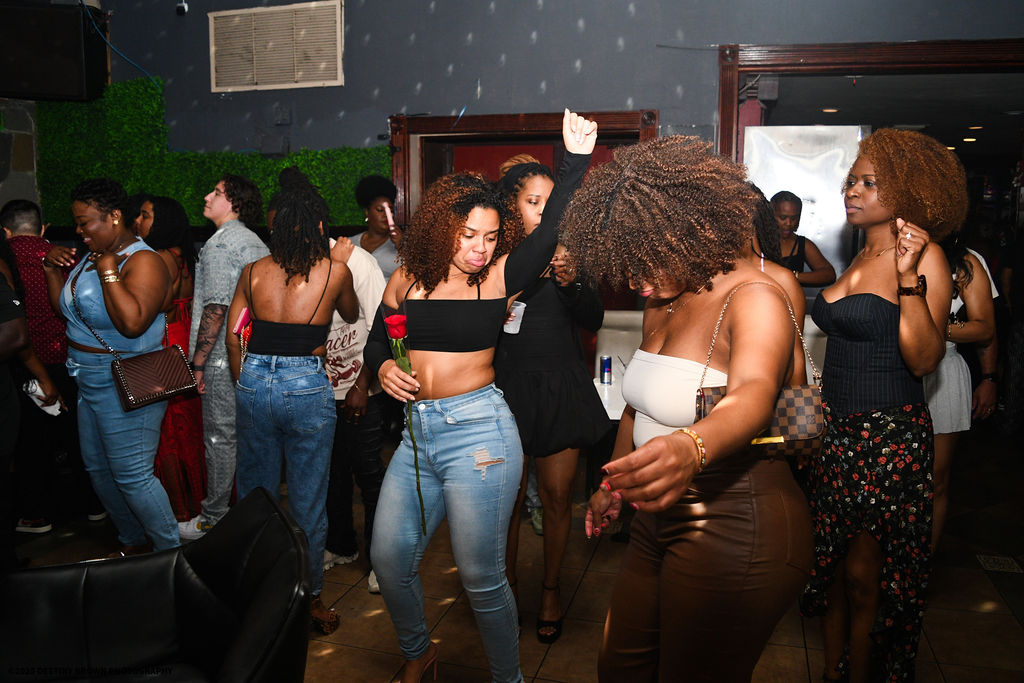
“These are grown-ass people,” says Pop Dukez, founder of I Love R&B Saturdays. “In the years that I’ve been doing this, there’s never been one fight. People come for the music.”
For Pop, that’s the point. The music creates a shared language. The community keeps people coming back. The secret isn’t exclusivity. It is intention.
“I want a place where grown folks can come, no drama. Hear the music, taste the drink, eat the food.” Every Saturday at The Polo Bar & Grill in Hallandale Beach, DJ Lucky from 99 Jamz spins a soundtrack of classics and crowd favorites. The room fills with people singing along to Usher’s “You Got It Bad,” Whitney Houston ballads, and Ashanti’s “Happy” as if they’re attending a family reunion rather than a nightclub. “People want to relive that era because it was quite special,” Dukez says.
But nostalgia alone doesn’t explain why these events continue to grow. The music may bring people through the door. The community keeps them coming back.
“People just radiate, and everyone is embracing each other,” Dukez says. “A lot of hugs go around.”
The vibe has become so popular that visitors now build vacations around it. “It’s become a tourist destination,” he says. “People purchase bottles months in advance from out of town with 15 people.”
That sense of belonging is something many attendees say they struggle to find elsewhere in Miami nightlife.
Sheets and Pillows photo
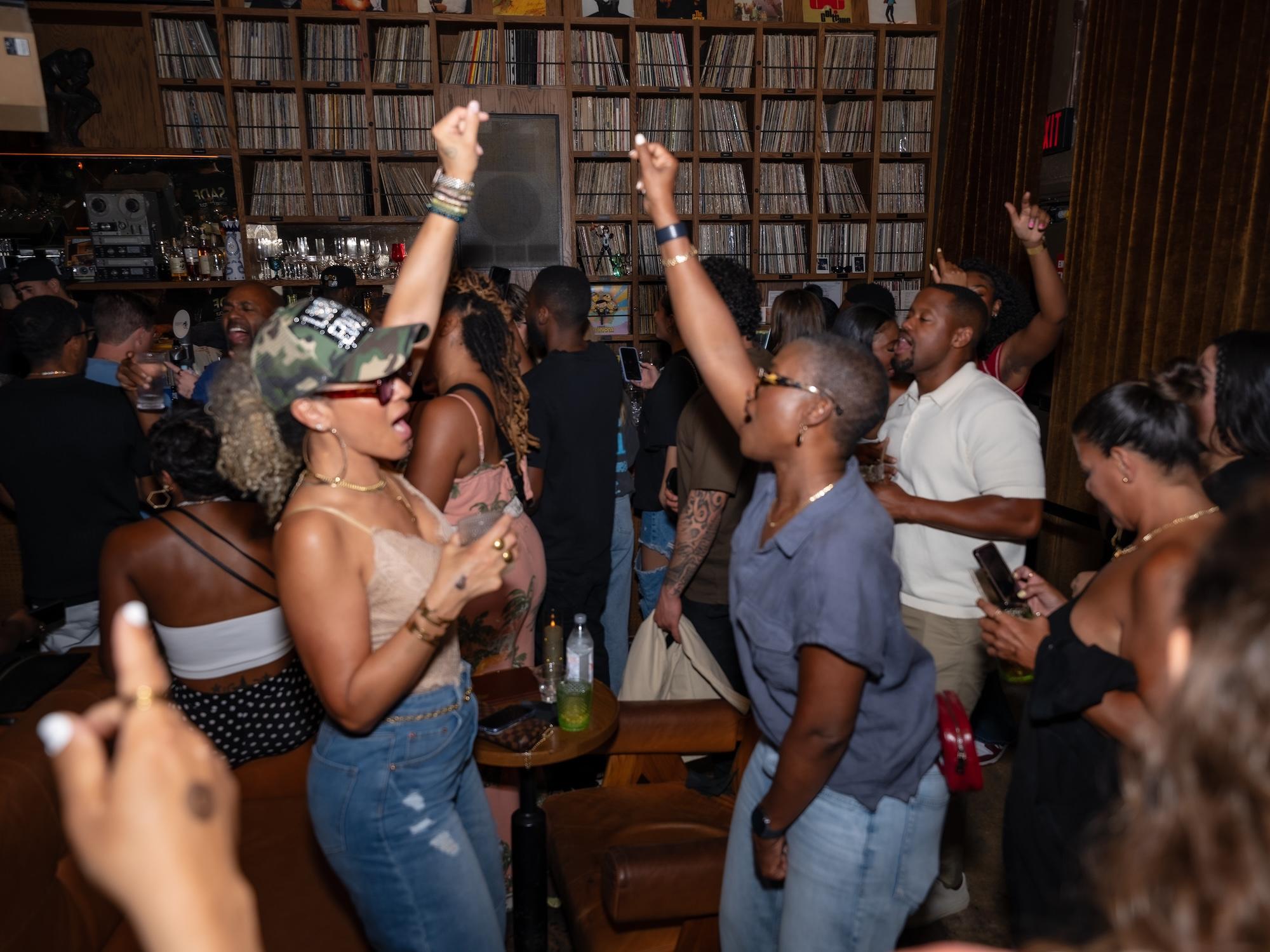
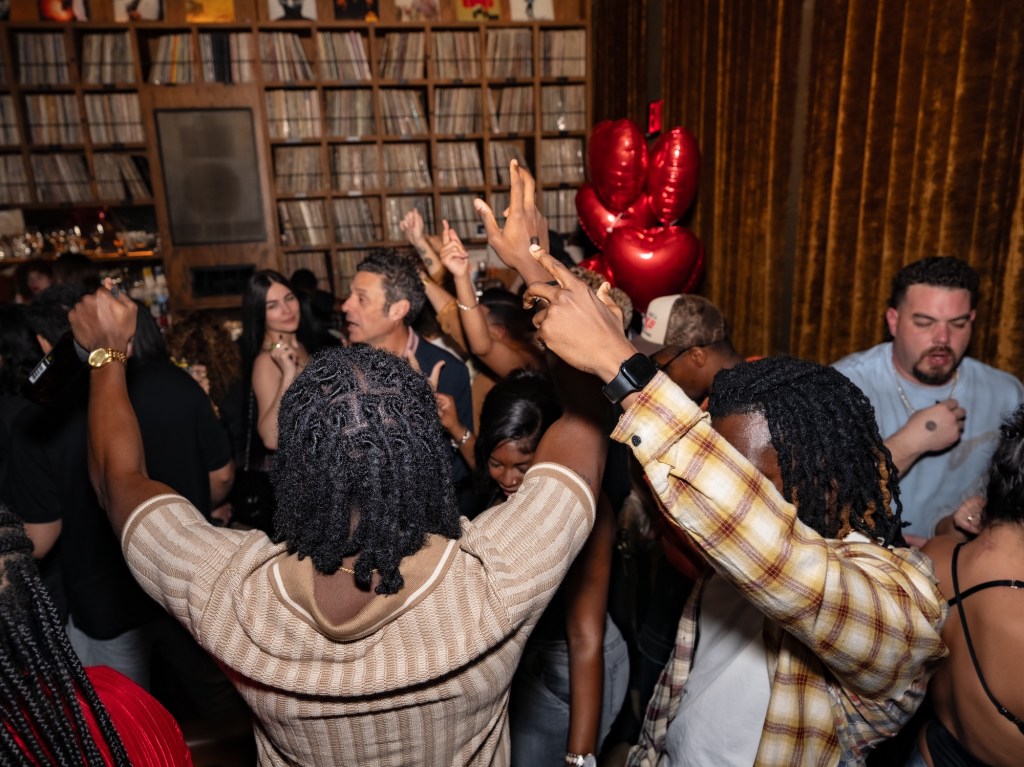
At Dante’s HiFi, Pancho de Pablo and Pose Retals have cultivated that feeling through Sheets & Pillows, their monthly R&B night that blends vinyl culture, deep cuts, and classic sing-alongs.
“We try to play ’80s, ’90s, and early 2000s R&B,” says de Pablo. Simple enough in theory.
In practice, the party has become a rare intergenerational gathering where twenty-somethings mingle comfortably with guests in their fifties. “The crowd easily ranges from 21 to the mid-50s,” says Retals. “It’s a special experience.”
When SWV’s “Weak” comes on, everyone seems to know the words, and when New Edition hits the speakers, the dance floor erupts.
And unlike many nightlife spaces, where age demographics are carefully segmented, these events thrive by uniting generations through a shared soundtrack. For de Pablo, whose home is packed with vinyl records, the appeal stems from a lifelong appreciation for Black music culture. Growing up in Chile, he was drawn to R&B, soul, funk, and hip-hop despite the limited representation of Black people in mainstream media.
Years later, that appreciation evolved into a mission to create spaces where the music could be celebrated authentically.
The lack of Black visibility in Miami’s music scene
For Pose, however, the mission is deeply personal. Growing up as a Black woman in Miami gave her a unique perspective on what was missing from the city’s cultural conversations.
“We need more cultural representation in Miami,” she says. Her observation touches on a complicated reality. Miami prides itself on being multicultural, yet many Black residents and creatives argue that Black culture often receives less visibility and investment than other cultural communities despite its enormous influence.
Pose points to what she describes as a pattern of Black erasure. “We need to preserve the culture,” she says.
She notes that many Miami residents embrace musical styles with Black roots without always understanding where those sounds originated.
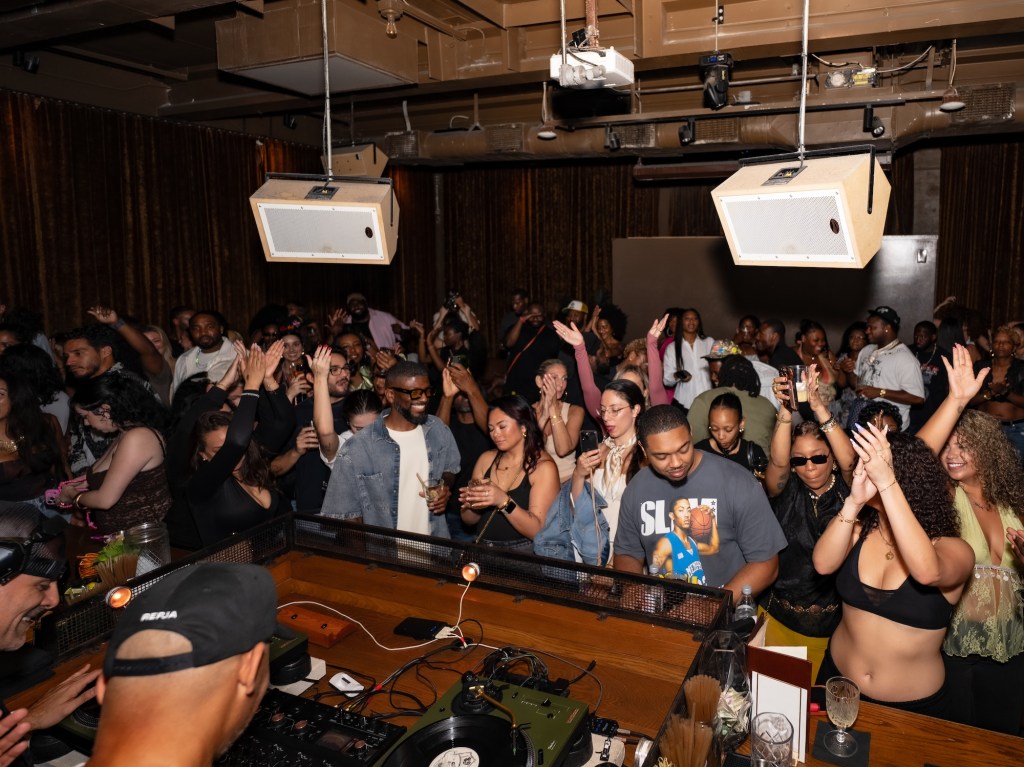
Sheets and Pillows photo.
That sense of cultural continuity also extends beyond the dance floor and into the music itself. In conversations around reggaetón, for example, there is often little acknowledgment of its deeper lineage, including its roots in Jamaican reggae and dancehall, as well as early pioneers like El General from Panama who helped shape its foundation. Much like salsa and merengue, which are often celebrated as distinctly Caribbean or Latin genres, these sounds are inseparable from African rhythms and diasporic musical traditions that have traveled, transformed, and reemerged across the Americas.
The issue isn’t appreciation. It’s acknowledgment. For Pose, preserving Black culture means creating spaces where people can celebrate the music while understanding the communities that created it. She believes Miami still has room to grow.
“I don’t even go to South Beach anymore,” she says, referencing exclusionary practices and beauty standards that many Black Miamians have long criticized. Instead, she has focused her energy on building spaces where people feel welcome. “We’ve created a safe space for people that love music and that R&B sound without being judged.”
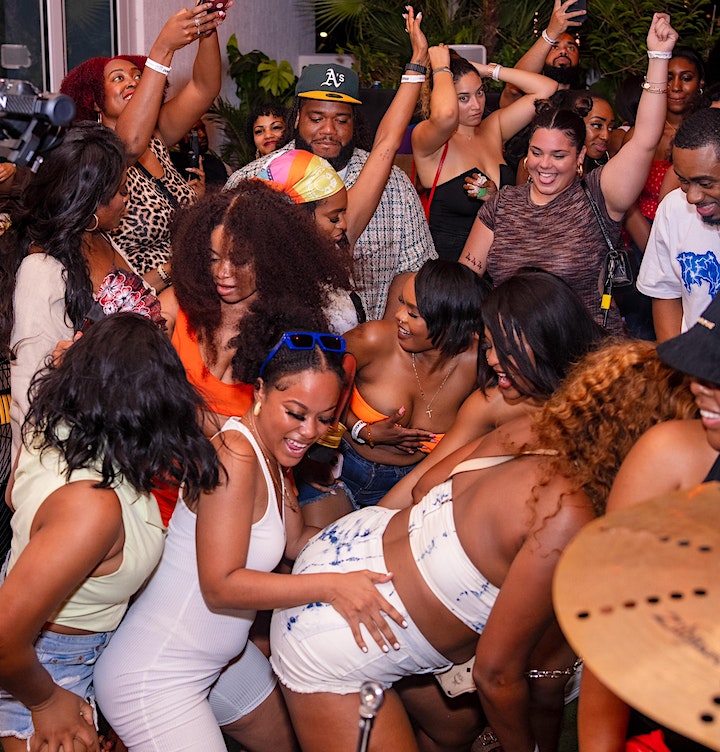
Stamped photo
That idea resonates throughout Miami’s emerging R&B and Afrobeats scene. At Arlo Wynwood, the monthly Afrobeats gathering Stamped: AYA X Friends has quietly become one of the neighborhood’s most successful recurring events. The hotel is now expanding that programming with Aura, an R&B-centered party launching June 13.
“What makes Stamped feel different is that people don’t just come for one night and leave,” says Kristen Daniels, director of marketing at Arlo Wynwood. “They return again and again. They bring friends. They celebrate birthdays. They know the DJs, the hosts, and the energy of the room.” The result feels more like a movement than a party. “You can easily come alone and make five new friends,” Daniels says.
“We’re not interested in simply adding a name to the lineup and calling it culture,” Daniels says. “You have to take the time to get to know your partners, understand their vision, and grow alongside them.” It’s a notable distinction at a time when conversations around diversity and representation have become increasingly politicized. Daniels believes cultural programming requires consistency rather than performative gestures. “Representation can’t only matter when it’s popular or easy,” she says confidently.
The responsibility extends beyond booking DJs. “If we’re going to benefit from culture being in the building, then we also have a responsibility to respect it and invest in it.” That means supporting the artists, DJs, entrepreneurs, and communities who create the culture in the first place. It’s one reason Stamped has continued to thrive. About a year and a half after launching the party, Daniels remembers standing on the rooftop overlooking a packed crowd moving together in rhythm. “That’s when we knew it had become bigger than us,” she exalts.
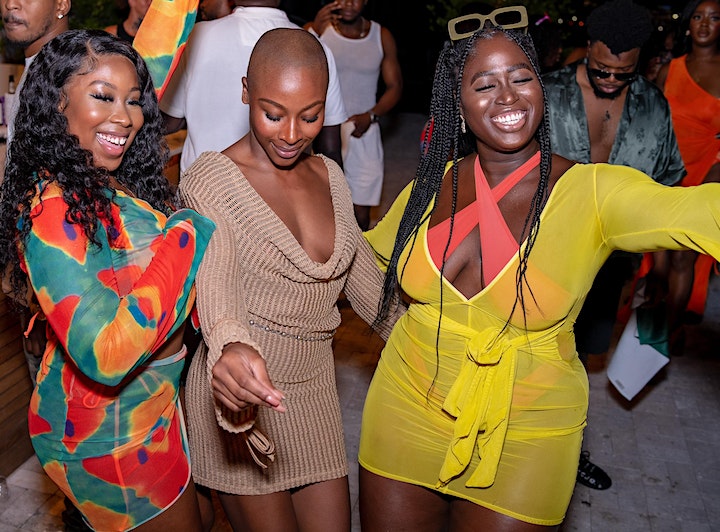
Provided by Stamped
The rise of Afrobeats
While many people use “Afrobeat” and “Afrobeats” interchangeably, the distinction matters. Afrobeat refers to the genre pioneered by Nigerian icon Fela Kuti in the 1970s. Afrobeats, meanwhile, is the contemporary West African sound that has become a global phenomenon through artists like Burna Boy, Wizkid, and Tems.
In Miami, the genre’s popularity reflects the city’s increasingly global identity. “Afrobeats brings joy, movement, and that global energy that gets people on their feet,” Daniels says.
R&B offers something different. “R&B brings the nostalgia and the sing-along moments.” Together, they create a powerful combination. People don’t just dance. They participate. They sing. They connect. They remember.
And perhaps most importantly, they belong. That may be the real story behind Miami’s R&B and Afrobeats renaissance.
These events aren’t succeeding because they’re trendy. They’re succeeding because they’re filling a void. In a city constantly changing, people are searching for places that feel familiar. Places where culture isn’t reduced to an aesthetic. Places where music serves as a bridge rather than a backdrop. The proof arrives every time the right record drops.
When the first notes of Faith Evans’ “Soon As I Get Home” send a room into a frenzy. When Whitney Houston turns strangers into a choir. When SWV’s “Weak” inspires a sing-along loud enough to compete with the speakers. For a few hours, age, profession, neighborhood, and social status disappear. Everyone becomes part of the same chorus. In a city often obsessed with exclusivity, that sense of belonging may be the most radical thing happening on the dance floor.
I Love R&B Saturdays. 8 p.m. weekly at the Polo Bar & Grill. 5590 W. Hallandale Beach Blvd., Hollywood; instagram.com/ilovernbsaturday.
Sheets and Pillows. 7 p.m. every second Tuesday of the month at Dante’s HiFi, 519 NW 26th St., Miami; 305-965-9975; danteshifi.com.
Stamped: AYA X Friends. 4 p.m. to 11 p.m once a month at the Arlo Wynwood, 2217 NW Miami Ct., Miami; 786-522-600; instagram.com/stampedinternational.