
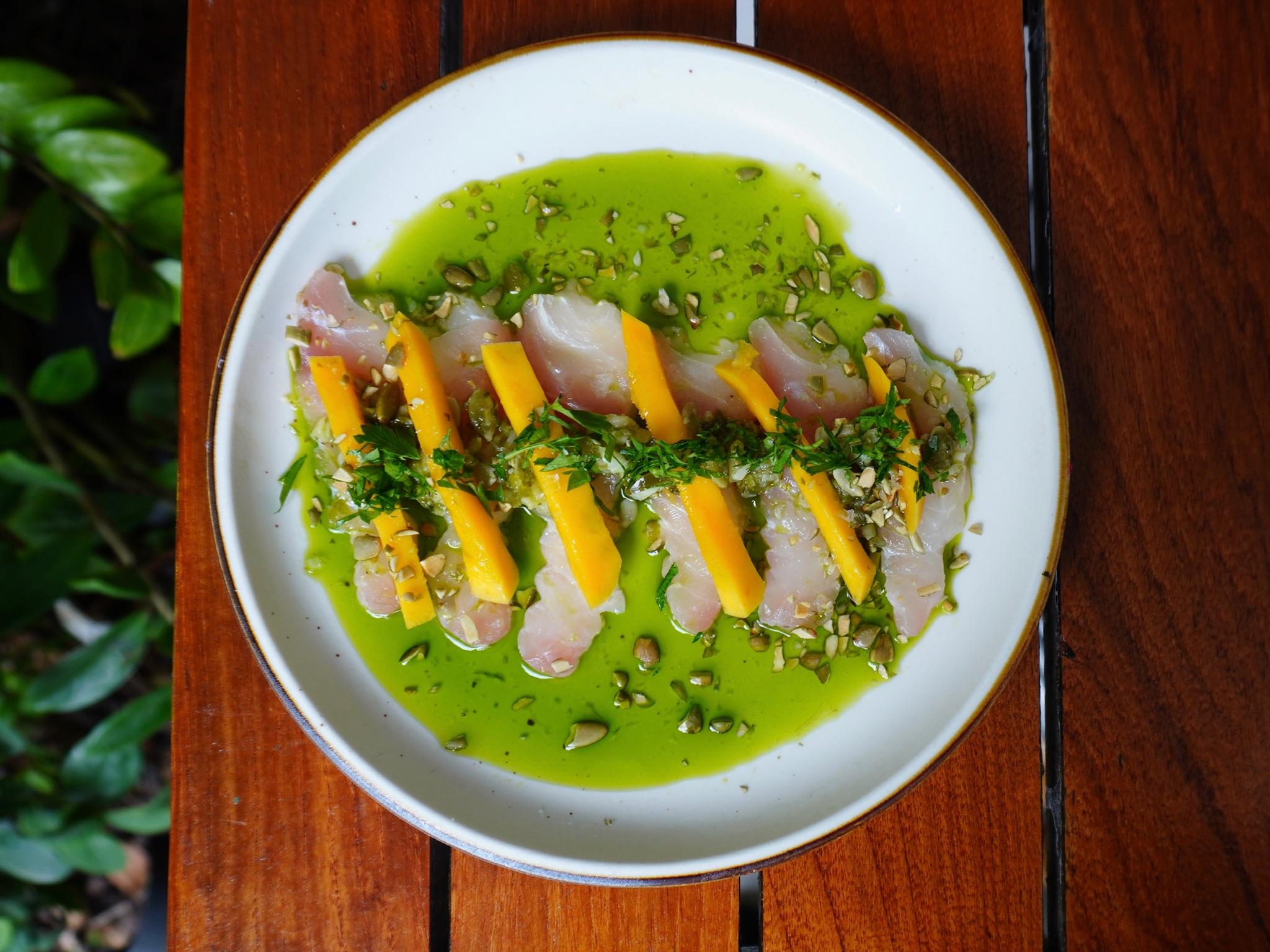
Photo by Rima Khalil

Audio By Carbonatix
Every summer in South Florida, mangos announce themselves before anyone has to say a word.
They fall onto sidewalks, pile up in neighbors’ kitchens, appear in office break rooms, and turn backyard trees into seasonal landmarks. For many in Miami, the mango is not simply a fruit. It’s a memory, a gift, a nuisance, a perfume, and, for a generation of chefs who helped put South Florida on the culinary map, a symbol of place.
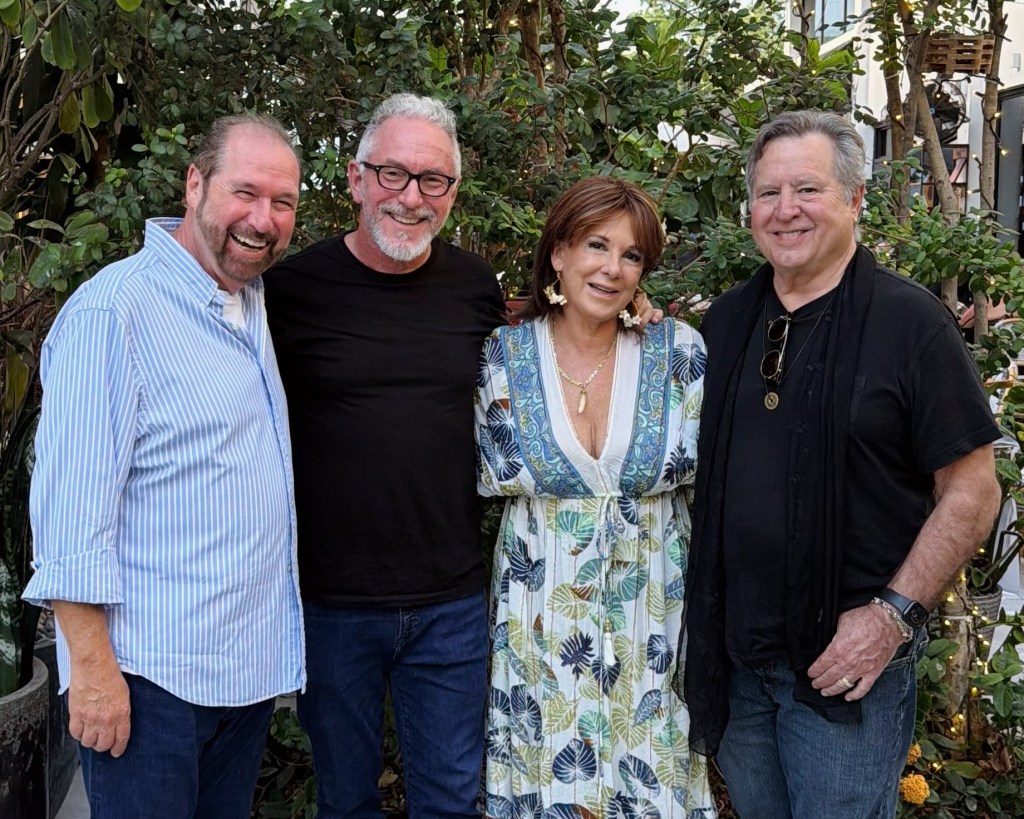
This past June, chef Michael Schwartz gathered some of those chefs at his restaurant, Michael’s Genuine, for a one-night Mango Gang dinner centered on the fruit that gave the legendary group its name. Chefs Norman Van Aken, Allen Susser, and Cindy Hutson joined Schwartz for an intimate five-course dinner built around mangos, storytelling, and the legacy of a movement that changed how Miami saw itself on a plate.
The dinner offered a larger question: Why mangos? Why did this fruit become the emblem of South Florida cooking? And why do they still carry so much meaning for the chefs who helped define Miami cuisine decades later?
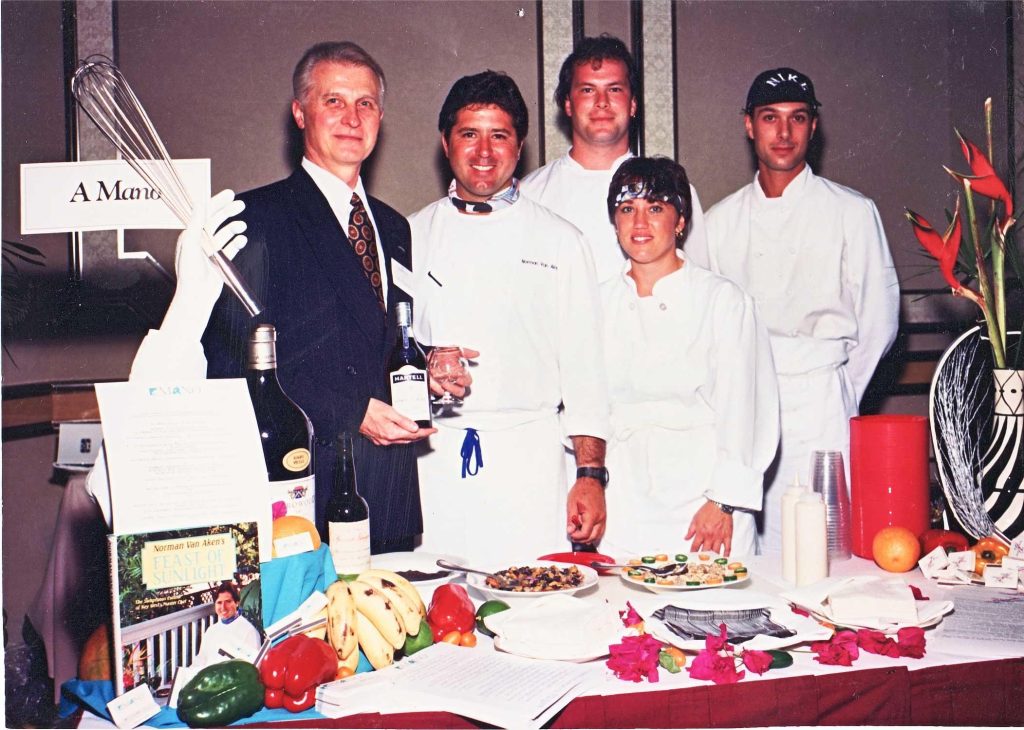
Provided by Norman Van Aken
The story of the Mango Gang
For Van Aken, the Mango Gang began with a cookbook idea. In the early 1990s, he and fellow chefs Allen Susser, Douglas Rodriguez, and Mark Militello were beginning to attract national media attention for their cooking. Rather than competing for visibility, Van Aken envisioned a collaborative cookbook celebrating the ingredients and flavors shaping South Florida cuisine.
The four chefs formed a company to make it happen. During a meeting with their attorney, Rodriguez suggested the name “Mango Mafia.” The lawyer immediately vetoed the idea. “And so we had mango already going,” Van Aken recalls. “Somebody said, ‘Gang.’ Mango with a G and the gang with the two Gs, it all kind of had a good poetic sound to it.”
The cookbook never happened, but the name began appearing in food media and soon took on a life of its own.
While the original Mango Gang technically referred to those four chefs, the term eventually came to describe a broader movement of South Florida cooks who were building a cuisine rooted in local ingredients and the region’s multicultural influences.
Among them was Cindy Hutson.
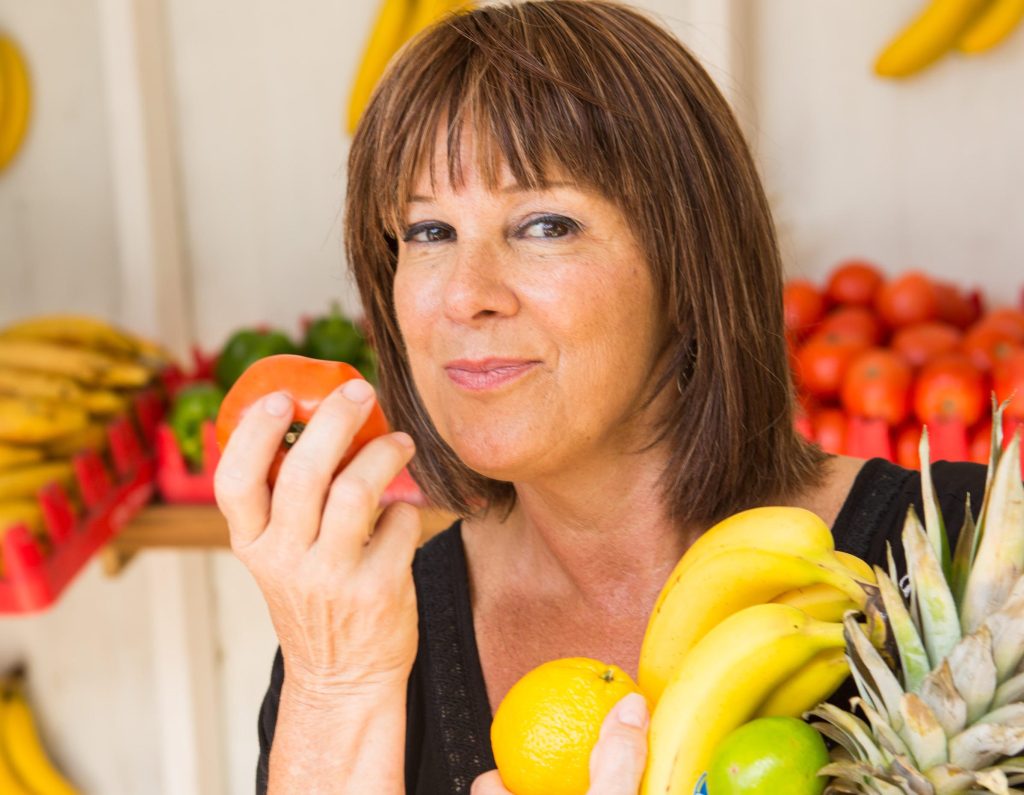
Cindy Hutson
The mango is more than a fruit
Before opening Norma’s on the Beach and later Ortanique on the Mile, Hutson spent years immersed in Caribbean food culture through her travels in Jamaica and her work importing Jamaican Blue Mountain coffee and specialty food products. Her restaurants helped introduce Miami diners to Caribbean flavors and tropical ingredients long before they became mainstream.
She was also an admirer of the chefs who would become known as the Mango Gang. “I was such an avid fan that I began cooking and creating, and my mind went into the same kind of spaces their mind was in when it came to food and putting it on a plate,” Hutson says.
What united these chefs was never simply the mango itself. It was what the mango represented.
At a time when fine dining often looked to France, New York, California, or Italy for inspiration, they looked around South Florida. They found mangos, yuca, malanga, boniato, local seafood, tropical fruits, Caribbean flavors, Latin American influences, and the mix of cultures that made Miami, Miami. “It provided a prism, a focus point for people who are purposefully positioning their cooking around local ingredients and the history of Florida,” Van Aken says.
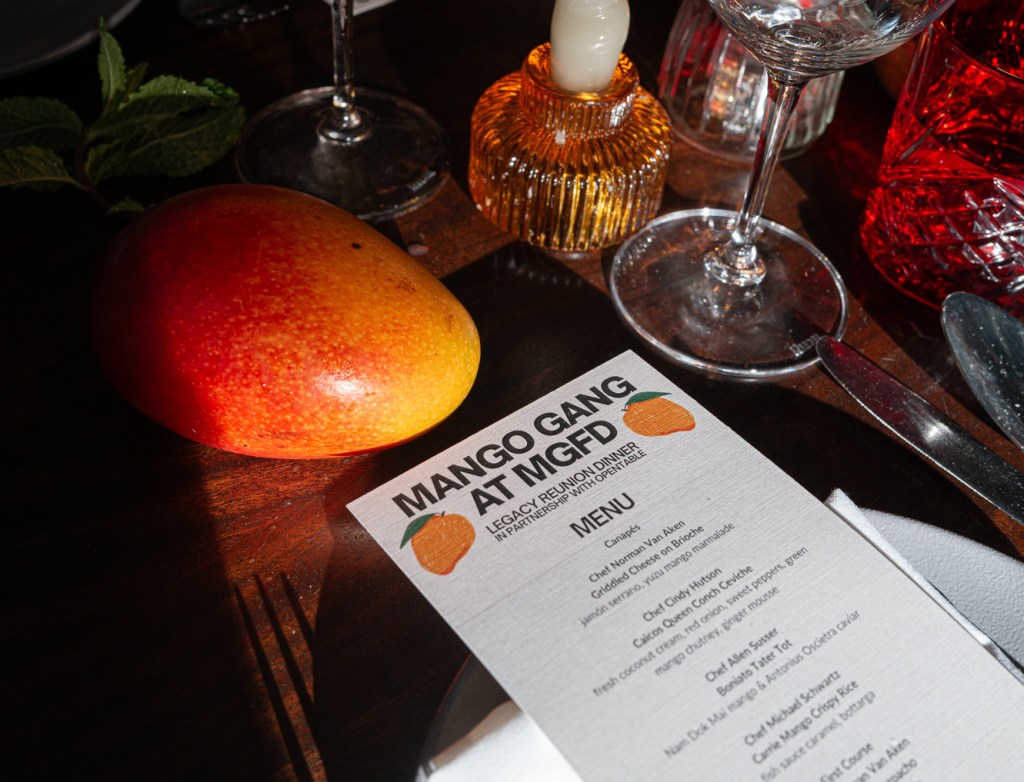
Photo by Giovanny Gutierrez
The fruit of the people
Long before the Mango Gang became synonymous with South Florida cuisine, the mango was already part of daily life here.
For Susser, the fruit became a lifelong fascination. Today, he is putting the finishing touches on a new book, “Feasting with Mangoes,” which explores Miami and the Caribbean through the lens of the fruit.
“The mango was always the center of the conversation,” Susser says. “What began as a chef’s fascination with a local ingredient has become a lifelong journey.”
For him, the fruit helped South Florida cuisine find its identity. “When the Mango Gang began gathering, South Florida cuisine was still finding its identity,” he says. “The mango became one of the ingredients that helped define who we were and where we lived. It wasn’t imported inspiration. It was growing in our backyards.”
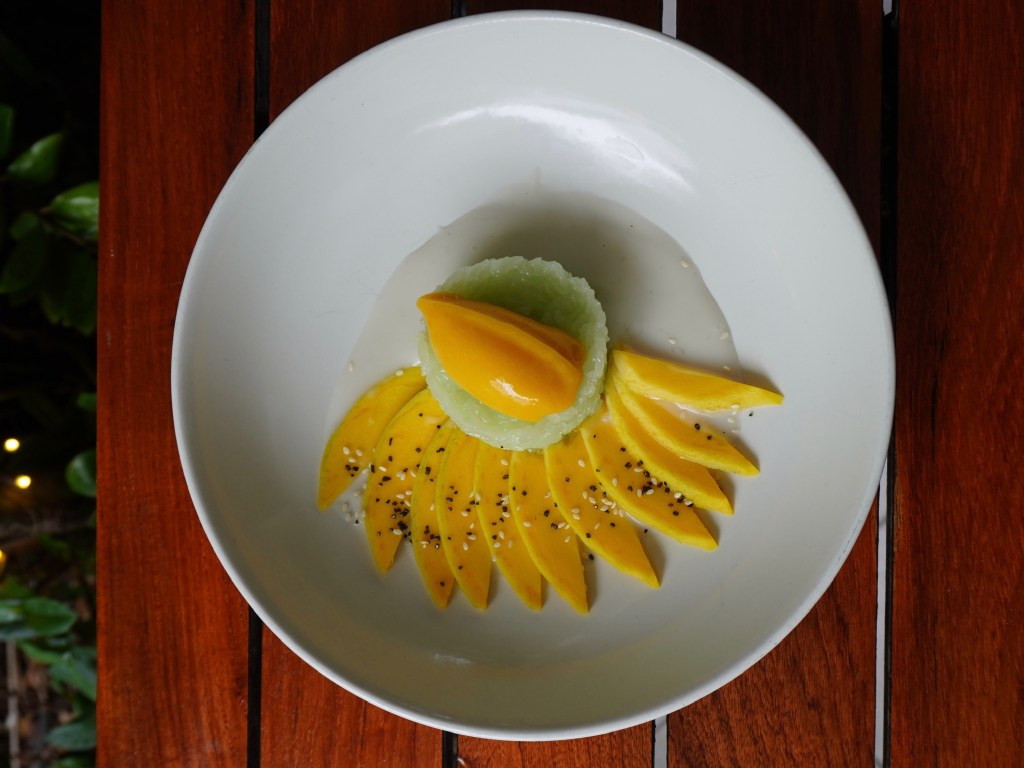
Photo by Rima Khalil
Hutson falls for the mighty mango
For Hutson, the relationship began during her travels through Jamaica. One afternoon, while sitting on a veranda in the Blue Mountains, a coffee grower handed her a Bombay mango and encouraged her to taste it. “It was juicy, sweet, and not too stringy,” she recalls. “That memory was beautiful.”
The experience sparked an obsession. She began tasting every variety she could find, learning which worked best in savory applications, which leaned sweet, and which could bridge both worlds.
Back in the ’90s, those discoveries began finding their way onto her menus. “Mangos were bright, flavorful, and at that time an underutilized recipe ingredient,” Hutson says. “Miami was ethnically diversified, and mango flavor brought together a cuisine that was identifiable to all regions of the Caribbean, South America, and Asia.”
The Genuine Hospitality Group photo
The fruit that defines Miami
Van Aken sees the fruit through a slightly different lens. Quoting food writer Waverley Root, he notes that the mango has long been known as the “king of fruits.” In ancient Sanskrit, he adds, the word for mango translates to “fruit of the people.” “No single ingredient represents a cuisine as multicultural as ours,” he says, “but it is undeniably broadly loved.”
What moves Van Aken most isn’t necessarily what happens in restaurant kitchens. “Mangos in a basket or wheelbarrow sitting on the side of many neighborhood roads at this time of year with a handwritten sign that says ‘Free Mangos’ make us feel like the world is a better place.”
For Schwartz, who is hosting the reunion dinner, mango season captures something uniquely South Florida. As the traditional growing season for ingredients like tomatoes, peppers, eggplant, and cucumbers comes to an end, local mangos take center stage. “There’s an energy and excitement around mango season that feels distinctly Miami.”
South Florida’s relationship with the fruit is unique. It is one of the few places in the continental United States where mangos thrive, and summer marks the peak of the local harvest.
“Mangos deserve to take center stage during the season,” he says. That may be why the mango still matters. It is not just sweet, tropical, or seasonal. In Miami, the mango is tied to the place. It is a reminder that some of the city’s most important culinary ideas did not arrive by plane from New York or Los Angeles. They grew here.
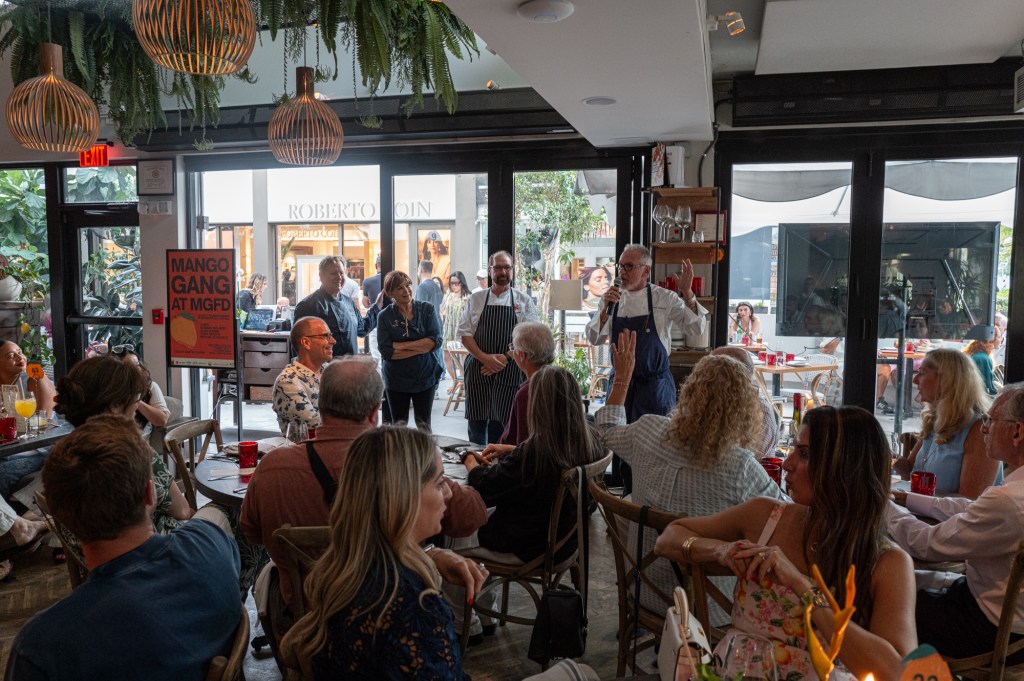
Photo by Giovanny Gutierrez
Keeping the legacy alive
The dinner at Michael’s Genuine is built around that same sense of affection: for the fruit, for the city, for the people who were there at the beginning, and for the diners who remember it.
More than three decades after the original Mango Gang first took shape, the chefs who helped define South Florida cuisine came together once again around the fruit that became their unofficial emblem. The dinner is a celebration of mango season, but it is also a reminder that some of Miami’s greatest culinary traditions didn’t start in famous food capitals.
They started in neighborhood backyards, beneath mango trees, with chefs who believed the best ingredients were already growing here.
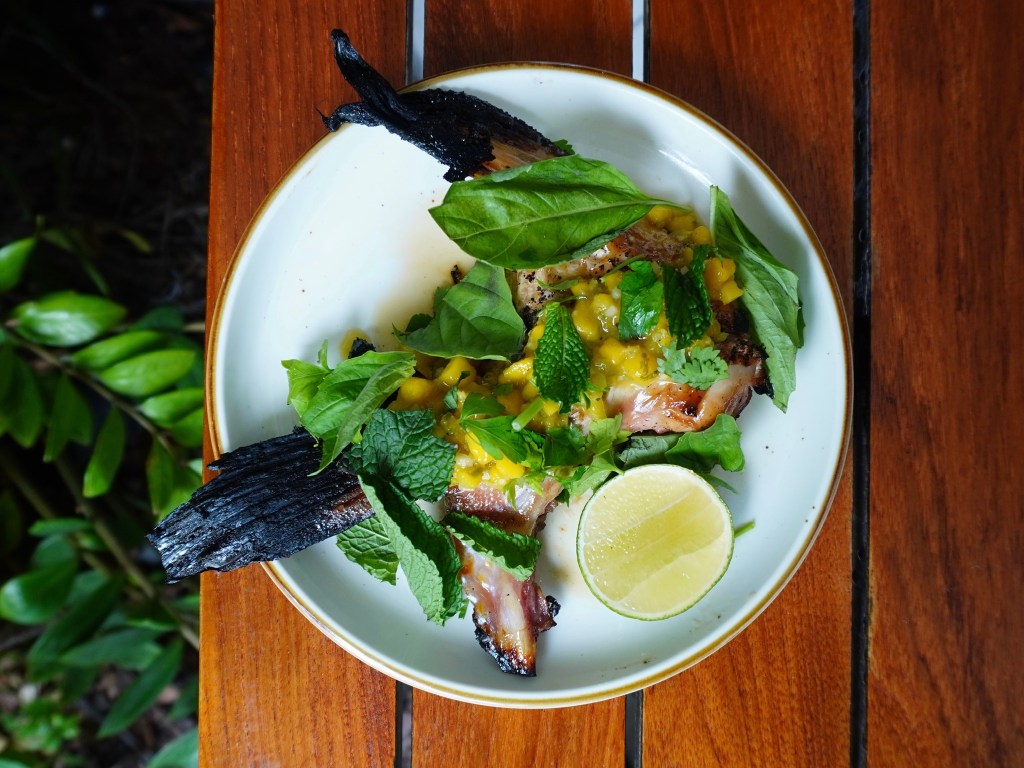
Photo by Rima Khalil
Still time to celebrate mango season
The one-night Mango Gang dinner may be over, but mango season isn’t.
Through the end of the season, Michael’s Genuine is continuing to spotlight locally sourced Florida mangos across its menu. Rather than sourcing the fruit through produce distributors, the restaurant gathers mangos from neighbors, employees, and friends with overflowing backyard trees, staying true to the hyperlocal philosophy that inspired the original Mango Gang.
Guests can enjoy dishes like red snapper crudo with local mango and the restaurant’s mango sticky rice, along with the “Mango Gang” cocktail, inspired by a mango lassi, or the zero-proof “Modest Mango” mocktail.
For anyone who missed the reunion dinner, it’s still possible to taste the fruit that helped shape Miami’s culinary identity. Those interested in the dinner can look forward to the next Mango Gang celebration in Miami in 2027.
Michael’s Genuine. 130 NE 40th St., Miami; 305-676-0894; michaelsgenuine.com.