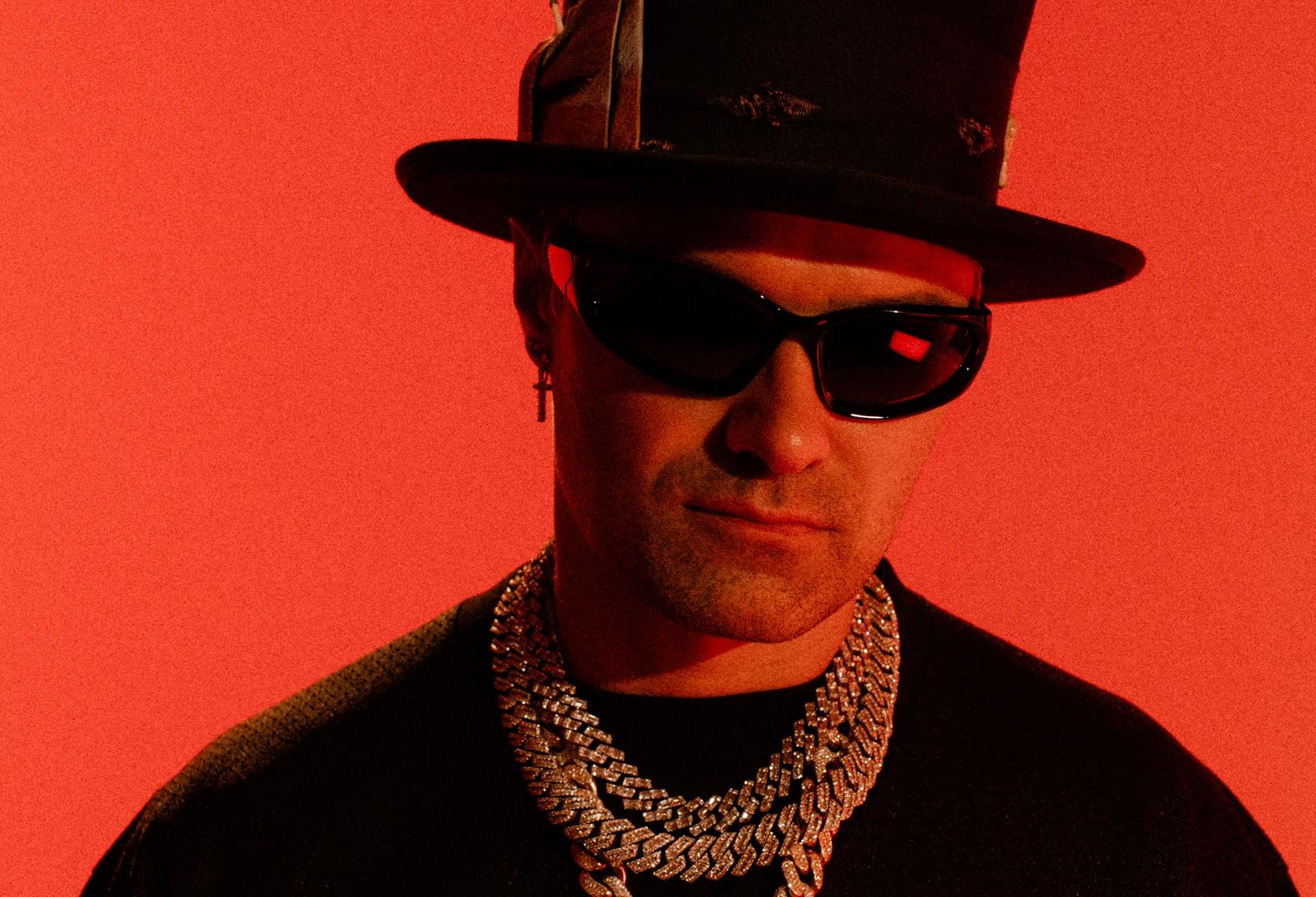
Alec Monopoly photo

Audio By Carbonatix
Alec Monopoly has never been interested in staying in one lane for too long. What began as an art practice centering on graffiti has since expanded to include forays into sculpture, music, and brand collaborations. But street art is still Monopoly’s primary passion. It still defines the way he sees himself, even as the scale of his work has changed dramatically.
Before gallery partnerships and international activations, Monopoly built his name in a medium where success depended on painting something that would stop people in their tracks. During the financial crisis of the early aughts and 2010s, as his star rose, he painted the Monopoly Man on walls around a struggling city.
“When you see a big Monopoly Man, it’s a statement, and it really catches your eye,” he says.
It was clever branding, but Monopoly’s growth has never been calculated in the corporate sense. He talks less about strategy than he does about taste, and the things he chooses to make tend to come from the worlds he already loves.
“I love cars, I love fashion, I love watches,” he says. “So most of the collaborations I do are from stuff I’m already passionate about.”
That ethos explains his latest venture, a private Miami Race Week event at Eden Gallery inside The Setai Miami Beach, where he’ll debut new works and perform a special DJ set. It’s not his first project involving F1; in 2017, he collaborated with Swiss luxury watchmaker TAG Heuer on the special edition Formula 1 Alec Monopoly timepiece. Long before F1 planted its flag in Miami, Monopoly had fallen in love with the motorsport in Monaco, where the Grand Prix dates back to 1929.
“I’ve been doing F1 in Monaco for years now, almost ten years,” he says, adding that the glamour of the locale is part of the allure.
“Formula One is a very interesting sport because it attracts such wealthy fans,” he says. “You fly into the private jet airport, and it’s full of jets and this jet-set crowd.” (Monopoly’s fascination with the aircraft was evident at Basel last year, when he debuted “Flying to a Happy Place,” his multi-site exhibition featuring life-size jet sculptures and large-scale installations.)
Still, as Formula 1 has grown into a marquee American event, with races in Miami and Las Vegas, Monaco’s excesses haven’t been able to compete against sentimental biases. “Miami is my favorite because [it’s] kind of like my hometown,” Monopoly says.
Miami Has Grown With Formula 1
The race’s arrival in Miami five years ago — and its rapid ascent as an event that nips at Art Basel’s heels in the number of parties and satellite events it spawns — coincides with the city’s broader transformation into a global cultural and entertainment capital. Monopoly saw the seeds of that transformation first-hand in Wynwood years ago.
“It was beautiful back then,” he says. “Beautiful and pretty gnarly.”
He remembers a Wynwood that felt slightly dangerous and unpredictable, but offered a level of freedom that has become harder to find in its more polished iteration.
“There were a lot more collaborations between artists,” he remembers. “We would get down on a wall — it would be four or five different artists from New York or L.A. — and we’d all be working together.”
Wynwood is decidedly more commercial now, with real estate and hospitality ventures replacing warehouse galleries, and those tides of transformation are expanding across the city.
“We’ve seen Miami change before our eyes, from a place where old people would come to spend the winters, to a global hub of art and music and culture,” he says. One aspect that remains the same: Monopoly maintains personal connections with Miami’s movers and shakers, particularly David Grutman and the Papi Steak circle.
“Those are my boys,” he says. “From day one.”
Turntables as Canvas
Music is part of that cultural ecosystem, too, and as it turns out, it was working on one of his visual pieces that got Monopoly to dust off his decks.
“I was using the turntables as the canvas,” he says. “And then I was like, you know what? I’m just gonna plug the turntables in and start DJing a little bit again.”
The side pursuit is part of his wider practice these days. Touring as a DJ has given him access to cities he might not otherwise have visited, and he always uses those opportunities to leave a visual mark.
“It’s opening up the world to me — for my art as well, not just the music,” he says.
Those passions continue to converge. Monopoly has already created F1-inspired works and sculptures, and he speaks openly about wanting to take that relationship even further. It feels like a natural step for an artist who’s made a career of refusing to choose between disciplines, instead opting to blend them into something unmistakably his own.
“The whole car would be amazing,” he says.
Maybe sometime in Monaco, but hopefully in Miami.
Alec Monopoly. 6 p.m. Friday, May 1, at The Setai Miami Beach Hotel, 2001 Collins Ave., Miami Beach; 646-509-6353. Admission is free with RSVP via edenart.com.