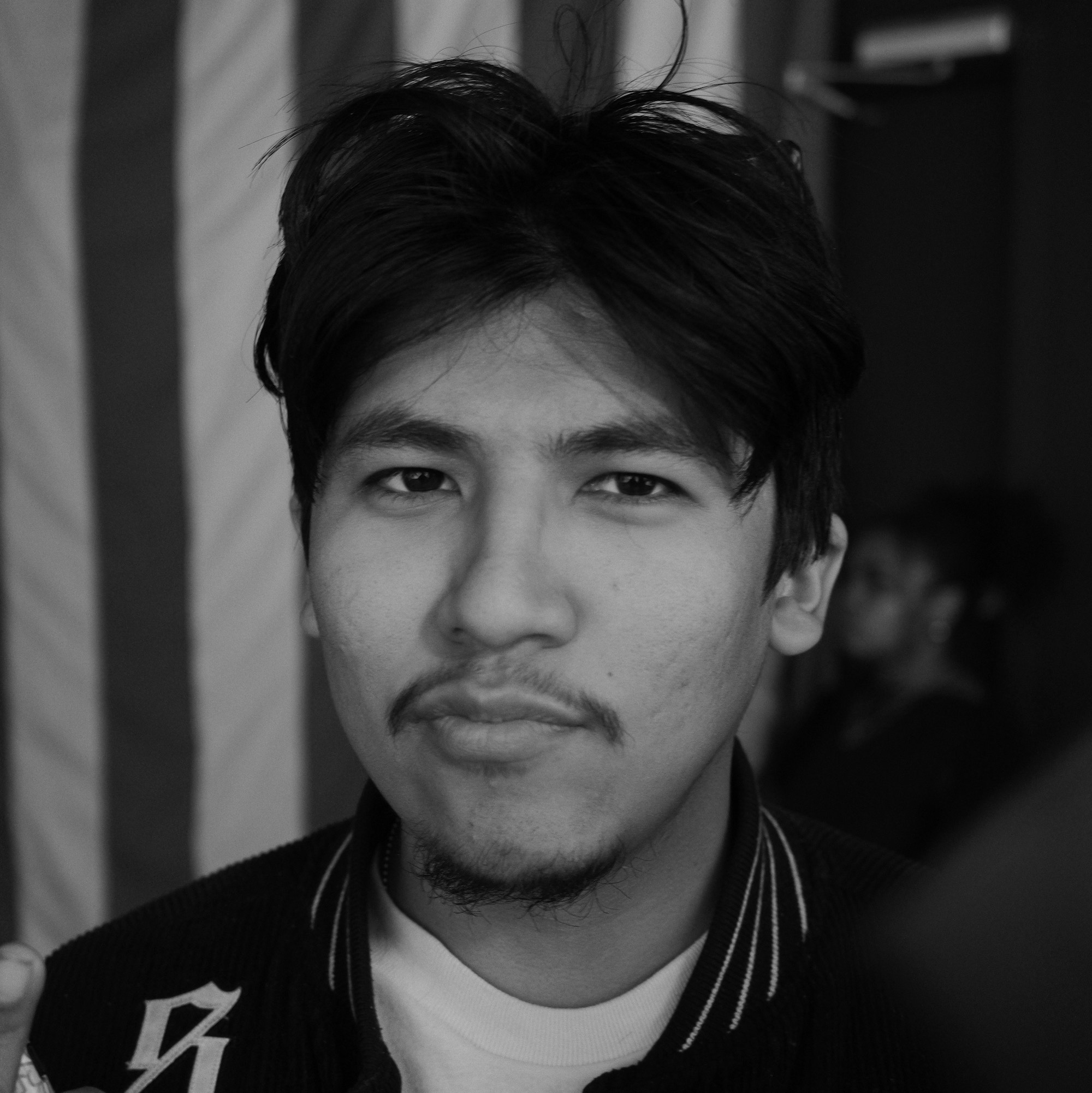

Nausea photo

Audio By Carbonatix
Some people spend years collecting sneakers. Others chase after vintage guitars or rare cars. Executive producer and artist manager Leandro Garcia flies across the country to rescue 40-year-old synthesizers.
When an original Roland TR-808 drum machine surfaced for sale in Los Angeles, Garcia didn’t hesitate. The seller refused to ship it, worried the legendary drum machine might be damaged in transit. So Garcia booked a flight, rented a car, spent the night in an Airbnb, picked up the machine himself, and carried it back to Miami. For most musicians, that sounds excessive. For Garcia, it’s simply part of the job.
“If you have the money, sometimes they’re just not available,” he says. “And if they are available, they’re on the other side of the world.”
That kind of obsession has become the foundation of one of South Florida’s most unexpected musical stories. Together, Garcia and vocalist and producer Emilio Corvison, better known by his artist name, Nausea, aren’t just releasing freestyle music. There is a genuine attempt to revive an entire genre that many assumed had been permanently relegated to old school radio blocks and nostalgic roller rink nights. Their debut single, “We’re Bringing Freestyle Back,” isn’t subtle about its intentions. Neither are they.
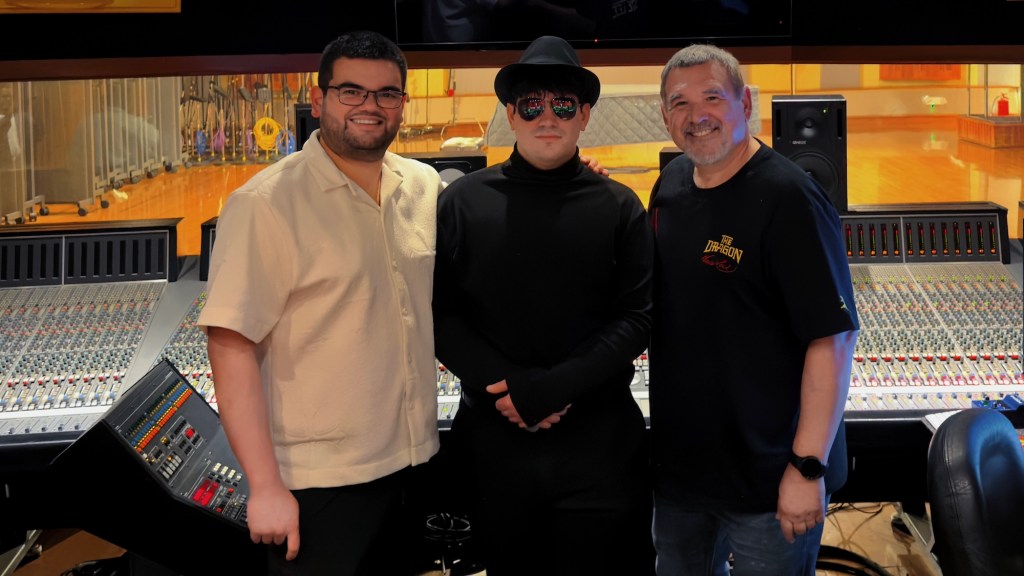
Nausea photo
Growing up in Miami meant freestyle was impossible to ignore. For Corvison, the soundtrack of childhood came from Power 96, neighborhood events, and Monday freestyle nights at Super Wheels, where booming drum machines echoed through the skating rink.
“The drums and the beats were something different,” Corvison says. “You don’t hear it a lot anymore, and that’s what made me fall in love with it.”
Unlike many artists inspired by vintage music, Corvison never wanted to imitate freestyle. He wanted to understand it. That curiosity eventually connected him with Garcia, who quickly developed an obsession of his own, although his fascination wasn’t limited to the songs. It was the machines behind them.
“He introduced me to freestyle about four years ago,” Garcia says. “That’s when I realized, ‘I love this.'”
Since then, Garcia has transformed into something between a producer, archivist, engineer, and vintage electronics technician. Walk into his studio, and you’ll find instruments that helped define the sound of the ’80s: a Roland Jupiter-8, Juno synthesizers, a Prophet-5, a Minimoog, and original drum machines. None of them arrived easily.
Finding vintage equipment has become a years-long scavenger hunt involving estate sales, garage sales, online auctions, international shipping, and cross-country flights. Paying for them has been another challenge entirely. Vintage synthesizers rarely lose value. If anything, they’ve become more expensive as younger musicians rediscover analog production.
Rather than giving up, Garcia created his own funding strategy. “I do estate sales, garage sales, auction lots,” he says. “I look for hidden treasures.”
The approach has financed years of collecting. But buying the equipment is only half the work. Because many of these instruments are now more than four decades old, Garcia personally restores them himself. Armed with oscilloscopes, service manuals, and an electrical engineering background, he replaces failing capacitors, recalibrates oscillators, and tunes each synthesizer back to factory specifications before it’s ever used in a recording session.
“I truly believe every analog synthesizer has a soul,” Garcia says. “When you turn it on, it breathes.” It’s a philosophy that sounds almost spiritual. Then again, listening to Garcia describe the machines, it’s obvious he doesn’t see them as collectibles. He sees them as collaborators.
Modern recording software can reproduce almost any vintage sound with convincing accuracy. Garcia knows that. He just doesn’t believe it captures the feeling. “The human mind likes imperfection,” he says. “Everything today sounds too perfect.”
That belief shaped every decision behind “We’re Bringing Freestyle Back.” Instead of using modern shortcuts, Garcia and Corvison immersed themselves in the recording techniques of freestyle’s golden era. They studied how records were mixed, how they were recorded, how engineers approached tape, and how imperfections became part of the music.
“We recorded everything onto two-inch tape,” Garcia says. “There’s no undo. There’s no redo.”
For Corvison, authenticity meant more than simply referencing the past. He wanted listeners to question whether the song had actually been recorded in the ’80s. Apparently, many have. “People keep telling me it’s an ’80s song,” Corvison says with a laugh. “I have to tell them, ‘No. It came out in 2026.'”
Reviving freestyle isn’t just about satisfying longtime fans. It’s about convincing listeners who weren’t even alive during the genre’s commercial peak. “It’s hard,” Corvison admits. “The older generation already has the music they grew up with. The younger generation wants something new.”
His solution wasn’t to modernize freestyle beyond recognition. Instead, he carefully borrowed small details from contemporary production. Subtle textures, familiar drum sounds, and sonic choices younger audiences already associate with modern pop and hip hop. The foundation, however, remained unmistakably freestyle.
The gamble appears to be paying off. The single has spread across TikTok while simultaneously finding a home inside the very spaces where freestyle originally flourished: roller rinks. “I took the song to DJs at Miami Roller Rink,” Corvison says. “People loved it.”
Soon, other DJs were requesting copies. According to the duo, roller rinks across the country have since begun adding the track into regular rotation. That’s exactly where they hoped it would end up.
“The goal isn’t just the rink,” Corvison says. “It’s bringing people together.”
Perhaps the biggest surprise hasn’t been the streaming numbers. It’s who’s been listening. The duo says members of pioneering freestyle acts have begun reaching out after hearing the record, artists they grew up idolizing. For Corvison, those conversations have been surreal.
“People I looked up to are messaging me,” he says. “They want to work together.”
Their next single, “Find Your Way to Me,” was recorded at Miami’s legendary Criteria Studios and continues their commitment to authentic freestyle production. They’re already planning vinyl releases, cassette editions, lyric booklets, and collectible packaging. Because for Garcia and Corvison, the music doesn’t end when someone presses play, but when someone holds it.
Freestyle has never truly disappeared. It simply stopped producing new stars. Garcia and Corvison are betting that the time is right.
In an era when vinyl sales continue to climb, analog gear commands premium prices, and younger audiences romanticize decades they never experienced, they believe freestyle finally has another chance. Whether they’re right won’t be decided by one song. It’ll be decided by whether more artists follow.
As our conversation winds down, I ask if there’s anything they’d like to leave readers with. The answer comes almost immediately. “We want more people to make freestyle.”
It’s a simple mission: not to preserve the genre inside museums or nostalgia playlists, but to make sure it’s still alive enough that someone else falls in love with it the way they once did.