
Photo by Edysmar Diaz-Cruz

Audio By Carbonatix
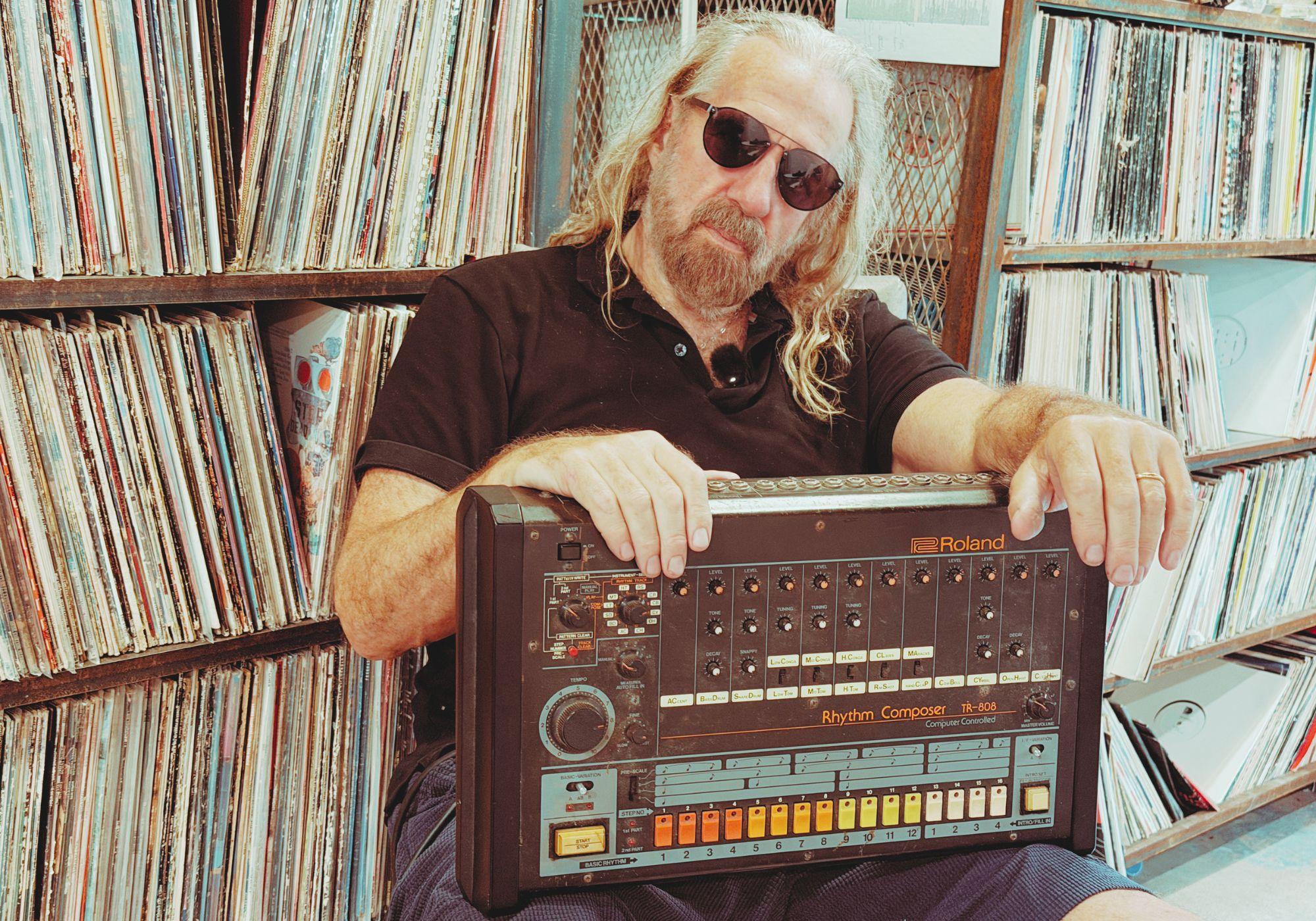
There is one instrument that helped shape the sound of modern hip-hop and played a crucial role in the development of Miami bass: the Roland TR-808.
The Japanese analog drum machine, initially considered a commercial flop, ultimately became a highly influential piece of music technology. Manufactured by Roland Corporation between 1980 and 1983, only about 12,000 units were produced. At a time when listeners were accustomed to the warmth and imperfections of live drummers, the 808 sounded too futuristic and artificial. History proved the skeptics wrong.
The list of artists who were early adopters stretches from Japanese electronic pioneers Yellow Magic Orchestra and soul icon Marvin Gaye to legendary producer Arthur Baker, whose work with Afrika Bambaataa & the Soulsonic Force helped redefine hip-hop while laying the groundwork for Miami bass. We recently sat down with the longtime Miami resident at his home studio to discuss the drum machine’s unexpected legacy. Baker even produced a documentary about the 808 featuring everyone from Pharrell Williams and the Beastie Boys to Phil Collins, New Order, Questlove, Damon Albarn, and David Guetta, among many other influential artists. So, if there’s anyone to talk to about all things 808, it’s him.
Sitting inside Baker’s studio — a space that feels like Ali Baba’s cave, overflowing with treasures for melomaniacs — we found him waiting with a Roland TR-808 carefully perched on a high chair, as if it were another participant in the conversation we were about to indulge in. Before the interview officially began, Baker was quick to clear up one point surrounding “Planet Rock,” the Afrika Bambaataa & the Soulsonic Force classic he produced: the iconic drum machine heard on the record wasn’t even his, and it wasn’t the one sitting beside us that rainy summer afternoon.
He explained that he rented the TR-808 from a musician who answered a classified ad in the Village Voice. “Village Voice… that was our internet, that was our Instagram. If you were a producer looking for a drum machine, you would go to the Village Voice… It really was how people communicated.”
Baker says there wasn’t some grand artistic revelation behind choosing the TR-808. The person who replied to the ad simply had that drum machine. Before committing to the rental, Baker did his due diligence and went to a music store to test the 808. What convinced him wasn’t the now-famous booming kick drum. “The percussion sounds I thought were really cool. They sounded like [the real] things, but they didn’t sound exactly like them, and it just gave it a modern take on all of it, very spatial, very new sounding.”
Ironically, neither Baker nor Herb Powers, the mastering engineer, realized just how powerful the machine’s low end really was until an early acetate literally blew speakers during a playback test at a record shop.
Although “Planet Rock” introduced many producers to the TR-808, Baker is careful not to take sole credit for what happened next.
He points instead to Miami producers who transformed the machine’s kick drum into the signature low-end rumble that defined Miami bass. “David Noller in Dynamix II with his partner Todd did a record called ‘Give the DJ a Break.’ They sampled it, tuned it, played a bass line with it. And that was very important in the creation of Miami bass…”
Baker says the influence of “Planet Rock” and “Looking for the Perfect Beat” extended well beyond the drum machine itself. “There were lots of elements, including the 808, but not exclusive to the 808… it was that whole vibe of “Planet Rock” and “Perfect Beat,” used by Luke and Pretty Tony and all the guys in Miami.”
So could Miami bass have existed without the TR-808?
Baker doesn’t hesitate. “No. No, there would be no Miami bass without the 808. Now, I’m not saying it was my use of the 808 because it was Dynamix II and other people who built on what we did first… but without the 808, there would be no Miami bass for sure.”
More than four decades later, Baker believes the same mindset that made producers embrace the TR-808 continues to shape popular music. “The type of mind who doesn’t go, ‘That doesn’t sound like real drums.’ You’d go, ‘That doesn’t sound like real drums, and I want to use it.'” But as far as technical tips go, Baker jokes: “Technical. Forget it. Everyone I know who uses the 808 just sort of messes around with it. They never really read the manual. I never read the manual. I think probably Egyptian Lover can recite the manual by heart.” [The LA musician has two shows in Miami this weekend, one at Floyd on Saturday, Aug. 8 and another one at Technique Records on Sunday, Aug. 9.]
For Baker, that willingness to experiment is why the drum machine has outlived nearly every other piece of studio gear from its era. “The sound of the 808 will never leave pop music… Bad Bunny, Bruno Mars… you hear it.”