
Photo by Celia Almeida

Audio By Carbonatix
If you’ve driven down 17th Ave. past LoanDepot Park (Marlins Park if you’re nasty) over the past two weeks, you’ve likely encountered congestion and spotted at least two of these sights: police directing traffic, baseball fans crossing the road, roosters crossing the road.
You might have also seen Daniel.
You’d know if you’d seen Daniel. Standing on the corner of 17th Ave. and NW Third St. in a reflective visibility vest, he holds up a sign offering parking for $50 during the World Baseball Classic (WBC). If you were standing behind Daniel, you’d see the back of his sign offering another price — $40 — to meet fluctuating demand. And if you were standing behind Daniel, you’d best get out of the way, because when a prospective client waves him down, he jumps on his bike, zips right up Third, then hangs an immediate left on 17th Ct. to escort his customers to the front yard where they’ll park for the duration of the game.
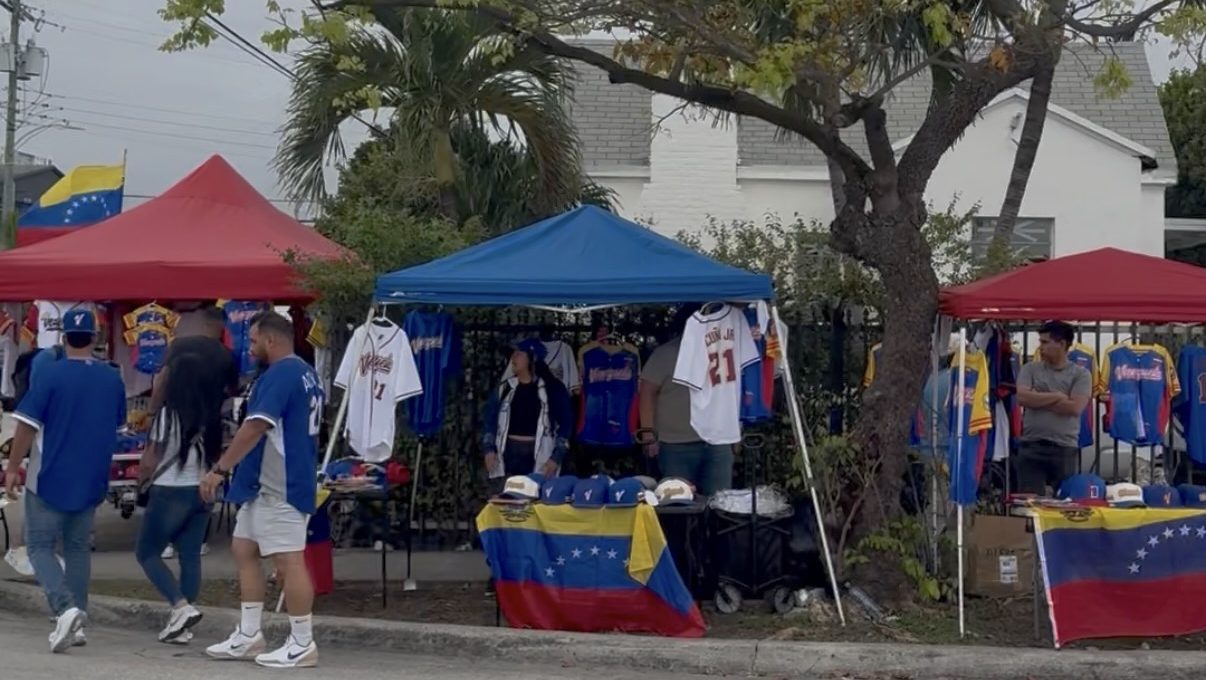
Daniel is just one of the many Little Havana entrepreneurs for whom the quadrennial WBC is big business. Just up the road, his neighbor, Adela Bobadilla, lures customers not with a bike, but with water bottles, soda, and homemade meals.
It’s a particularly successful hustle when Nicaragua is playing. “I’m from Honduras, but we have similar gastronomy,” she says. “In Honduras, we call it yuca con chicharron, and they call it vigorón (boiled yucca topped with pork rinds)…They’re walking by, and you offer it, and they just immediately turn around. People who didn’t park here just come and eat.”
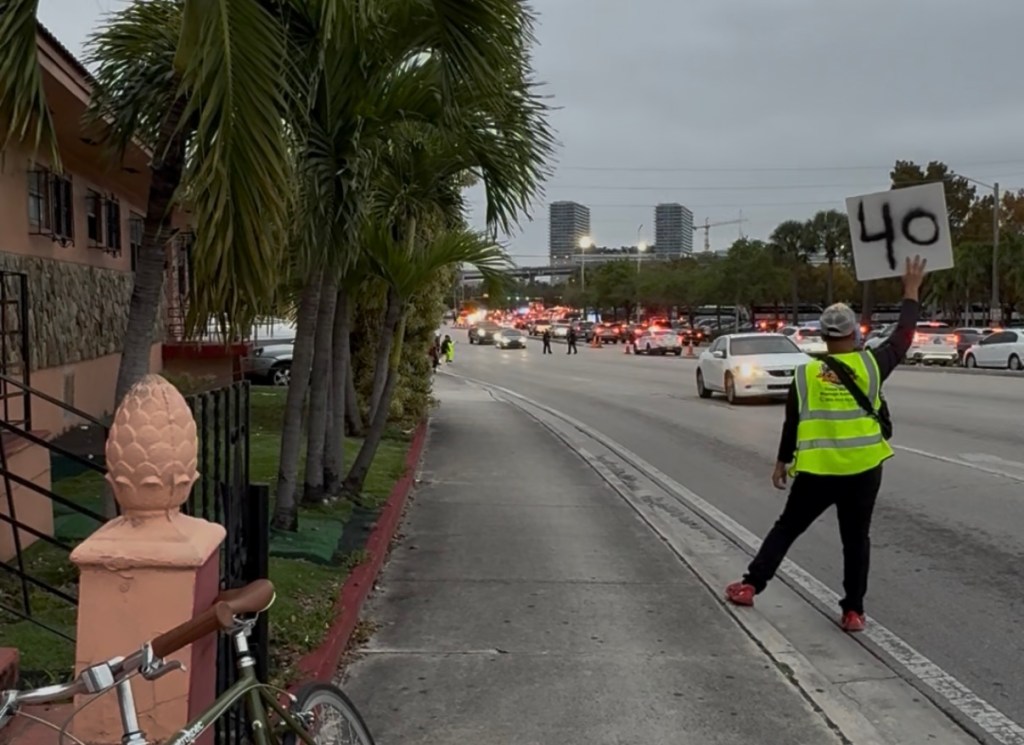
Photo by Celia Almeida
Bobadilla has lived in her home for 24 years, and she remembers parking cars during Miami Hurricanes games when the Orange Bowl loomed over the neighborhood. She says she can fit 15 to 20 cars on her property, totaling upwards of $1,000 per day during the WBC. Prices vary based on demand — earlier in the series, she was charging $20, but for the final, she’s had to keep up with her competitors.
“Everybody is just spiking prices,” she says. “We try not to compete with that. If they have it at a certain price, we put it at the same price so they don’t feel that we’re taking their business.”
The neighbors all have their own systems, but Bobadilla keeps her customers’ keys to ensure no one’s car gets blocked in. That attention to detail has paid off: Six satisfied customers kept her contact information from the last tournament and returned to park at her home this year.
“It is a lot of work,” she says, but she’s taking advantage while she can. The home team doesn’t attract quite the same fervor.
“We don’t park anything with [the] Marlins,” she says. “The Marlins [don’t] bring anybody.”
Her neighbor, Melisa, also remembers the golden Orange Bowl era. Though the WBC is lucrative, she says she made even more money when the Canes played in Little Havana.
‘We would average between $40 and $60, but they wouldn’t mind being blocked, so we could fit more cars,” she says. “The Canes [crowds] were more university students, so they wouldn’t mind hanging out. Baseball is more [popular with] families, so they have children, and they want to leave early. Also, for Canes games, they would stay all the way to the end. With baseball, they leave earlier.”
Melisa lives on 17 Ave., directly across from the stadium, and has a side yard and front yard with plenty of room — she says she can fit 32 cars on her property.
For the final, signage out front offers parking spots for $80, but she goes as low as $40 for games with lesser demand. On a slow day, she makes “about $1,300 — and that’s like at the lowest.”
She’s got the process down to a science. As we speak, she waves away two trucks and gestures to the drivers, spreading out her arms to communicate that the vehicles are far too large to play automotive Tetris in her yard.
It is indeed her yard now — Melisa says she’s paid off her mortgage, and parking cars during this series has helped her with another major property expense: “We paid off our roof loan with just these games,” she says.