
Photo by Joe Raedle/Getty Images

Audio By Carbonatix
Videos depicting immigration arrests in the Little Haiti neighborhood of Miami are already spreading on social media. In one of them, several masked U.S. Immigration & Customs Enforcement (ICE) agents are seen detaining people outside of Chef Creole, a well-known Haitian restaurant, whose owner went viral for expressing his regret over voting for Trump in a television interview. Apparently, he has lost crucial immigrant workers and may have to close down some of his restaurants as a result. Not taking seriously the “mass deportation” signs that Trump’s supporters were waving during the 2024 campaign has consequences.
Immigration enforcement has ramped up rapidly across the country. Since early July, ICE has doubled its daily arrest numbers, with arrests surging as high as 10,000 during a single five-day period. The two largest private prison companies in the U.S., CoreCivic and GEO Group, are reaping the benefits, reporting combined quarterly revenue of $1.4 billion due to an uptick in detentions. ICE is once again nearing record detention levels, with close to 66,000 people in custody as the Trump administration pushes toward its goal of detaining at least 100,000 people at a time.
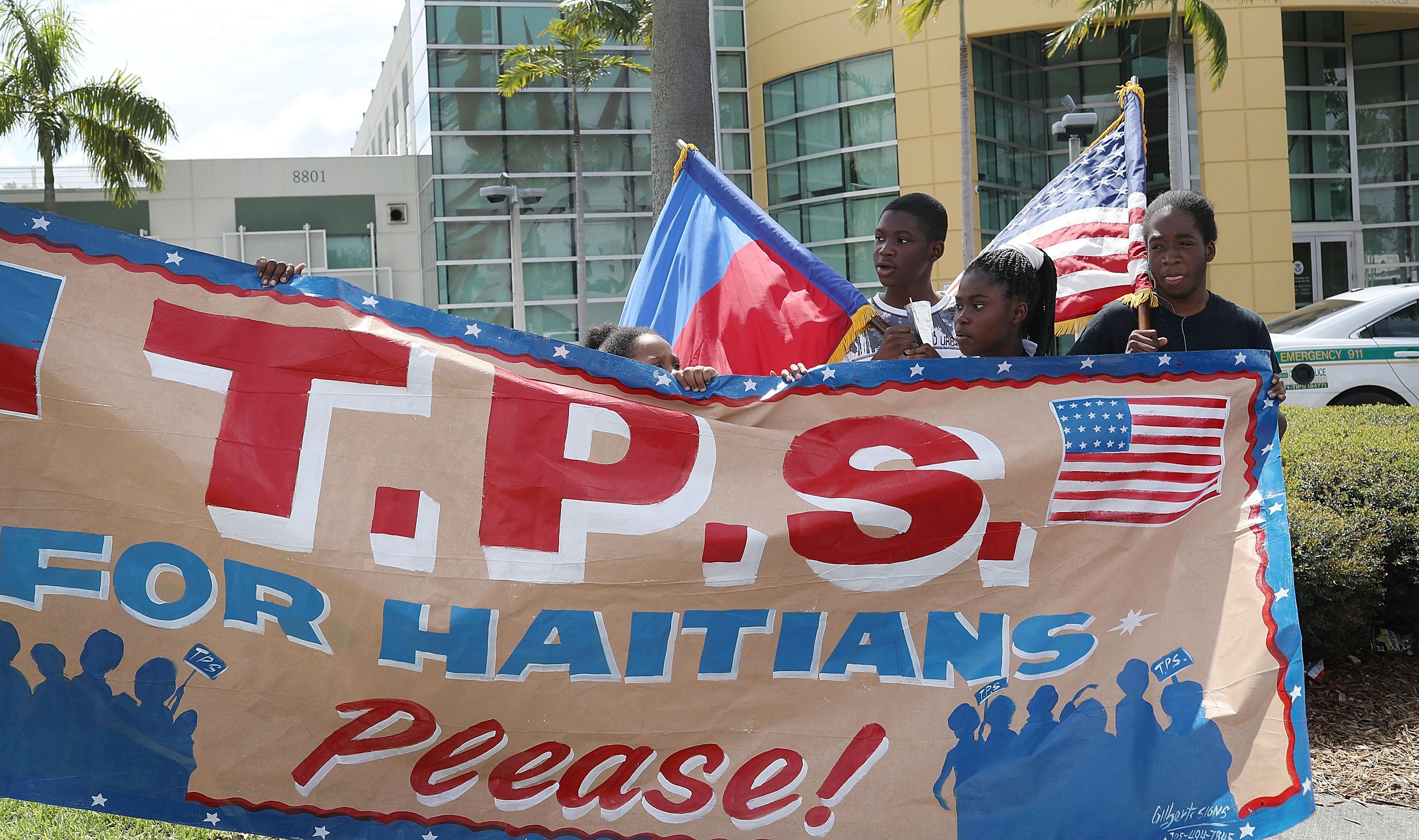
The ending of Temporary Protected Status (TPS) for Haitians opens a new front in the witch hunt against immigrants unfolding across the country, as the Supreme Court has greenlit the rescinding of legal protections from approximately 350,000 Haitians in the U.S. Miami Commissioners received the news as they heard public testimony on the city’s 287(g) contract, which establishes municipal police cooperation with ICE.
For almost four hours in late June, more than 100 residents addressed commissioners with concerns about the role of Miami police in federal immigration enforcement. Several noted the urgent need for the city to bring some relief to immigrant families, as approximately 158,000 Haitian TPS holders live in South Florida (nearly half of all Haitian TPS recipients in the country). Together, they generate an estimated $2.6 billion in annual economic activity and contribute approximately $306 million in state and local taxes each year.
These aren’t just abstract statistics. Those numbers stem from healthcare workers caring for seniors, hotel employees welcoming millions of visitors, construction workers rebuilding communities after hurricanes, teachers supporting children, and business owners creating jobs in neighborhoods across Florida. These are industries that employers have struggled for years to staff, and these workers do not magically disappear without consequences. Businesses lose experienced employees. Hospitals lose caregivers. Restaurants shorten hours. Construction projects are delayed. Families spend less because they no longer have stable incomes. State and local governments collect less tax revenue while facing higher costs for healthcare and social services.
The Trump administration clearly does not care about these negative outcomes. Their acrimony towards immigrants, particularly Haitians, is long-standing and well documented. During his first term, President Donald Trump’s U.S. Department of Homeland Security moved to revoke TPS for Haiti on January 18, 2018, an effort that was thwarted by various legal challenges. Not long after, Trump drew international condemnation when referring to Haiti as a “shithole” country. The 2024 presidential election cycle was marked by ridiculous false comments from both Trump and Vice President JD Vance claiming that Haitians were eating people’s pets in Ohio.
Since assuming the presidency again, Trump has beefed up immigration enforcement, aided by the U.S. Congress through the passage of the “One Big Beautiful Bill Act” in 2025, which allocated approximately $170 billion to immigration enforcement, detention, and enforcement operations. The legislation earmarked $30 billion for detention and deportation activities, $45 billion for the construction of new detention facilities, $47 billion for border walls and physical barriers, $16 billion for surveillance technologies and border security, $14 billion for state and local enforcement cooperation, $12 billion for expanded border patrol staffing and infrastructure, and an additional $11 billion distributed across the DHS, Department of War, Department of Justice, and the Bureau of Prisons.
The Senate approved an additional $70 billion for immigration enforcement in June of 2026. Florida Senators Rick Scott and Ashley Moody recently voted in favor of giving these outrageous sums of money, hundreds of billions in taxpayer dollars, to ICE, an out-of-control, rogue agency that has killed two U.S. citizens in cold blood in broad daylight and — just in the previous month — has been responsible for the death of at least three people during their enforcement operations.
A discharge petition recently forced the U.S. House of Representatives to hear and vote on a bill which would extend TPS for Haitians through the next three years. The Senate version, S.4814, has not been given a hearing, nor has it been voted on. Senators Scott and Moody, so eager to vote for the disbursement of billions of dollars to an agency now hunting down their Haitian and Venezuelan constituents, remain silent when advocating for their protection. They both could and should call on their party, which controls the U.S. Senate, to hear S.4814, but so far, crickets.
Florida officials cannot continue sending contradictory messages. We celebrate hardworking people when they fill labor shortages, care for our aging population, and help our economy grow. But then we threaten to deport those same workers, disregarding both their legal authorization to live and work here and the lives they have spent years building in our communities. Congress still has the power to prevent the unnecessary humanitarian and economic crisis looming, and should quickly move to extend Haitian TPS and provide stability for families. Similarly, City of Miami commissioners and Mayor Eileen Higgins could rescind their 287(g) agreement, bringing at least some relief to residents worried about the collaboration of Miami Police and ICE. What we need now is political will and courage.