
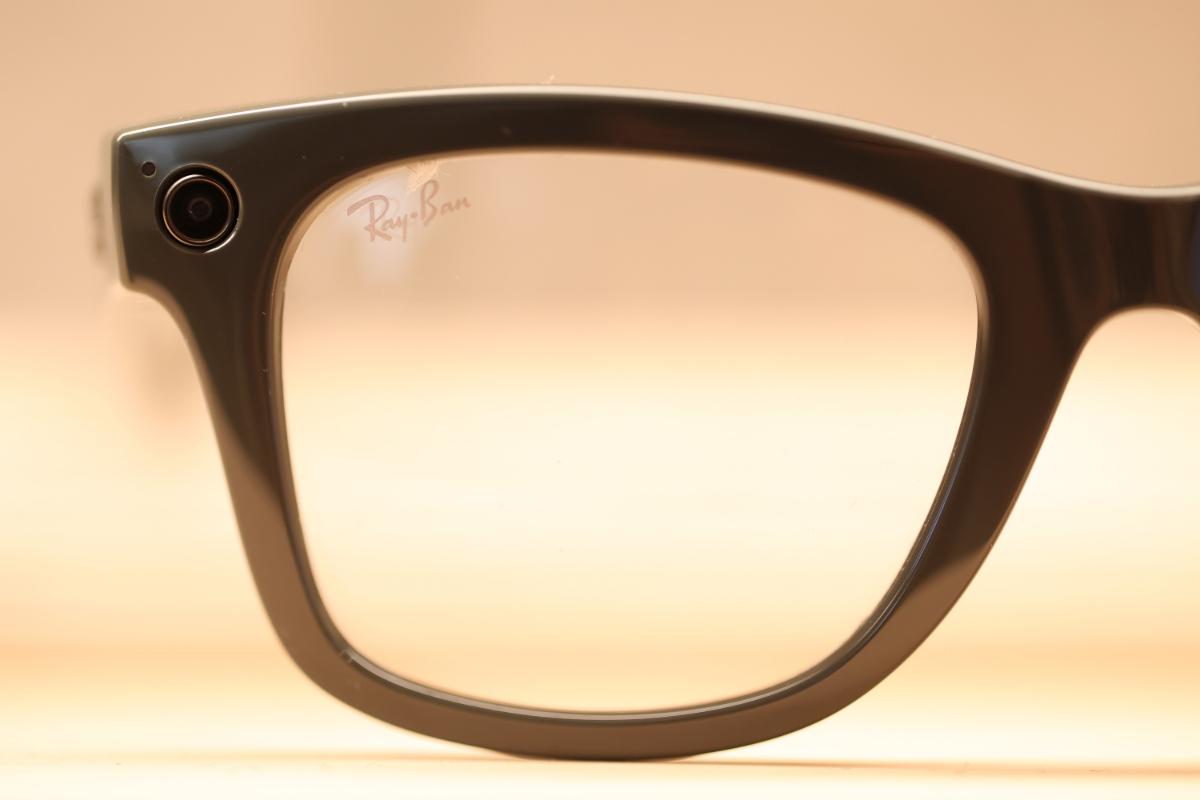
Photo by Justin Sullivan/Getty Images

Audio By Carbonatix
At least two Florida sheriff’s offices have quietly acquired Meta smart glasses for officers, a move that privacy advocates warn could make it easier for police to record the public without people noticing.
Records obtained by surveillance researcher Dave Maass and posted to the collaborative news site MuckRock show that at least two police agencies in Florida — the Broward County Sheriff’s Office (BSO) in South Florida and the Okeechobee County Sheriff’s Office (OCSO) in South-Central Florida — have purchased the glasses.
Meta markets the Ray-Ban smart glasses primarily as consumer wearables that can take photos, record videos, livestream, and interact with the company’s AI assistant. “AI glasses for effortless connection,” its site reads.
Records show BSO purchased several pairs from Amazon in May 2025 for its undercover Internet Crimes Against Children unit. Veda Coleman-Wright, a spokesperson for the sheriff’s office, declined to answer questions about how officers are using them, citing a public records exemption covering “surveillance techniques or procedures.” She also declined to provide any departmental policy governing officers’ use of the glasses. It’s unclear when officers are permitted to record with them or how any footage is stored and retained.
OCSO, meanwhile, bought half a dozen pairs of the glasses back in October 2024, records show. Jack Nash, a spokesperson for OCSO, says the department’s officers “use these devices for remote troubleshooting.”
“Throughout the county, we have approximately eight locations, and when one IT technician needs another technician’s ‘eyes’ on an issue, they use these devices to provide a live visual of the work being performed without requiring a second person to be physically present,” Nash wrote in an email.
This comes as law enforcement agencies elsewhere appear to have experimented with the glasses.
In December, Border Patrol agents in the Chicago area were seen wearing Ray-Ban Meta smart glasses while conducting immigration enforcement operations, according to an investigation by The Daily Northwestern. The outlet reported that at least two agents appeared to wear the glasses while arresting people and confronting protesters, raising concerns among privacy advocates about officers recording members of the public without their knowledge.
While there have been no public reports of law enforcement agencies formally partnering with Meta to use its smart glasses, individual officers elsewhere in the country have been seen wearing them on duty. According to 404 Media, U.S. Customs and Border Protection (CBP) agents wore Meta smart glasses during immigration enforcement operations in Los Angeles and Charlotte, North Carolina, even though CBP said it has no arrangement with Meta.
New Times asked Meta in an email whether it has any policies governing law enforcement use of its consumer smart glasses, partnerships with police agencies, and concerns about officers using the devices to record members of the public. The company did not respond before publication.
Will Owen, a spokesperson for the Surveillance Technology Oversight Project, believes that law enforcement’s use of the technology raises concerns.
“Police officers wearing Meta smart glasses and secretly recording the public is a direct threat to Floridians’ right to free speech and protest,” he tells New Times.
Owen explains that the glasses differ from body cameras in a significant way. They are “ordinary-looking glasses that make no gesture toward police accountability,” he says, with only a small LED light to indicate someone is being recorded, which could easily be missed in a crowd or obscured by the wearer. Technology news outlet Engadget reported last month that users have found ways to cover the light despite Meta software updates meant to prevent it.
A Meta spokesperson tells New Times that if people try to tamper with the LED light on the glasses, including placing blockers over it, the camera will not work. The spokesperson says the company recently updated the glasses to disable the camera if it detects tampering with the LED.
Owen says it’s “alarming how local police officers may also abuse this technology.”
“Meta smart glasses have no place in law enforcement in South Florida or anywhere else in the country,” Owen says.