
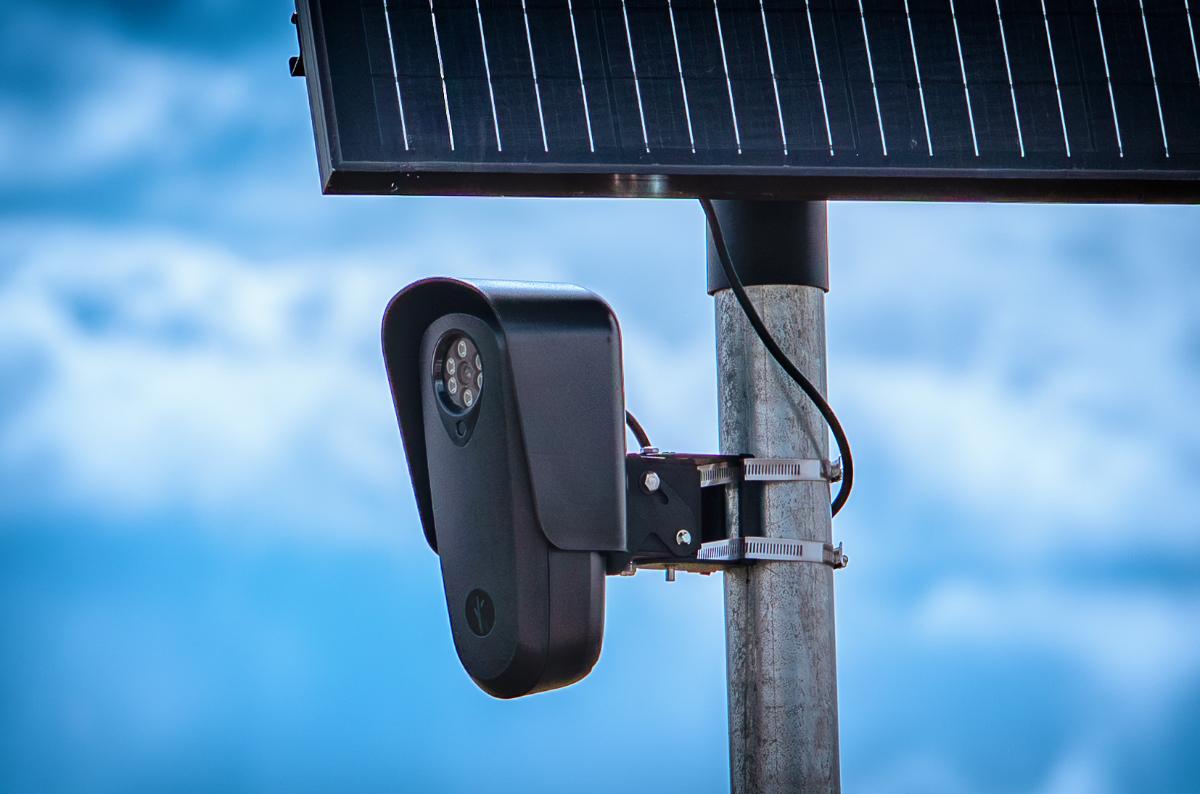
Photo by Tony Webster/Flickr

Audio By Carbonatix
Around the country, people across the political spectrum have recently united against a common enemy: Flock cameras.
In Tennessee, an independent congressional candidate admitted to shooting — yes, shooting — four of the automated license-plate readers, or ALPRs, down. In Winona, Minnesota, police found all eight of the city’s Flock cameras gone, the poles sawed off at the base and tossed into the weeds. In New Mexico, a man was arrested after allegedly destroying 13 of the cameras; asked if he planned to continue, he told local reporters: “Absolutely.”
South Florida, it appears, now has a Flock vigilante — or vigilantes! — of its own.
The Fort Lauderdale Police Department (FLPD) says two Flock cameras in the city’s Croissant Park neighborhood were cut down last month, according to a police report obtained by New Times.
A city employee found the cameras down around 8:50 a.m. on July 6 at SW 4th Avenue and SW 21st Street, where the pole stood on the median facing traffic in both directions, according to the report (attached at the bottom of this story). The responding officer wrote that one pole had been cut from the ground — possibly with a knife — and that the two cameras were “melted and slashed.” The city employee hauled the poles to police headquarters.
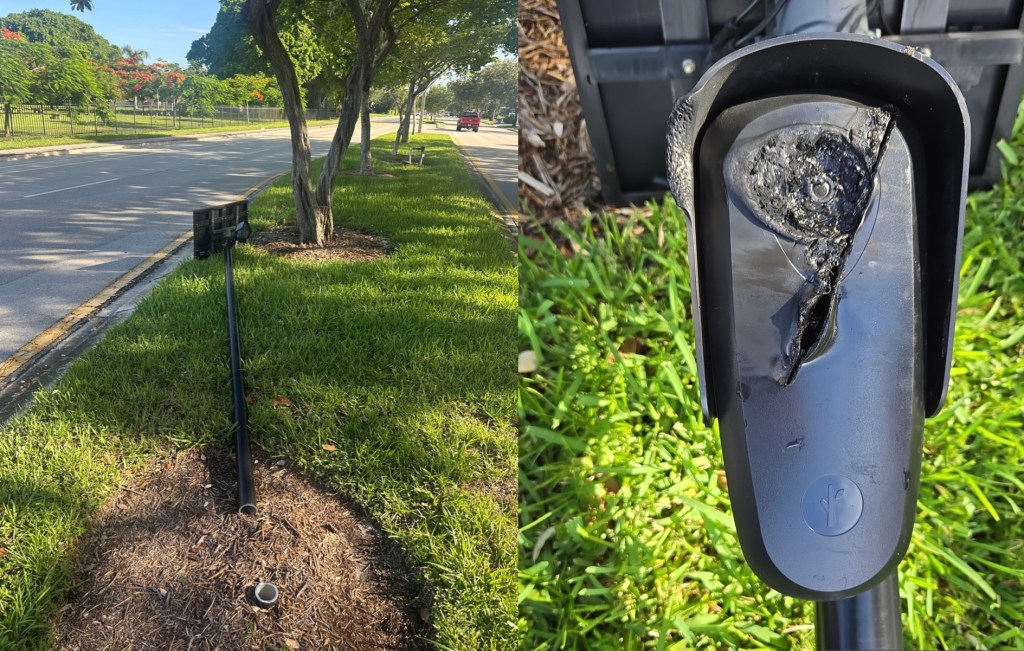
While Fort Lauderdale police classified the incident as felony criminal mischief, the case didn’t remain open long. A detective canvassed the area and found no public or private surveillance video and no witnesses, the report states. She closed the case pending “additional evidence” on July 28, three weeks after the cameras came down. A department spokesperson tells New Times no arrests have been made.
The city listed the damaged equipment at $6,000. A city employee told the responding officer the poles run about $3,000 apiece.
Casey Liening, an FLPD spokesperson, tells New Times the department signed a one-year agreement in March 2022 to test 25 Flock Safety license plate reader (LPR) cameras. It now buys its Flock cameras through a cooperative agreement with Cobb County, Georgia — an arrangement Liening says is permissible when it’s with another government agency for products or services from a vetted vendor.
Eighty eight Flock cameras are stationed across Fort Lauderdale, Liening says. DeFlock, a crowdsourced map that tracks license plate readers nationwide, lists more than 850 across Broward County.
Flock, based in Georgia and valued at $8.4 billion, says its cameras scan license plates billions of times each month in communities in nearly every state. The cameras, or ALPRs (automated license plate recognition), log the plate of every car that passes and upload it to a massive database. They can also identify cars by make and model, and read bumper stickers. The company says scans are deleted after 30 days.
The devices have drawn nationwide backlash from privacy advocates who say the cameras sweep up the locations of drivers suspected of nothing at all. Critics also point to reports about police misusing the systems. In one case, a Texas officer searched cameras nationwide for a woman who had gotten an abortion. In the Florida Keys, a Monroe County sheriff’s deputy tracked down and pulled over a woman he’d met on the set of the Apple TV series Bad Monkey after adding her plate to a hotlist. He was fired and arrested in March on three felony counts of misusing a law enforcement database.
Flock, on the other hand, says the cameras are integral to public safety, capturing details that help investigators, including plate numbers and vehicle make and model. The company’s website advertises that the cameras “stop crime in real time” by alerting officers “the moment a suspect car passes by.”
As anger grows over law enforcement contracts with Flock, some people (as evidenced above) have gone after the cameras directly. In late July, The Guardian identified at least 33 instances across 23 states in which people damaged or destroyed Flock cameras in what appeared to be protests of surveillance.
Meanwhile, civil liberties groups are pushing a more, um, conventional route. The American Civil Liberties Union’s national “Get the Flock Out” campaign, launched this summer, walks residents through filing public records requests, drafting model ordinances, and attending city council meetings so they can push their local governments to end Flock contracts.