
Photo by Miami Animal Rescue

Audio By Carbonatix
July 23. A Thursday morning. A joint task force comprised of members of the Miami-Dade Sheriff’s Office, City of Miami Special Investigations Section, and the FBI Violent Gang Task Force executes a residential search warrant on the home of Lazaro Lesteiro-Diaz. Over the past few weeks, the 26-year-old local rapper known as “Drakula,” aka “YungLazz” has been posting videos of himself spitting verses about allegedly committing financial crimes while brandishing a Glock, stacks of cash, “a laptop screen showing multiple victims’ Personally Identifiable Information,” and, perhaps most bizarrely, a call center headset. These sets attract views not only from fans of his deft, staccato flows but also, alas for him, law enforcement. (Sample line: “I called you from a Bank of America number. Ima boof a plot.”)
Inside Lesteiro Diaz’s room, authorities seize a Glock with an extended magazine, a Drakula diamond chain (which resembles the one seen in this video), cash, a prescription bottle of Promethazine (sometimes misused in combination with codeine as “purple drank”) with the prescriber’s name scratched off, and the now-famous call center headset. In another room toward the back of the premises, two decapitated chickens lay at its threshold and festooned with what the arrest report describes as “Santeria Witch Craft” ritual paraphernalia, there is a male baby goat in a box, his neck painted orange in what police presume to be sacrificial markings. (For what it’s worth, a local Santeria expert who asked to remain anonymous said they’d never heard of such markings being used in ritual sacrifice.)
What a long, strange trip it’s about to be, kid.
Mysterious ways
July 15. A Wednesday. Lulu, a petite seven-year-old Maltese, is bleeding out. She has been mauled by a larger dog, and there seems to be little hope. But providence moves in mysterious, complex ways — and this tiny creature, in its underserved suffering, is about to become a vessel for unpredictable healing and hope across many creatures great and small. (Our own species very much included.)
Miami Animal Rescue steps in, organizes emergency veterinary care for Lulu, posts a call social media for donations. The community delivers, raising more than $14,000. The “volunteer-powered” nonprofit, so often restrained by budget, vows to use the surplus to come to the aid of other, previously unreachable animals. “I think it’s safe to say the universe heard us,” Lee Meyer, the marketing director for Miami Animal Rescue, says.
Calls flood in: A senior dog found in the street with an earful of maggots. A raccoon who fell from a tree and broke two of his legs. A colony of feral cats with severe eye infections.
And then a text message arrives from a detective with the City of Miami Police Special Investigations Section. He had just participated in the raid of the home of a local rapper who had just picked up a charge of felony “animal cruelty with intent to injure, kill.” Could the group take possession of a goat?
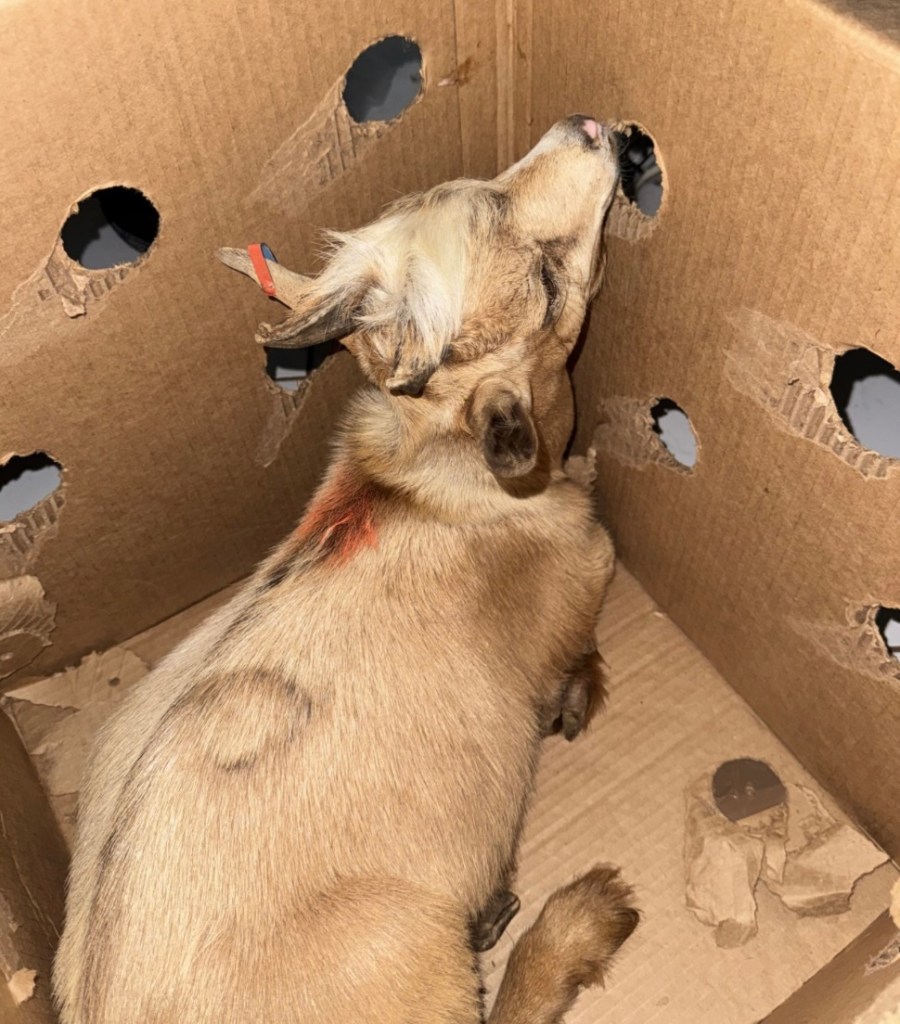
Photo by Miami Animal Rescue
The truth is, Miami Animal Rescue doesn’t really have the proper resources on hand to do so. But the detective had already called Miami-Dade Animal Services and Florida Fish & Wildlife. The goat is in last-resort territory, and if Miami Animal Rescue refuses, he will likely be left to the fate painted across his neck. Necessity being the mother of invention, Miami Animal Rescue reaches out to Yleana Escobar, a longtime wildlife rescue worker and Miami-Dade teacher who heads the Veterinary Science Magnet program at Felix Varela Senior High School. During her tenure, Escobar has shepherded the school’s veterinary program from an elective to a full-fledged, hand-on specialization magnet complete with air-conditioned kennels for rescue dogs and cats, a working barn, and a clinic where veterinarians from Miami Veterinary Foundation increase community access to pet healthcare with students serving as techs and assistants. It’s a remarkable achievement that is set to pay dividends in this moment of need. “I know her heart,” Meyer says of the longtime educator and animal advocate. “I knew she was going to say yes.”
Meyer is right. Escobar hangs up and surveys the students working throughout the barn with their animal wards. The one she is looking for is not there.
“Call Francesca,” she says.
The goat whisperer
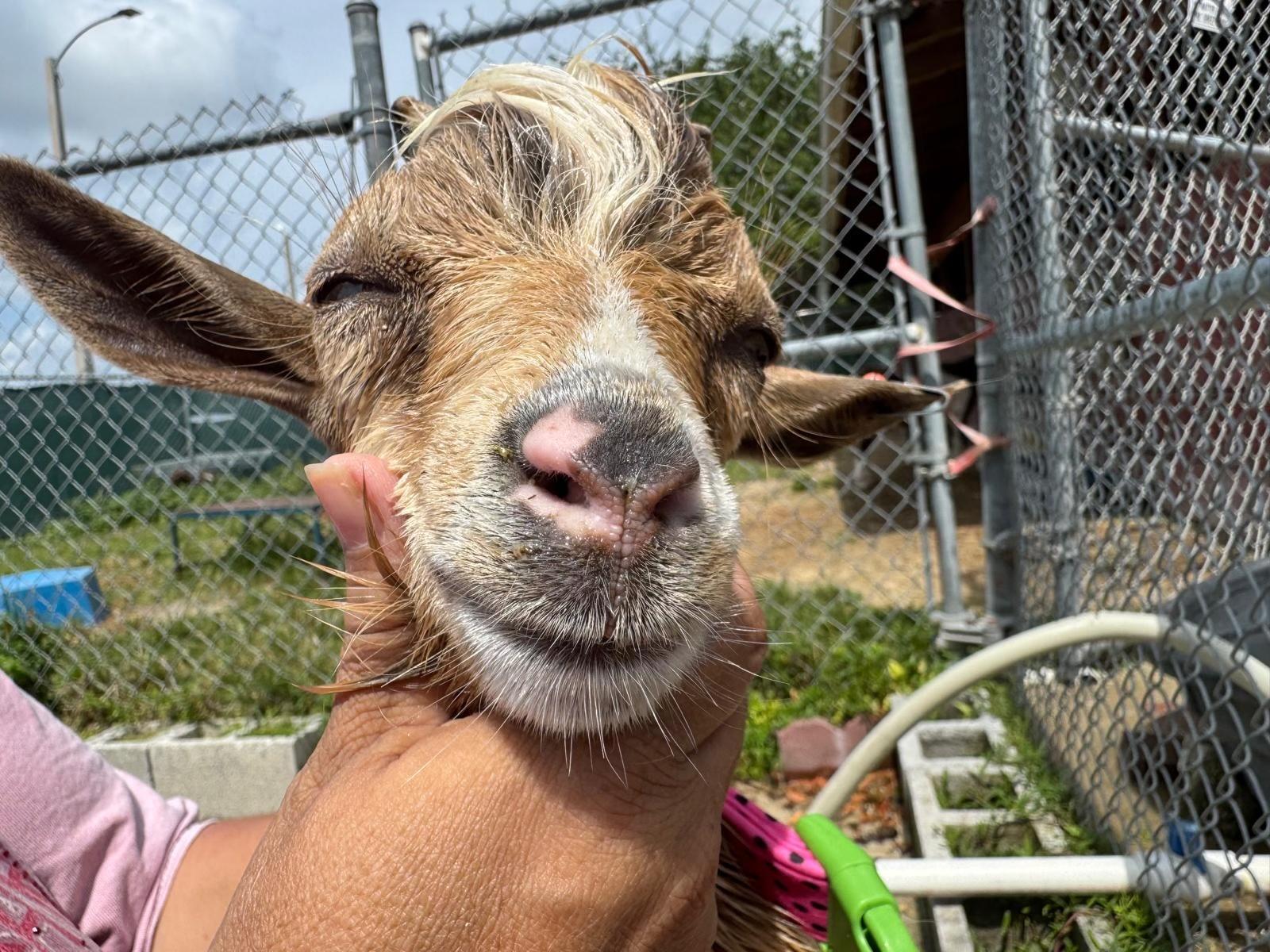
The students line up for the goat’s arrival as paparazzi might for a celebrity. They soon dub him Valor — a nod to his “boldness or determination in the face of great danger.” An examination finds the approximately five-month-old animal in surprisingly good health.
His psychological state is another story altogether. He trembles and avoids contact. He won’t eat.
Valor nervously turns small circles in the corner of the pen assigned to Francesca Silva. The 17-year-old senior who chose to focus her time and space at the school on dairy goats after developing a close relationship with a goat named Dimmy a few years back. “My daughter has loved animals and nature for as long as I can remember,” Silva’s mother, Claudia Zuluaga, tells Miami New Times. “She has a wonderful and caring heart, but she is also very quiet and struggles with severe anxiety and panic attacks. Animals have always been her comfort and safe place, so she spends as much time with them as she can.”
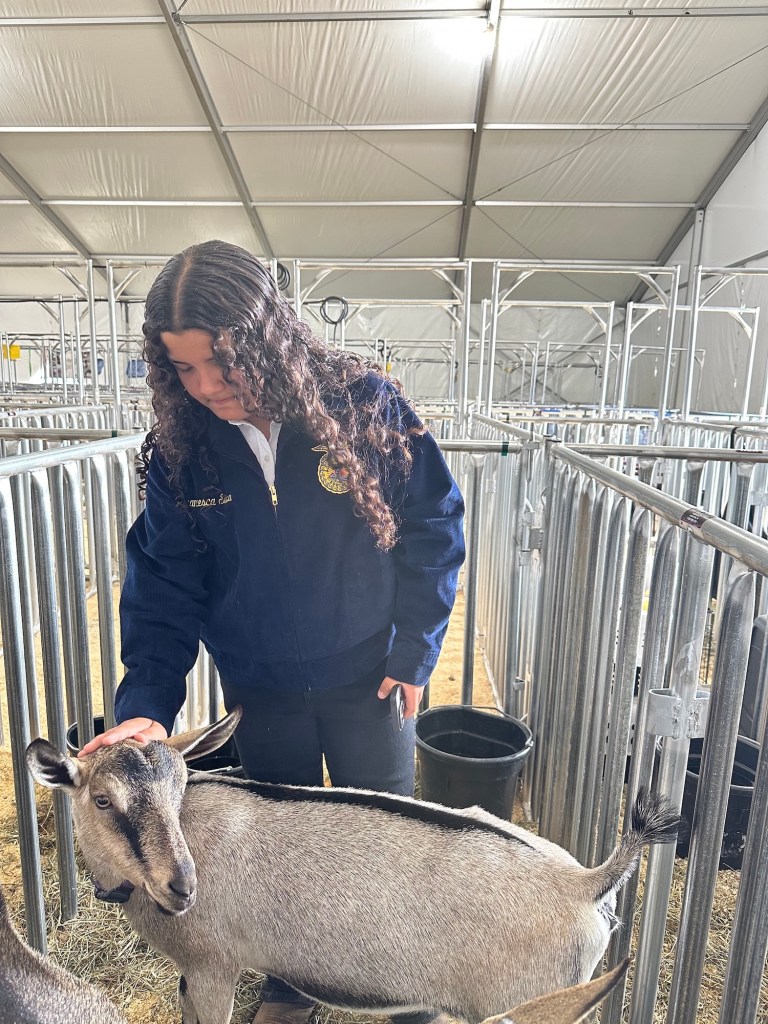
Photo by Claudia Zuluaga
This reserved nature serves Silva well as she builds a rapport with Valor. “I spent some time sitting down in his pen and just letting him come up to me,” she says. “Also, the more goats associate you with food, the more they like you. They’re like big dogs in that way. So I kept feed on me, too.”
Deep into the night, between feeding baby goats and milking the adult goats, Silva stands vigil over Valor. By the next day, Valor is living up to his name, eating and engaging with the thrilled students. A miraculous thing happened as Silva advocated for Valor: She found her voice. “I’ve always had a lot of anxiety talking to people,” she says. “Like you. But I felt like I had to — was inspired to — for Valor and it got so much easier for me.” Their connection is contagious. Soon the goat and the other students are bonded as well.
“Seeing Francesca overcome her anxiety and speak so beautifully meant more to me than I can explain,” her mother says. “I am incredibly proud of the brave, kind, and determined young woman she is becoming. I cannot wait to see where her love for animals and her hard work take her.”
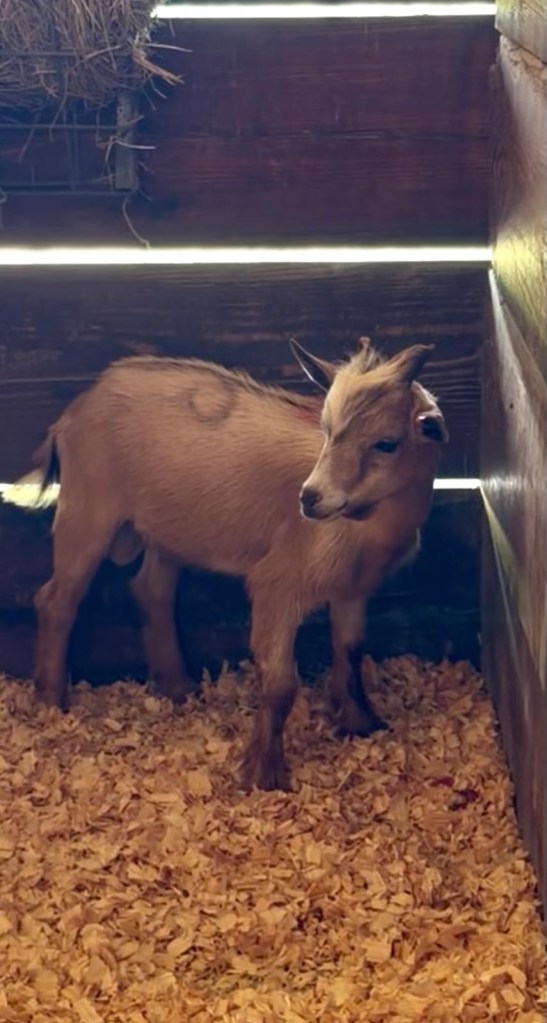
Photo by Miami Animal Rescue
Silva hopes to attend the University of Florida, become a veterinarian, and one day breed dairy goats on her own farm both to encourage sustainable agriculture and for show. (Silva’s GoFundMe to raise money to expand her work to this end with her Nigerian Dwarf goat, Autumn, is here.) “Valor wasn’t the only one saved in this scenario,” Escobar says. “Francesca came out of her comfort zone because of her love of animals. And watching her take care of Valor from the minute he arrived until the minute he left inspired all of us here and beyond. These kids are so committed — they’re working harder than the average adult — but the animals touch our lives in very positive ways, too.”
A note on animal sacrifice & the law
It worth mentioning that the U.S. Supreme Court explicitly upheld the broad right to religious animal sacrifice under the free exercise clause of the First Amendment in the 1993 case Church of the Lukumi Babalu Aye, Inc. v. City of Hialeah. That ruling found that Hialeah city ordinances against animal slaughter for purposes other than food amounted to “improper targeting of Santería sacrifice,” while allowing that “legitimate governmental interests in protecting the public health and preventing cruelty to animals could be addressed by restrictions stopping far short of a fiat prohibition of all Santería sacrificial practice.”
Lesteiro-Diaz’ “animal cruelty” charge — alongside those of money laundering, unlawful possession of five of more identifications, armed drug possession, and organized scheme to defraud — presumably triggered an exception in his case. (New Times looked into the nuances of these laws in its 2019 report on the related practice of ritually chaining turtles together.)
Movin’ on up
Felix Varela was never going to be Valor’s forever home.
Even as Escobar, Silva, and the other students work their rehabilitative magic, Miami Animal Rescue runs a fine-toothed comb across the state seeking a fitting, compassionate refuge for Valor. They find it in Ocala: A couple with two small, animal-adoring children just bought a home with many acres on which they hope to start a hobby farm. They enthusiastically agree to take Valor, even promising to adopt more goats to ensure his social card is full of other horned playmates. The son and daughter at his new home greet Valor with titters of joy and bubbles.
“Are you excited?” Miami Animal Rescue President Meg Sahdala asks Valor in the car on the drive north.
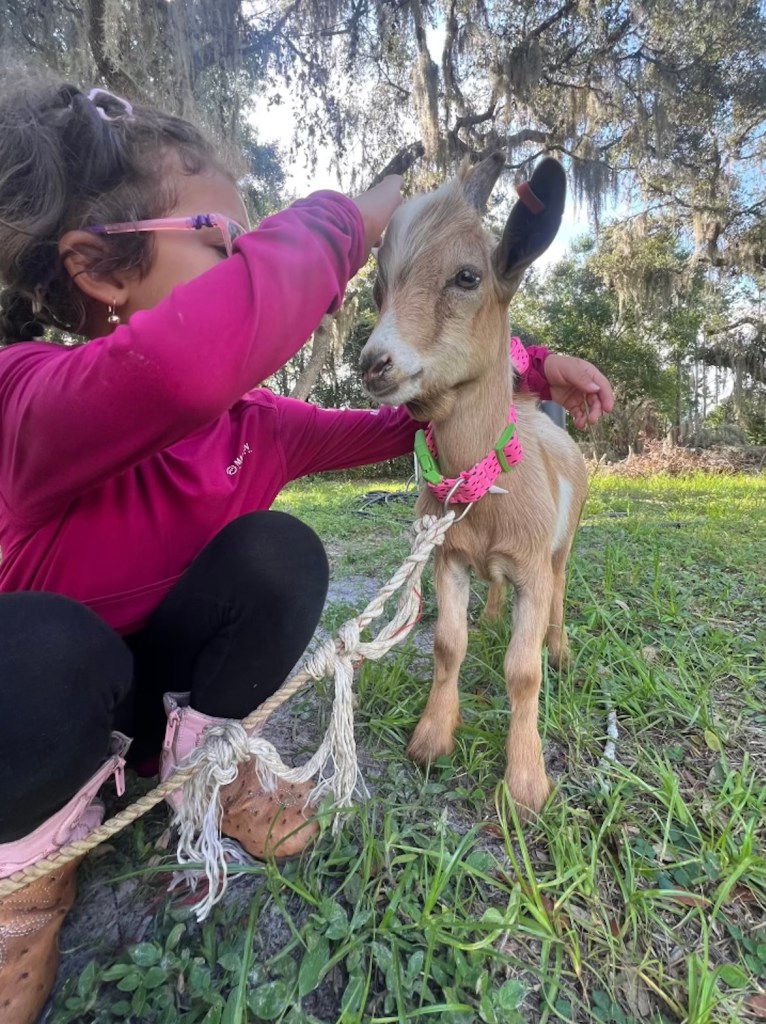
Photo by Miami Animal Rescue
“Bahahahaha,” the goat replies.
“He is a very lucky goat,” Meyer says. “That I can say. He’s not going to be livestock, or part of a ritual. He’s just going to be free and loved.”
At virtually any point along the way in this journey, people could’ve chosen to say, “no, not my problem” rather than, “yes, we’ll figure it out.” No one would have blamed them. Miami Animal Rescue could have decided Lulu’s wounds were too grave and the surgery too expensive. People could’ve scrolled past Lulu’s post and not donated. The detective could’ve left the goat to his fate. Yleana Escobar could’ve turned down the request to temporarily house Valor. Francesca Silva could’ve stayed in her shell. The family in Ocala could’ve decided it was too soon to accept a rescue.
But the saying yes — the acceptance of necessity as the mother of invention — made the difference.
“In this line of work, you feel helpless a lot of the time,” Meyer says. “You want to do so many things for so many animals, but the reality of resources kicks in. When I saw the selfies these kids took with Valor, though, all the sleepless nights and all the tears shed over the situations we humans put these animals through are worth it in the end. A successful story re-energizes you. Animals can’t speak for themselves. If we have to shout from every rooftop to be a voice for voiceless, we will.”
Lesteiro-Diaz posted his $30,000 bond and has been released from police custody. He appears to be working on new music ahead of his scheduled August 25 arraignment. An attorney for the rapper contacted by New Times writes via email, “We have no comment at this time.”
Copy of Lazaro Lesteiro-Diaz’s arrest report: