
Screenshot via YouTube/James Fishback

Audio By Carbonatix
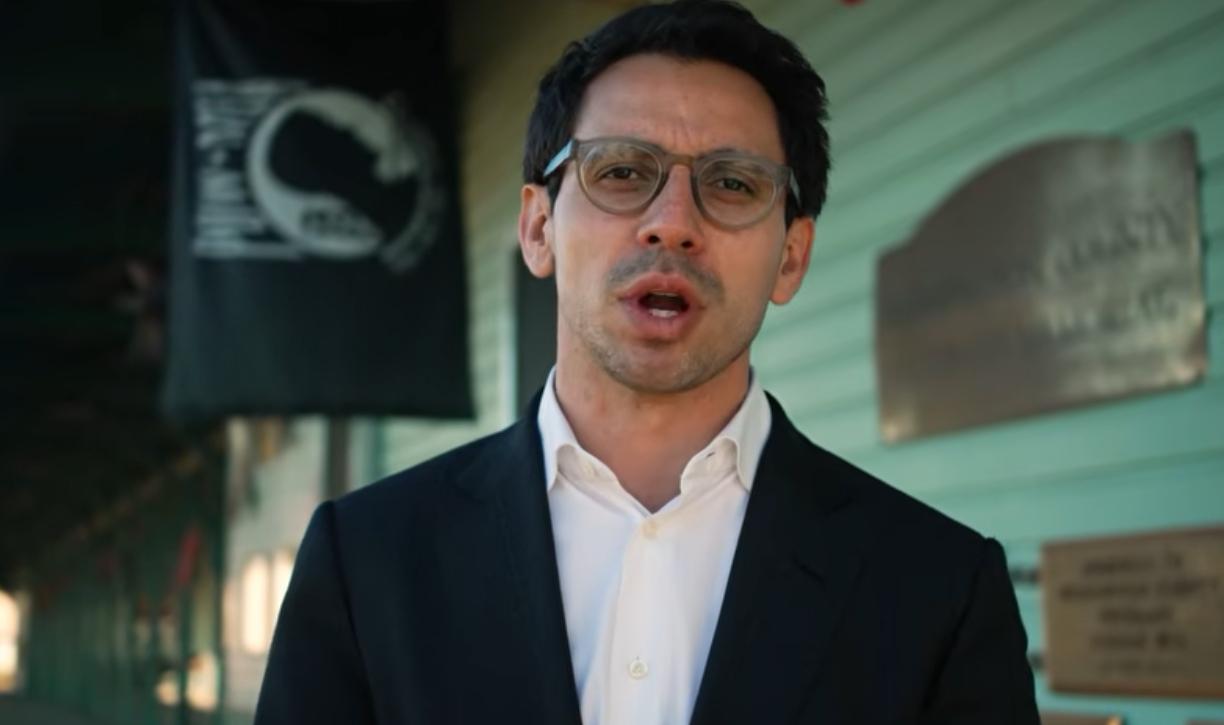
Videos have shown him telling a Black man he deserves to be lynched, repeatedly referring to a Black gubernatorial candidate as a “slave,” and most recently, he’s put out a statement referring to the same man as a chimp. But, despite what you may think, Florida GOP candidate James Fishback assures New Times he isn’t racist.
The most recent controversy came as Fishback, on Wednesday, was weighing in on a civil lawsuit filed Tuesday against GOP candidate Byron Donalds. The lawsuit (attached below) claims he assaulted Collier County School Board member and founder of Mason Classical Academy, Kelly Mason, at a Naples grocery store in 2022.
Fishback, seeing an opportunity to slam his favorite political punching bag, took to X to issue his statement, in which he refers to Donalds as a chimpanzee in bold print.
“On August 12, 2022, Byron Donalds assaulted a woman in broad daylight, and yesterday that woman filed civil charges to finally bring him to justice,” his statement reads.
“Kelly Mason is a mom of two, former teacher, and a registered Republican. She and Byron both served on a board of directors together, and had a falling out. That lead to a 6’5″, 290-pound Byron Donalds to chimp out on a 5’0” blonde woman in a Naples grocery store.
X users immediately pointed out the problematic phrasing Fishback chose, with one writing, “Seems foolish to use a racially charged term like ‘chimp out’ in an official statement.
“Unforced error.”
Some took the opportunity to jump on the racism train and use the N-word (hard R included), with one commenter writing, “I believe the victim because By’rone (referencing how Fishback has repeatedly mispronounced Donalds’ name) is a n—– and beating women is what n—–s do best.”
According to the Jim Crow Museum, a Michigan-based history museum dedicated to teaching the history of intolerance, referring to Black people as non-human primates (monkeys, apes, chimps, etc.) is a centuries-old insult used to portray Black people as subhuman.
When asked if he was aware of this history or whether he’d like some supporting literature, Fishback told New Times via phone Thursday he’s, “not aware of the history.”
A history of racially charged comments
Fishback, a native of Davie, is no stranger to racially tinged controversy; his campaign has been filled with outrage-driven moments over the past year. The GOP hopeful is full of controversial takes, including implementing a 50 percent “hoe tax” on OnlyFans models and the notion that women in the U.S. should behave more like those in Saudi Arabia (who have only had the legal right to drive since 2018).
He also seemingly has an obsession with using racially charged language when talking to and about Black people.
Fishback calls Donalds a slave on campaign trail
Fishback has long referred to Donalds as a “slave” to his donors, dating back to last year. When pressed previously on the inherent racism of the word, he told New Times Donalds is “not Black,” and instead described his opponent as Haitian and Panamanian, and with “no direct descendant of slavery in his family.”
During the phone call with New Times on Thursday, Fishback reiterated his stance that calling a Black man a slave isn’t racist, arguing that he’s called other white politicians slaves to their donors, as well.
Fishback tells Black man he should be lynched
At an April campaign stop in Orlando at the University of Central Florida, Fishback was recorded telling a Black man he should be lynched after the man asked about Fishback’s romantic history with a minor (something he’s previously denied in conversations with New Times, though the alleged behavior is well-documented).
While using the word “slave” to describe a Black person has the obvious ring of racism, the word “lynching” may slide under the racism radar for some. But the word refers to the specific extrajudicial public act of a mob capturing and hanging a person and is intrinsically tied to the U.S. slave trade.
Lynchings were violent public acts that white people used to terrorize and control Black people in the 19th and 20th centuries, particularly in the South. Lynchings typically evoke images of Black men and women hanging from trees, but they involved other extreme brutality, such as torture, mutilation, decapitation, and desecration.
According to the Southern Poverty Law Center, “regardless of its subject, the language is cavalier and dangerous. This framing erroneously equates a judicial process to a very real, very painful — and very American — act.”
Despite what some might think based on his continued use of racially charged rhetoric, Fishback insists he “isn’t racist,” adding, “I think Black Americans are deserving of the same respect as everyone.”