
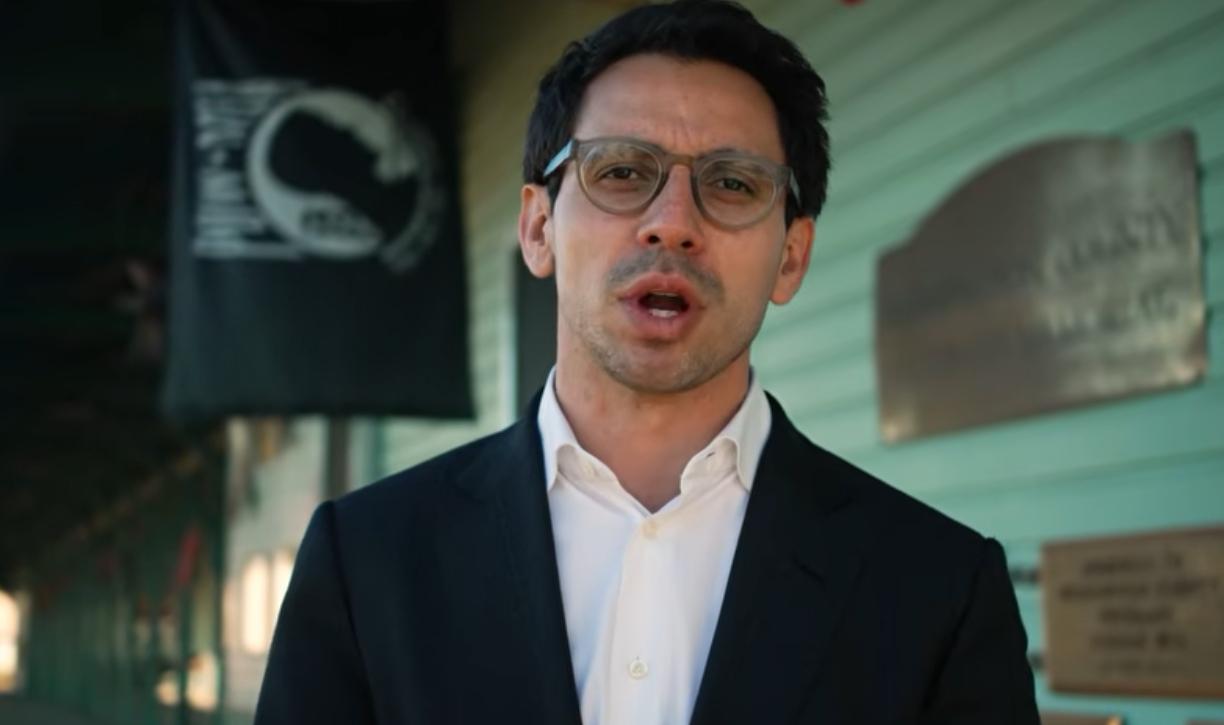
Screenshot via YouTube/James Fishback

Audio By Carbonatix
In a Monday court filing, Florida Lt. Gov. and gubernatorial candidate U.S. Representative Jay Collins is asking a judge to remove opponent James Fishback’s name from the ballot, arguing he doesn’t meet the residency qualifications to run for the state’s top office, according to the lawsuit. And despite the South Florida native’s claims to the contrary, statements from the Washington, D.C., Office of Tax and Revenue (OTR) indicate he hasn’t lived in Florida the requisite seven consecutive years preceding the 2026 gubernatorial election.
The race to replace Gov. Ron DeSantis has been filled with controversy for the past year, and Fishback’s name appears in a hearty portion of it. Some highlights of the 31-year-old Davie man’s campaign include: lying about being his a commencement speaker at his alma mater Boyd H. Anderson High School in Lauderdale Lakes, wanting to impose a “sin tax” on OnlyFans performers, reportedly owing attorneys more than $150,000 in legal fees, and marrying Valeria Quimby months after posting photos of another woman he referred to as Florida’s future First Lady.
The question of his eligibility to run in Florida has circulated for months. On Monday, it finally manifested in a lawsuit (attached below). Collins and Fishback are set to appear on ballots for the Republican primary Aug. 18, ahead of Election Day Nov. 3. In the lawsuit, Collins argues that Fishback isn’t qualified to run for Florida governor because he hasn’t lived in the state for the past seven years, as required by state law to run for governor.
The argument stems from Fishback’s voting record from six years ago. On Nov. 3, 2020, Fishback was a registered voter in Washington, D.C., and remained so until at least June 1, according to the lawsuit.
Records show that in September 2021, Fishback bought an apartment in the Glover Park neighborhood of D.C. for $400,000 and listed the address as his homestead (a legal status residents may apply for only for their primary home address for tax benefits). The catch with homestead exemptions is that the person typically must prove they live at the address by providing identification, vehicle registration, or other documents showing the address as their primary residence.
Responding to a voicemail left by New Times, Fishback via text said he did buy an apartment in D.C. in 2021, which is currently occupied by his sister and across the street from his parents’ home. He argued the residence doesn’t have a homestead exemption because he “has never lived there.”
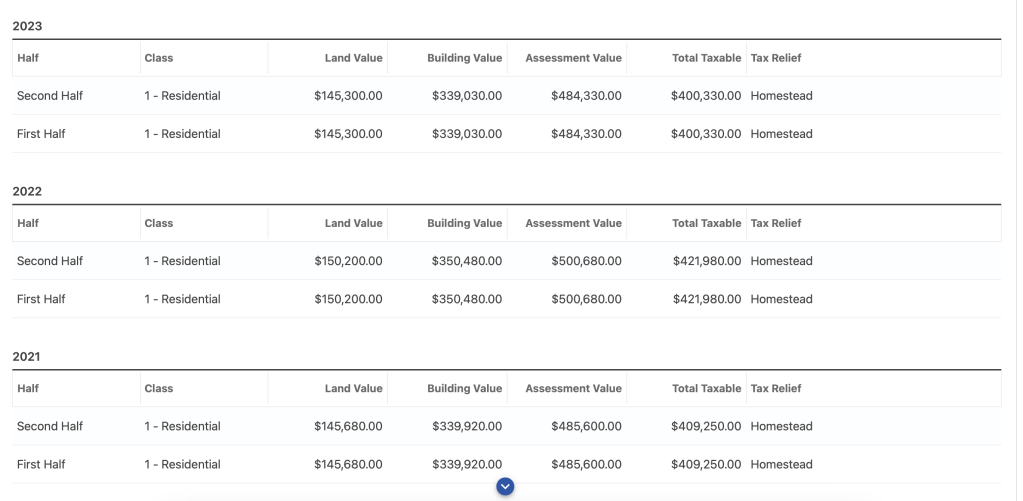
But a review of Washington, D.C., property tax appraisals shows that officials have applied a homestead exemption to the address in question since 2021. When asked to explain, Fishback told New Times, “It actually does not have a homestead exemption. DC recognized that that exemption was erroneous, rightly removed it, and adjusted the tax bill accordingly.”
But OTR public affairs officer Eric Balliet told New Times the office “received a homestead deduction application for this property signed by Mr. Fishback and dated Sept. 24, 2021, which was processed by OTR on Oct. 7, 2021.”
Balliet did, however, confirm part of Fishback’s account, saying an April 2026 audit found the homestead exemption had been erroneously applied beginning in 2023. That means the exemption was valid from 2021 until it was incorrectly renewed in 2023 — years that encompass the period during which a 2026 gubernatorial candidate would have had to establish Florida residency.
“As a result of a tax relief audit in April 2026, the homestead deduction was removed from this property from 2023 and forward,” Balliet wrote in an email. “OTR conducts around 300 audits a year to determine if the homeowner still meets eligibility requirements for the homestead deduction. Some of the reasons a homeowner would not be eligible are: driver’s license doesn’t match primary residence, the property is no longer the homeowner’s principal residence, or the homeowner’s voter registration is not in D.C.”
Fishback faces another issue: He has yet to repay the back taxes owed after officials determined his homestead exemption had been incorrectly applied for three years, according to Balliet.
“The property owner was informed via a corrected bill on April 23, 2026, that they owe more due to the removal of the homestead deduction. As of June 25, the current outstanding balance is $5,566.55. The outstanding amount includes $383.96 in penalty and $1,343 in interest given the underpayment of taxes,” Balliet wrote in the email.
Fishback didn’t respond to follow-up texts posing questions about signing for the homestead exemption in 2021, nor about the unpaid taxes.
Fishback initially responded to the lawsuit on X by posting a photo of a driver’s license issued in 2016, which he presented as evidence that he has lived in Florida for seven years. When New Times asked whether he had proof of residing in Florida during that period, he texted a photo of what appeared to be his current driver’s license listing an address in Madison, a rural North Florida town between Tallahassee and Jacksonville.
In his X post he wrote, “Jay Collins, acting on behalf of Byron Donalds, is now illegally suing to remove me from the ballot, just like Democrats tried to do to Trump in 2024.
“His claim? That I, a fourth generation Floridian who has lived here my entire life, haven’t lived in Florida the past seven years. Here’s my Florida driver’s license from 2016. This baseless lawsuit is nothing more than a desperate and illegal attempt to stop our momentum because they know we’re going to win on August 18.”
When asked what makes him think Donalds (another Republican gubernatorial candidate) is actually behind the lawsuit, Fishback wrote, “Byron Donalds knows he can’t beat me so he’s trying to cheat and kick me off the ballot. It won’t work.”
According to the lawsuit, “By registering to vote and voting in the District of Columbia, purchasing a home in the district and covenanting to occupy it as his principal residence, and applying for and receiving the district’s homestead deduction — which required him to affirm that the district was his permanent home and domicile — Fishback engaged in positive, overt acts establishing his domicile in the District of Columbia, and not in Florida, during a substantial portion of the seven-year period preceding the Nov. 3, 2026 general election.
“Mr. Fishback does not and cannot satisfy the seven-year durational residency requirement of article IV, section 5(b) of the Florida Constitution; therefore, he is not, and will not at the time of election or assumption of office be, constitutionally eligible to serve as governor of Florida.”
The lawsuit further accuses Fishback of lying under oath when he filed to run for governor by submitting a candidate’s oath attesting to his Florida residency for the past seven years.