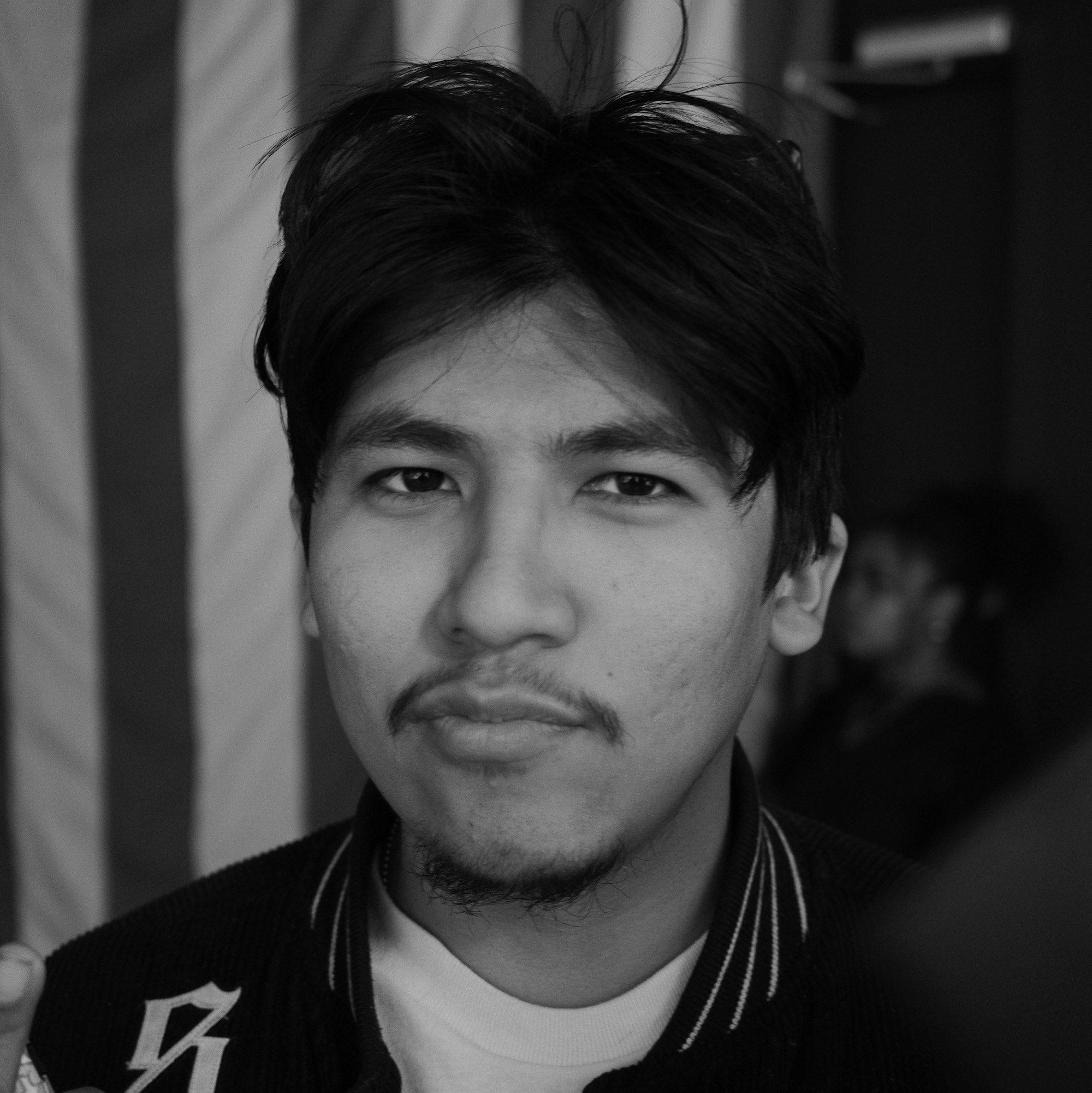

Photo by Carlos Gallego

Audio By Carbonatix
For decades, record labels were the unquestioned power center of the music industry. Artists signed. Labels owned. Infrastructure flowed in one direction. That structure built giants, but it also created friction in a modern era defined by independence, ownership, and transparency.
Algorhythms Music Group was not created to adjust that system. It was built to redesign it.
At the helm is Diego Martin Gomez de Cordova, a Miami-born entrepreneur who serves as Co-Founder and CEO of both Algorhythms Music Group and Algorhythms Entertainment, an integrated music collective that spans record labels, artist management, creative venues, IP strategy, and entertainment investments.
Entrepreneurship, for Gomez de Cordova, wasn’t a pivot into music. It was the foundation.
Before fully immersing himself in the music industry, Gomez de Cordova built and scaled a group health management company from the ground up, ultimately selling it to a Fortune 500 firm just weeks before the COVID-19 shutdown reshaped global markets. Prior to healthcare, he worked in aerospace, managing and selling assets across international markets.
Each chapter followed a similar blueprint: strategic growth, operational precision, and an ability to connect people, capital, and opportunity.
Music, however, was different. It wasn’t just a business vertical. It was a passion.
Today, Gomez de Cordova’s focus is entirely on music and entertainment, where he leads Algorhythms as a collective built to operate across multiple layers of the ecosystem, not just one.
A Joint Venture Label Model Built on Infrastructure
Algorhythms is intentionally structured as two complementary divisions:
Algorhythms Entertainment functions as the management and creative arm. It oversees a boutique but diverse roster of Electronic and Latin artists, operates a dynamic creative space in Wynwood, and strategically invests in entertainment-related companies.
Algorhythms Music Group, the company’s newest and largest venture, serves as the infrastructure backbone. It develops and supports record labels, builds and scales music brands, and guides cultural operators into the recording and IP business.
The division marks a major milestone through its distribution partnership with Sony’s the Orchard, positioning Algorhythms within a global delivery and reporting ecosystem while maintaining independent flexibility.
Rather than functioning like a traditional label that signs and owns artists outright, Algorhythms operates primarily through joint venture partnerships on individual records. That means no artist ownership. No career lock-ins. Just record level partnerships and infrastructure support.
Co-founder Gamil Kharfan, a Colombian-Lebanese entrepreneur with over a decade of experience building eight-figure businesses, complements Gomez de Cordova’s vision with operational scale. Across his ventures, Kharfan has overseen more than $50 million in revenue and invested millions into growth strategies across industries.
Together, the two approach music not as a trend but as a scalable system. “The rules of business don’t change,” Gomez de Cordova explains. “Leadership, management, systems, those apply everywhere.”
Christopher Martinez, Head of Marketing, rounds out the executive core, with a background in intellectual property and brand strategy, and previously co-running a Miami-based creative agency in the late 2010s. His expertise ensures that infrastructure is matched by identity and execution.
Bridging Miami Nightlife and Recorded Music
Algorhythms positions itself as an engine, one that event brands, labels, and artists can plug into.
Through its Music Group division, the company manages backend operations including distribution coordination with the Orchard, royalty tracking, accounting, legal oversight, DSP strategy, DJ promotion, playlisting, and marketing infrastructure.
Creative vision remains with the partner brand or artist. “We handle the complexity,” Martinez says. “They handle the art.”
One of Algorhythms’ most disruptive plays lies in its relationship with event brands. Across global markets, nightlife operators and festival curators possess cultural influence and direct access to artists. What they often lack is the operational infrastructure to run a label.
Algorhythms aims to fill that gap. By providing legal, accounting, distribution, and marketing frameworks, the company enables brands to extend into recorded music without diverting resources from live operations.
Among its notable collaborations is Miami nightlife fixture David Sinopoli, whose brand My Friend Misty is being developed in tandem with Algorhythms’ infrastructure. The partnership reflects the company’s thesis: taste plus systems equals scale. “We guide brands into the recording and IP business,” Gomez de Cordova says. “That’s where long-term value lives.”
Within electronic music, metrics operate differently. Streaming numbers matter, but so do DJ support, club rotation, and Beatport rankings. A track that climbs into the top tier of house charts can dramatically increase booking fees and global exposure without ever entering mainstream pop conversations.
Algorhythms tests music in real environments before scaling it. Records are circulated to DJs, played in clubs, and evaluated based on crowd response.
“When a room moves, that’s a signal,” Gomez de Cordova says. The model reflects the company’s roots in nightlife, a culture where validation happens on dance floors, not dashboards.
Algorhythms operates out of a growing creative hub near Wynwood and Edgewater, reinforcing its commitment to Miami as both a live and recording destination.
The city has long served as a global epicenter for electronic festivals and Latin music production. Gomez de Cordova sees the next evolution as merging those strengths, positioning Miami not just as a place to perform, but as a place to build.
“We’re doing this for Miami,” Kharfan says.
With four to five partner labels already active and a goal of eight to ten fully operational divisions within the next year, Algorhythms is scaling deliberately.
But for Gomez de Cordova, scale is not the point. Structure is.
Across aerospace, healthcare, and now music, his throughline remains consistent: identify inefficiencies, build infrastructure, and connect the right people at the right time.