
Photo by Monica Mendoza

Audio By Carbonatix
Yet another mixed-use entertainment space has opened in Miami, and this one will court fans of sports, comedy, and music. The launch of JAM Arena, inside Casino Miami, follows a string of recent venue openings, including Wynwood’s Throw Social and Midline. But rather than catering exclusively to concerts, Jai-Alai Miami (JAM) Arena will host a diverse array of events while honoring its rich history as an important sports venue in the region.
Ahead of opening night on Friday, February 13, New Times was the first media outlet granted access to the arena, its athletes, and the people behind the revival of a sport that celebrates 100 years in South Florida this year. While jai-alai once flourished across the United States, today it is only played in this state, and JAM Arena is hallowed ground. Originally opened in 1926, it is considered the birthplace of jai-alai in Miami.
“Everybody in Miami has a jai-alai story,” says Sandra Rodríguez, public relations manager for the World Jai-Alai League. “They know someone who played, or their father used to go, or they remember driving past the building. Even if they never went inside, it was always part of the city.”
Rodríguez remembers hearing about jai-alai as a child through an older cousin who would come home energized after matches. “I didn’t really understand what it was,” she says, “but I could feel the passion. That stuck with me.”
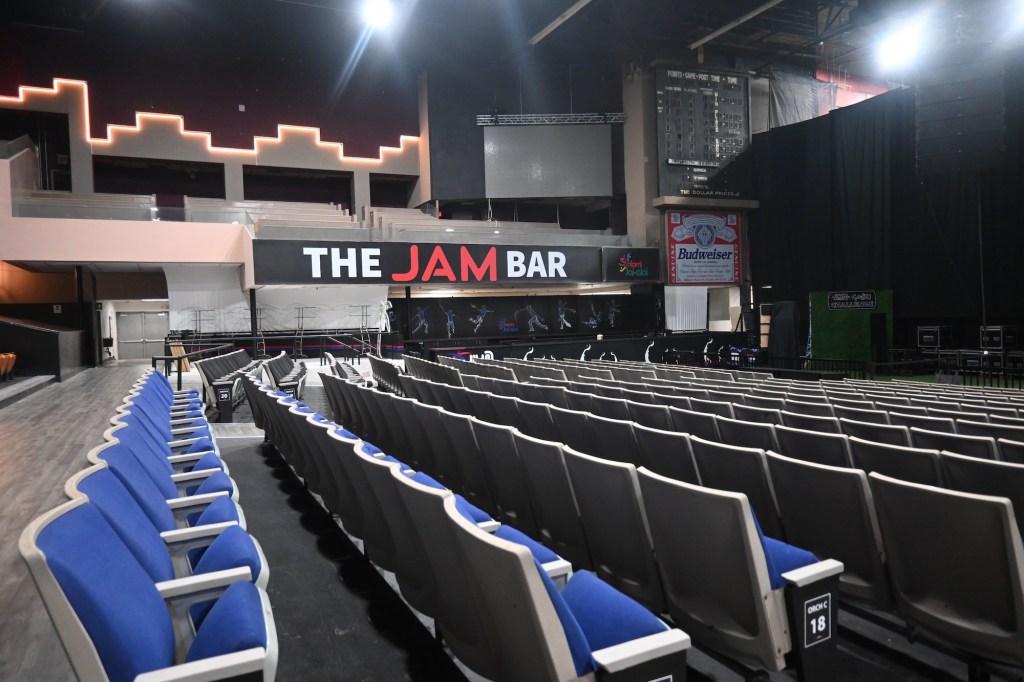
Photo by Monica Mendoza
Inside the New Space
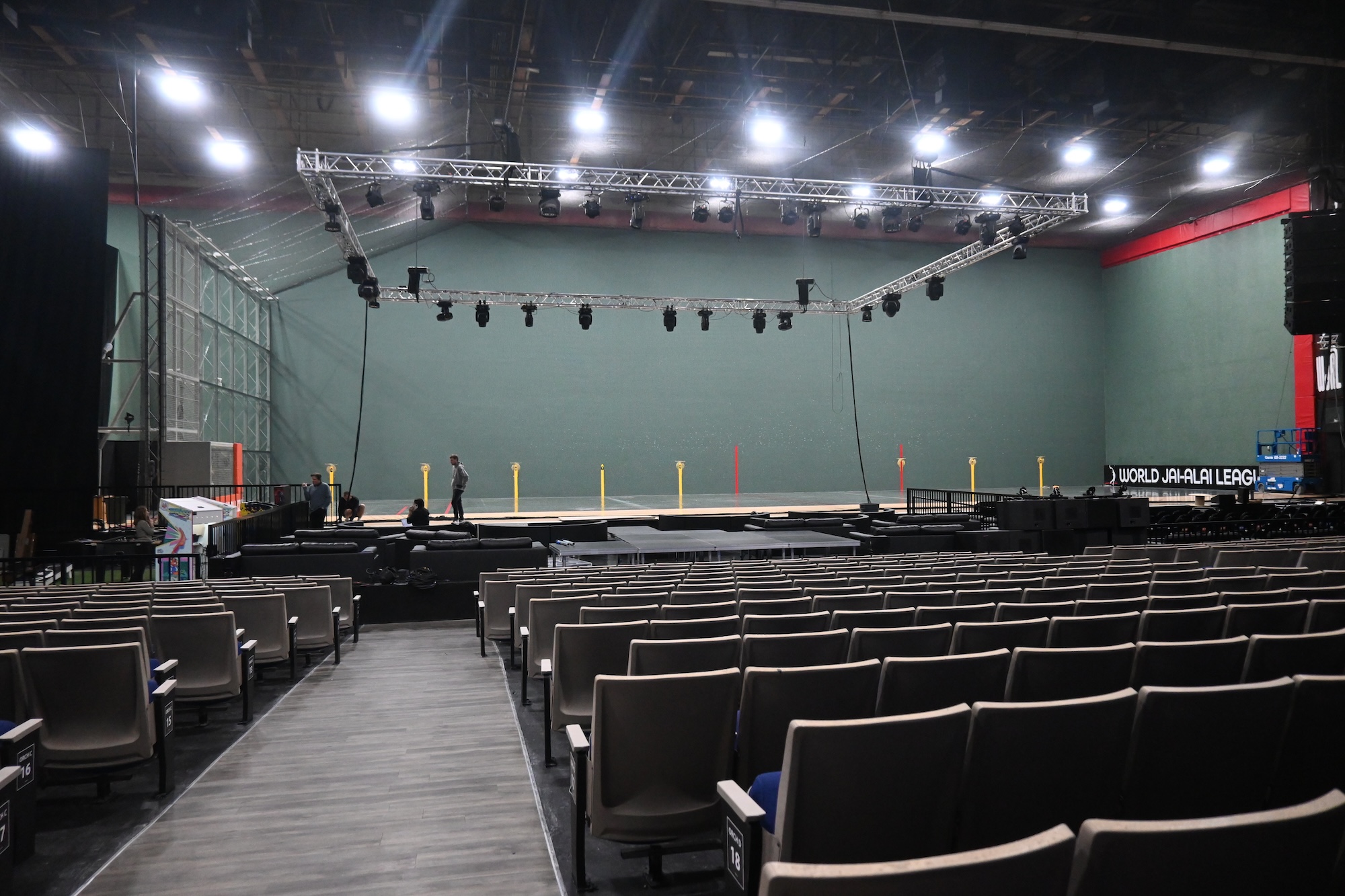
Walking through the renovated arena feels like stepping into a living archive. The court gleams under new lighting. Seating has been restored. A bar and interactive fan zones bring a modern energy to the space. Soon, visitors will also be greeted by a curated display of historic photographs — many previously exhibited at HistoryMiami Museum — celebrating the sport’s deep local roots.
“This building is turning 100 this year,” says Scott Savin, chief operating officer of the World Jai-Alai League. “But this room hadn’t been used for jai-alai in five years. It needed a lot of tender loving care.”
That care came with a price tag of nearly $1 million and a three-month renovation process that included new flooring, new seating, updated amenities, refurbished walls, and a fully redone court. But for Savin, the investment was about restoring dignity as much as infrastructure.
“This is one of the most prestigious jai-alai venues in the world,” he says. “And beyond the sport, it’s also an iconic concert hall. Frank Sinatra played here. Bruce Springsteen. Santana. Aerosmith. There’s sports history, music history, and Miami history all wrapped into this one building.”
Building on that legacy, the arena is designed to host live performances, comedy shows, cultural programming, and special events. Whitney Cummings headlined a post-game set on opening night, while comedian and actor Matt Friend is scheduled to play the venue next month. JAM has upgraded its seating, acoustics, and common areas for these uses.
Into the Next Century
The league, now entering its ninth Battle Court season, has also thought through how the sport presents itself to the public. Traditionally, jai-alai is played in a “fronton,” a term Rodríguez says can feel intimidating or obscure to newcomers. “We stopped using that word,” she explains. “We want this to feel accessible — something people can walk into without feeling like they need a rulebook.”
Battle Court is a team-based format designed to make the game easier to follow and more dynamic for first-time spectators. Six teams compete, featuring 36 professional players from around the world, including Spain’s Basque region, France, Mexico, the Philippines, and the United States. Several players are local standouts, and many come from families where jai-alai spans generations.
“For a lot of these athletes, their fathers played, their grandfathers played, their uncles played,” Rodríguez says.
That lineage is embodied by players like Ben Langhans, whose path to jai-alai was anything but traditional. “My dad played professionally for 13 years,” Langhans says. “But my brother and I grew up playing baseball. There wasn’t a jai-alai court where we lived in North Carolina.” Instead, they trained in batting cages, adapting baseball drills to learn the mechanics of the cesta. Years later, both brothers became national champions, carrying their father’s legacy forward.
For players like Langhans, competing in Miami carries emotional weight. “This is the home of jai-alai,” he says. “To play here, where my dad played — it’s special.”
The venue will host weekly “Jai-Alai Fridays” matches, with games broadcast on ESPN+. Fans can also place wagers through platforms such as Hard Rock Bet and DraftKings. Team ownership includes high-profile names like three-time NBA champion Udonis Haslem, signaling the league’s intention to position jai-alai firmly within contemporary sports culture.
Jam Arena. Doors open at 6:30 p.m. on Fridays and matches start at 7 p.m. at 3500 NW 37th Ave., Miami; jamarena.com.