
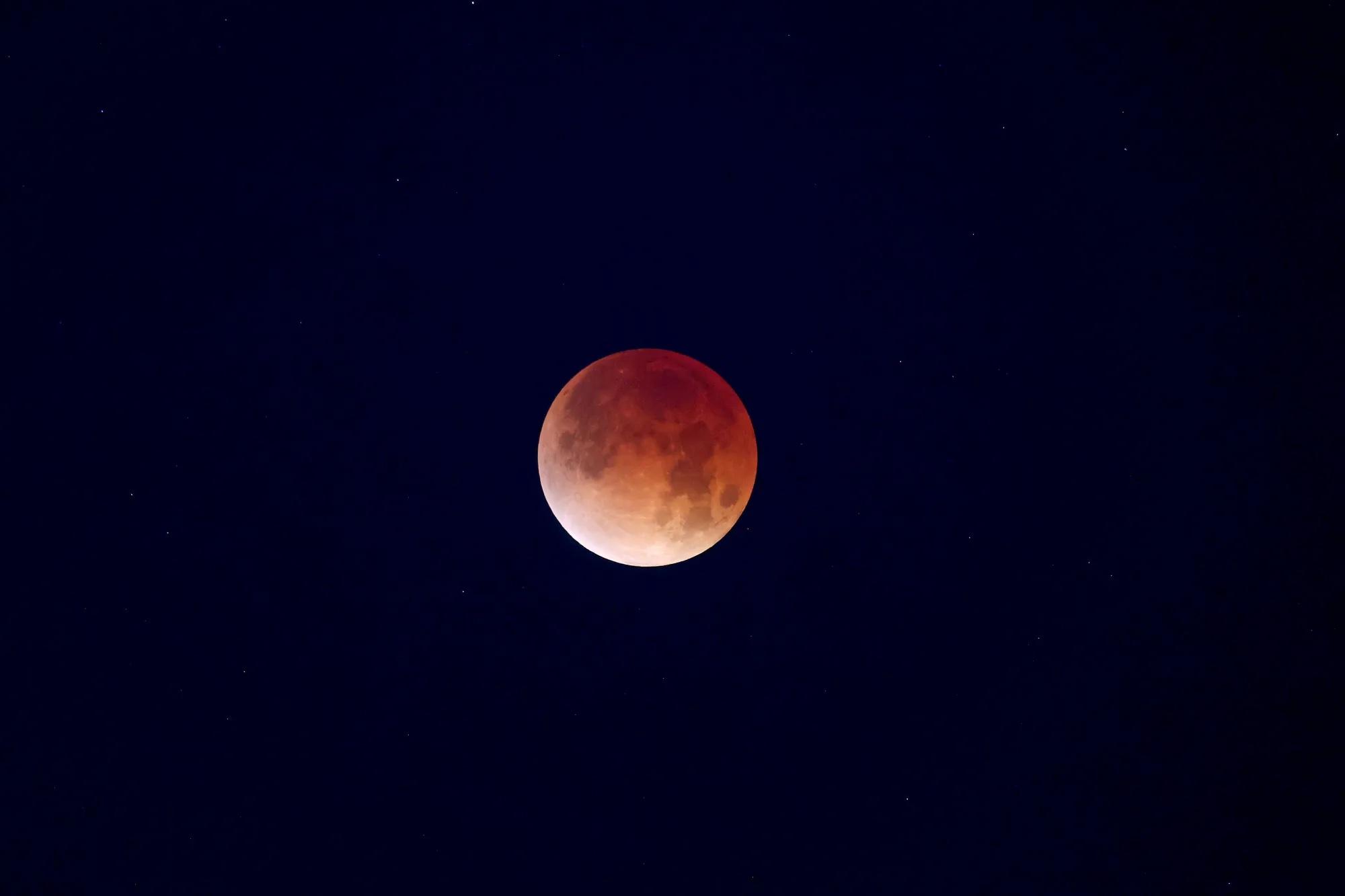
Photo by Michael DeMocker/NASA

Audio By Carbonatix
Astronomers say a special celestial visitor is set to paint Miami skies red late next Thursday — that is, if South Florida’s trademark rains don’t kill the vibe.
According to NASA’s Jet Propulsion Laboratory in California, an astronomically active month is set to end in the wee hours of Aug. 28 with a partial lunar eclipse that will cover about 93% of the moon in Earth’s shadow, giving it the reddish hue from which the term “blood moon” derives. But its visibility in South Florida could depend on rainy conditions expected hours before the light show, according to National Weather Service forecaster Ana Torres-Vazquez.
“Storms that afternoon could result in lingering cloud cover that night,” Torres-Vazquez says.
Noting that the forecast could change as Aug. 28 approaches, Torres-Vazquez says forecasters are expecting “20% to 40% cloud coverage” during the eclipse. “And we’re talking about the entire sky, so there might be some clouds on the horizon and some pockets of visibility,” she says.
The eclipse is expected to peak between 12:12 and 12:14 a.m. Aug. 28, when the moon could appear its darkest and reddest, Torres-Vazquez says.
Lunar eclipses don’t happen every month because the moon’s orbit is tilted relative to Earth’s orbit around the sun, meaning the three bodies don’t usually line up perfectly. Full lunar eclipses are even rarer, making up about 29 percent of all lunar eclipses, according to NASA. And, unlike solar eclipses, lunar eclipses are totally safe to view, despite what that one Palm Beach resident thinks.
“On the night of Aug. 27, continuing into Aug. 28 for some time zones, the full moon slips through Earth’s shadow, resulting in a partial lunar eclipse,” according to NASA. “It will be visible from much of North and South America and parts of Europe and Africa.
“At maximum eclipse, about 93% of the Moon’s diameter will be inside Earth’s dark central shadow, called the umbra. The moon will not be completely covered, but it can look dramatically darkened, with a rusty, coppery tint along the covered edge.”
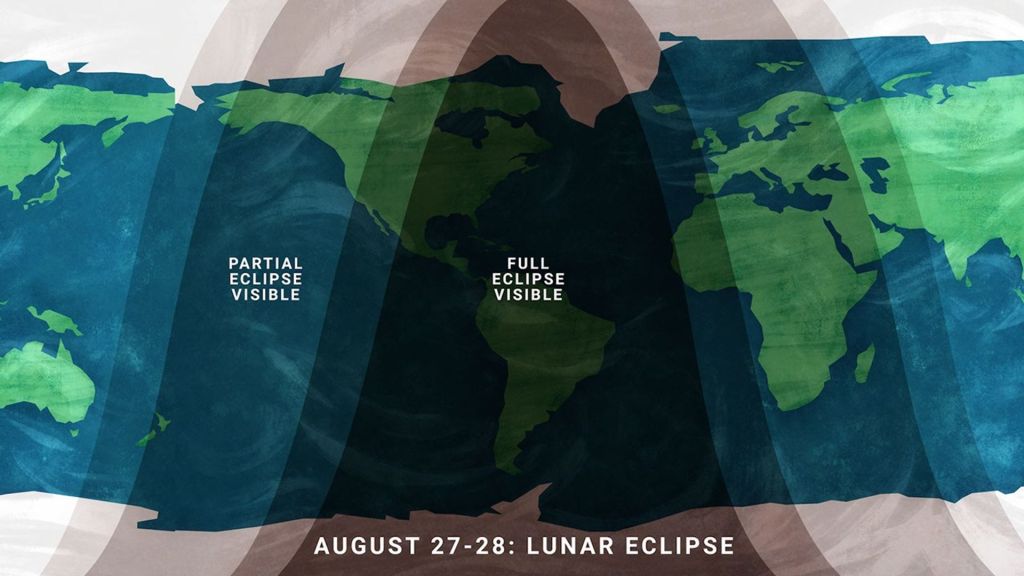
The Aug. 28 partial lunar eclipse caps an eventful month for skywatchers. Portions of Russia, Greenland, and Iceland saw a total solar eclipse, the Northern Hemisphere caught the Perseid meteor shower, and Venus has been visible from both hemispheres all month, according to NASA.
ana torres-vazquez