
Ken Griffin and city images via Getty; Citadel rendering by Foster + Partners; Illustration by Natasha Yee

Audio By Carbonatix
Reader support matters more than ever
We're in the final stretch of our summer campaign. Our goal is to raise $10,000 by August 9 to support the journalism our community relies on. Reader support is helping shape the future of local news.
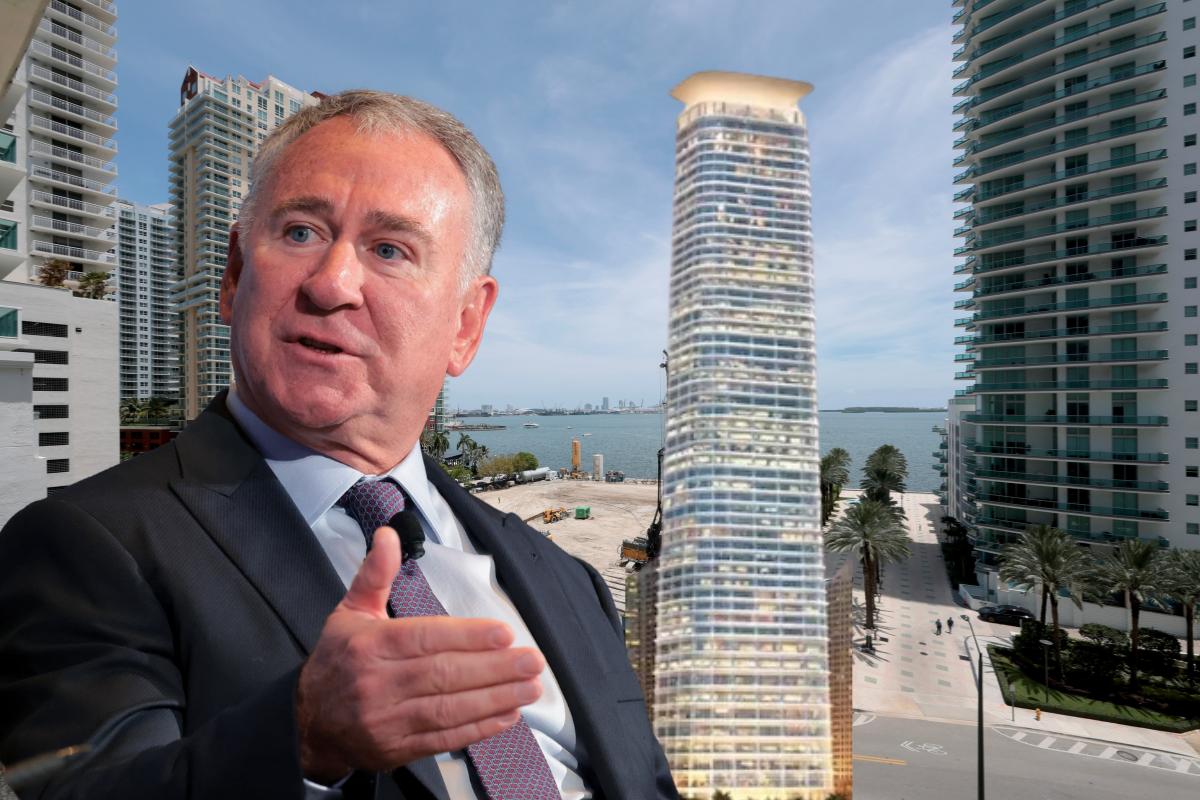
For two years, owners at Solaris at Brickell Bay watched a single buyer quietly acquire units in their 22-story tower and tried to figure out who was behind it.
The purchases came through a series of anonymous Delaware LLCs, each buying individual units in all-cash deals. The shell companies shared a registered agent with the entities that held the commercial property surrounding the building, and many owners concluded the buyer was the billionaire next door.
This week, the speculation was confirmed. Citadel chief workplace officer Paul Darrah said Thursday at a Bisnow real estate summit that Ken Griffin was the buyer and now owns every unit in the building.
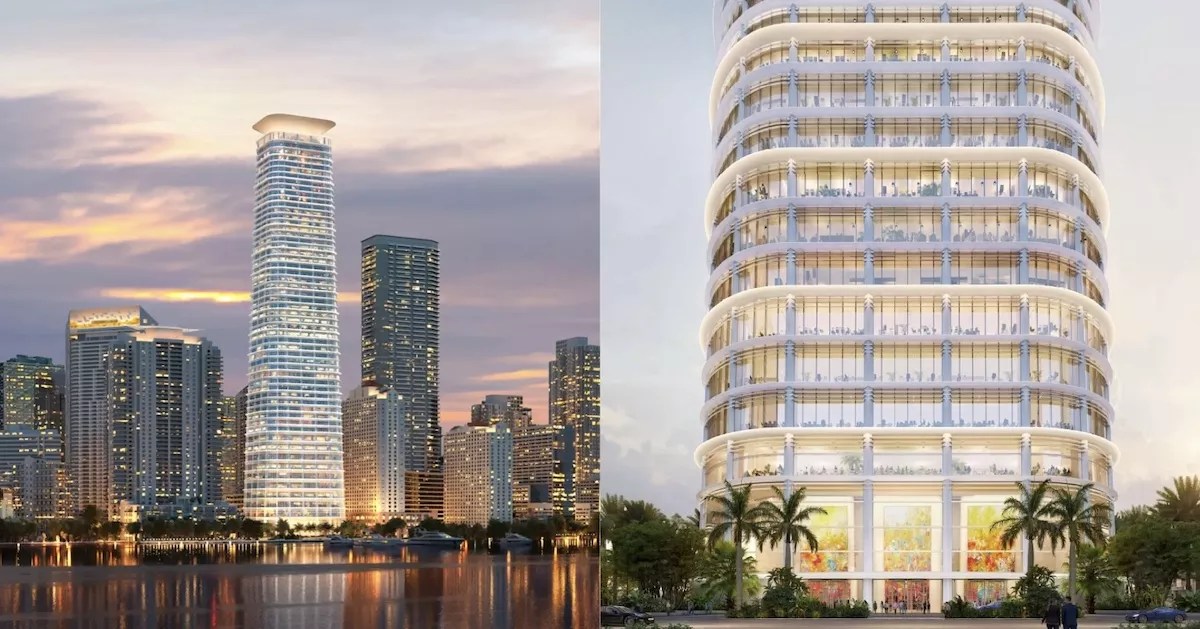
The disclosure clears the way for Griffin to demolish Solaris, which sat in the middle of his 4.2-acre assemblage — the last holdout between the Citadel founder and control of two full city blocks across from his planned 54-story headquarters. In its place, Griffin is proposing 300 apartments and a parking garage with more than 1,400 spaces.
Much of the story was sitting in the public record for anyone willing to follow the paperwork — though not at the address most Brickell projects pass through. Because Griffin’s parcels were folded into Miami-Dade County’s Rapid Transit Zone, the development sidesteps City of Miami zoning review and runs instead through the county’s Brickell Station Sub-Zone under Chapter 33C, a track that rewards transit-adjacent sites with added height, density, and lighter parking requirements. Tracing the filings to the county rather than the city is what surfaces the rest.
The county record shows the headquarters won approval in December, with commissioners granting a variance to shrink the tower’s setback from Biscayne Bay to 40 feet from the standard 50. The project’s attorney, Akerman’s Neisen Kasdin, a former Miami Beach mayor, told the commission it represents a $2.5 billion private investment. The May 13 filing that added
the 300 apartments and the 1,420-space garage, and stripped out the hotel, is an amendment to that already-approved plan, which is why the Solaris demolition can proceed without another fight at City Hall.
Owners told the Wall Street Journal that Griffin repeatedly raised his offers until enough of them agreed to sell — a version of the condo-termination process that has become common in Miami as developers chase scarce land.
Griffin’s Miami push has accelerated amid a public dispute with New York City Mayor Zohran Mamdani, who filmed a video promoting a pied-à-terre tax in front of the $238 million Manhattan penthouse Griffin owns. Griffin said Citadel needed to “double down on our bet in Miami,” and has since swapped the tower’s planned rooftop hotel for more office space.
Rendering by Foster + Partners
He is not alone. Down Brickell Bay Drive, a partnership led by Vlad Doronin’s OKO Group and Oak Row Equities paid $520 million in December for the Brickell Bay Office Tower and Yacht Club Apartments site — the priciest development-site sale in Florida history, topping Griffin’s own 2022 record.
Santander broke ground on a 50-story tower at 1401 Brickell, and Peter Thiel’s family office just set a county office-lease record at 830 Brickell, the same tower where Citadel’s 500 Miami employees work while the headquarters rises.
Even after Solaris falls, Griffin won’t quite own the entire block. On one corner stands a structure built in 1905, once the site of Miami’s first physician’s office, that belongs to the City of Miami and houses the Dade Heritage Trust, an architectural-preservation group. Griffin’s complex will rise around it.