
Photo by Sunny Fischer

Audio By Carbonatix
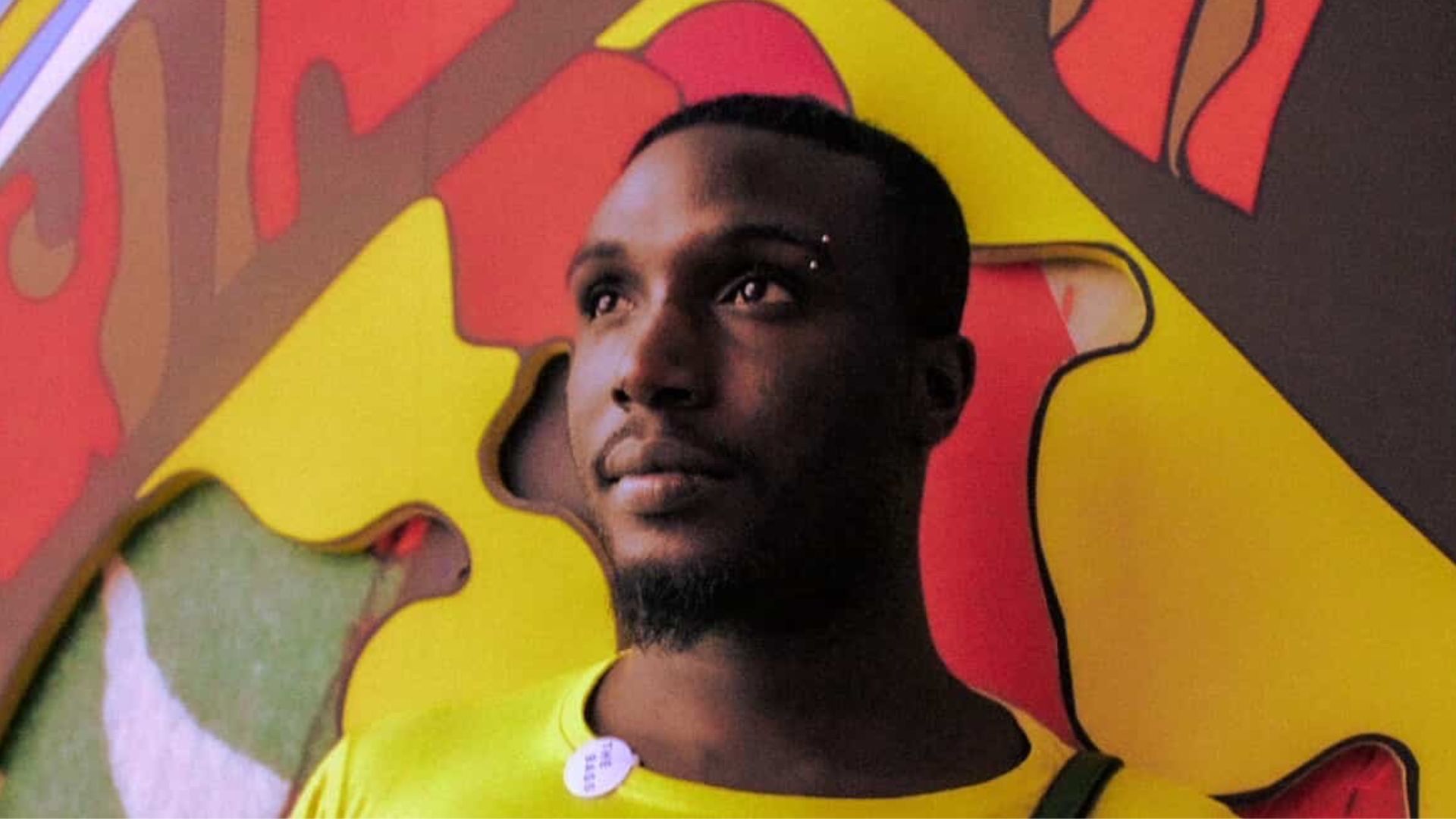
Akia Dorsainvil, known in the Miami music scene as Pressure Point, is a DJ, creative force, and the powerhouse behind Masisi — a Black queer Caribbean party and radio platform. Through music and expression, he channels his Haitian roots and spiritual worlds onto the dance floor. “I think Black people need Jesus and magic to survive,” DJ Pressure Point pleads in conversation with New Times. “I think black people need prayer and self-determination, and with help from our ancestors, who you believe are working in your favor.”
Pressure Point is well aware of the expenses he is incurring on us here. Belief is another subscription to consider. The task of suspending our suspicion of the fantastical to shed the real-world dread that drapes our shoulders. It’s a heavy ask. One answered by the titillating and propulsive vitality of his sets, which bring another form of suspension: emulsion. Here, the dance floor becomes a pocket dimension to those in search of belonging. A place where you plop a version of you to move in all the ways that are perilous beyond here.
His rigidity on the decks is a testament to his spiritual prowess. He demands that you dance. To contort your body in ways that are solely natural to you and allow the vocals to guide you. The reverence he displays for the sounds and voices across the Black musical diaspora is evident. Blending into a kaleidoscopic romp of a Windows Media Player visualizer. Chopping vocals to chants to land on the down beat, stretching out melodic phrases to coo as synths, or leaving them untouched to spill over the beat, and onto the dance floor. All while showing compassion for the energy you’ve already spent. The night and the bodies it cloaks into the wee hours depend on these expenses to survive. The collections of all that he is as a curator, community leader, music nerd, and, most importantly, who he is as Akia.
It’s recording day inside the Little River Cultural Garden, home to Masisi Radio. Encircling the room are the black and white filtered faces of notable Haitian creatives, tacked against the moss-green slab of concrete. Overhead, there are branches of foliage drooping, grazing every shoulder, patting every crown that could reach, gifting them a wreath. Dressed in flowy black trousers and skin-wrapped black vest, Pressure Point is everywhere and everything. It’s a magic trick he’s learned to conjure since starting Masisi.
In 2019, Dorsainvil sought a party for the demographics who looked like him to be free, even if it was just for a night. He formed Masisi. During the pandemic, when the community sought to answer its own questions, it evolved into a platform that hosted fundraisers, auctions, open mics, a cinema club, and an online radio station. Masisi, like any liar for the young and discarded, became too comprehensive to be so insular.
During this three-hour block, he transitions from director to sound engineer and gaffer, moving around the room to attend to the needs of everyone, all while unmarred by the physical exertions of labor: sweat. Fresh off his first trip to London, he’s unbothered. That’s not to say there’s no lamenting being done. There are things beyond his grasp that he condemns, silently. The big one is superstardom, and who does he have to be to reach it?
“I guess it would be beneficial to have a persona.” Throwing his head back, a bitter chuckle unaligned with the carefree visual. The morose lighting accentuates his beaming, velvety, granular profile.
Persona falls on the outskirts of magic. Let Dorsainvil tell it, there’s no separation between him and the DJ. Both are collections of everything around them. Both are the offspring of ancestors who went a far way south so the next generation can live a life far better than their own. Each serves the other in its own fashion. Without Dorsainvil to fund these projects, Pressure Point would be an ideological thesis. But the idea is the same: Accepting that the current version of you is unable to fulfill a vision as is, so recreating yourself for the vision is the most common magic trick of all.
His lullaby-soft tenor dissolves when discussing the range of the community they represent, placing clear boundaries between the city they serve and the community he seeks to be no King of. “I can’t worry about Miami as a whole, I just can’t,” he says, “I’ve got to worry about my community. The people who check up on me, where it flows into each other’s lives directly, and just try to listen and be like, make sure that my humanity is at the center.”
Masisi Radio is a sanctuary, a college nestled within a nominal and unassuming building. A closed practice designated solely for the next generation of Queer creatives. A language where “My Love” is less of a noun phrase and more of a symbolic gesture, an open palm resting on top of flesh. A send-off to someplace safer than these walls. Confined inside the walls, you are human. But most of all, you are your own savior.
“I do think that it’s okay to be selfish, like, at the end of the day, I’m not here to save you. I’m not.” Unfurling his arms off his chest, closing the distance his words have to travel. “I didn’t sign up for this job at all to save anybody. The job I signed up for was to be an artist, and hopefully, through my example, that folks know that they can do the same thing.”
The night closes with one last hymn from a forebearer, the original Miami Queen of Soul, Betty Wright. “My Baby Ain’t My Baby Anymore” is an intimate revelation of loss. Wright is composed, “Maybe it doesn’t pay to play fair in this game called love,” stonewalls the horns’ caterwauling. As much as we spoke about the community, love has a price. The price is an investment. To imagine a locale that accepts you and live long enough to reach it. As we said goodbye, Pressure Point says with a hug, “Get home safe, okay, love.” Especially on a Sunday, when the ancestors had an entire three-hour block dedicated to them, a simple goodbye requires the power of prayer.