
Photo by B. Scott McLendon

Audio By Carbonatix
Reader support matters more than ever
We're in the final stretch of our summer campaign. Our goal is to raise $10,000 by August 9 to support the journalism our community relies on. Reader support is helping shape the future of local news.
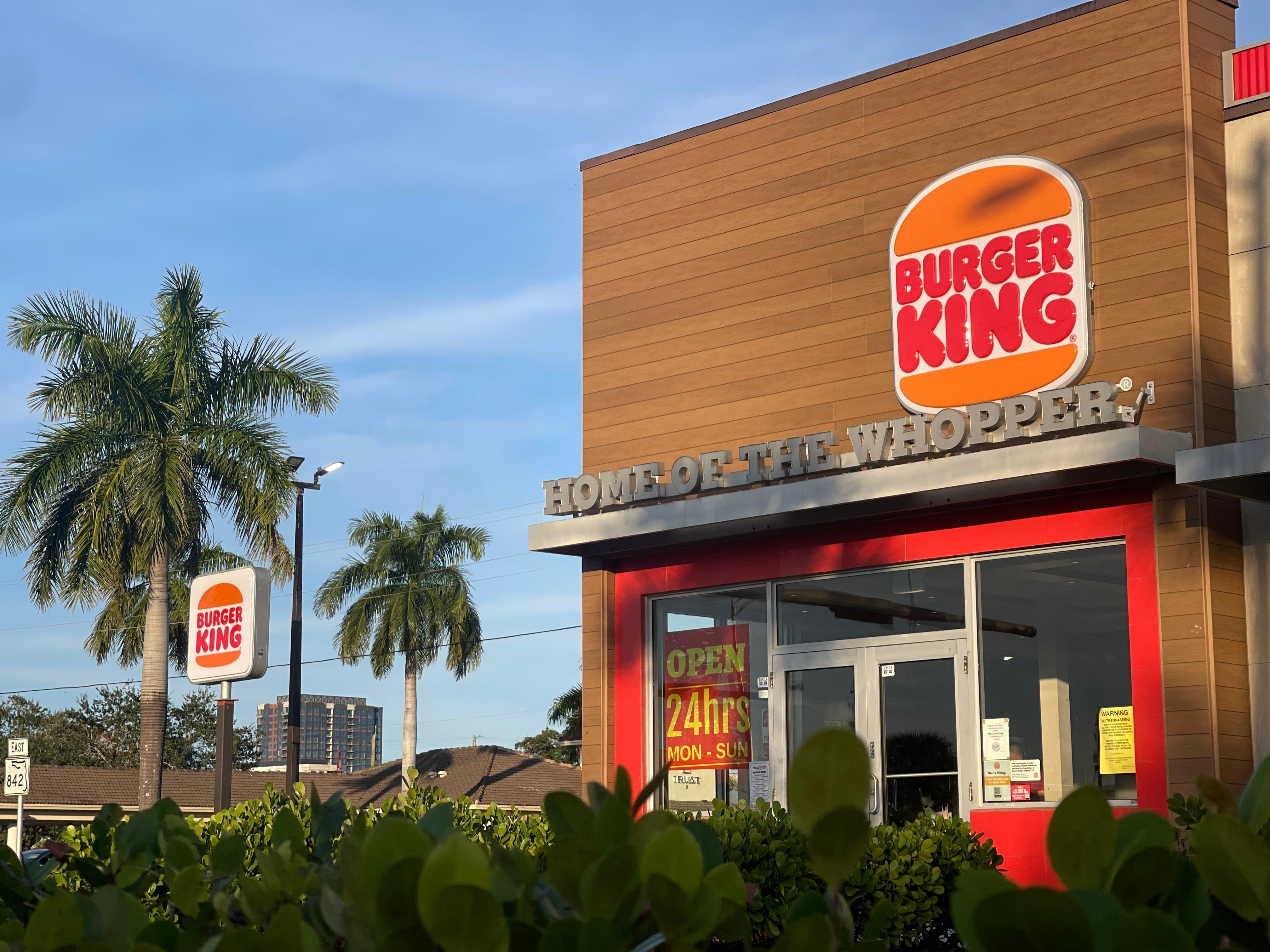
Paper crowns, onion ring-laced French fries, hours of laughter, and a place where language barriers dissipate in the presence of a universal word: “Whopper,” Burger King is a place that evokes powerful memories for immigrants, as many are sharing in a pair of social media posts. Commenters from social media who spoke to New Times agreed that the Miami-based burger joint is an essential part of the American Dream; it’s where a meal signifies that you’ve made it.
The realization for many began where all major modern trends spawn: TikTok, where users began sharing stories of their parents’ love for Burger King. Americana buffs may recall that Burger King actually began as Insta-Burger King in Jacksonville in the early 1950s, before moving its headquarters to Miami in 1959, where it completed its transformation into the Burger King we know today. According to Miami culinary savant Burger Beast, the first Insta-Burger King in Miami opened on December 4, 1954, at 3090 NW 36th St.
Nine more locations opened in then-Dade County during that decade, establishing a sizable foothold in South Florida just before scores of Cuban immigrants arrived. But proximity to immigration hotspots is only part of the equation, according to those who spoke to New Times. After all, McDonald’s has, in many cases, been in the same markets longer than Burger King (which did not respond to New Times‘ request for comment).
“They didn’t treat you any differently, you wouldn’t get ridiculed, questioned, or made to feel bad for having an accent,” Vanessa Weir, the daughter of Ecuadorian immigrants, tells New Times when pondering why immigrants gravitate to Burger King over McDonald’s over other burger chains. Her comments mirrored the sentiments of many others in an Instagram post.
The page @wearemitu posted the aforementioned TikTok story, where a user shared an emotional photo after hearing about his dad’s first day in the U.S. Droves of commenters seemed to have had the same lightbulb moment, collectively recognizing Burger King as the place where their immigrant parents felt they had made it.
“It was a place you could go and laugh for hours,” Weir tells New Times.
Weir’s parents immigrated to Florida from Ecuador after her grandfather, whom she called “Grandpa” because he loved having an American title, she tells New Times. She has countless memories of grandpa taking her to the Burger King counter for a Whopper; it was one of the first English words he learned to say.
“My grandfather didn’t speak a word of English, but he was working lots of jobs,” she recalls. “He could say ‘hamburger,’ but that’s all he knew at first.
“Then he discovered Burger King. He could order a Whopper and understand that word.”
Something about that word, about that particular sandwich, has woven itself into the fabric of immigrants’ lives as they sew themselves into the American tapestry. Miami resident Danny Beltran agreed the word is nearly sacred in his house, too. But like Weir and hundreds of commenters on social media, he didn’t know the restaurant meant so much to other immigrant families.
Beltran’s parents moved from Cuba in the ’80s before getting married in South Florida, where he grew up, spending many a meal at Burger King. He didn’t realize those family memories at the chain — as is true for many first-generation immigrants — actually predated him.
“They were here for a few weeks, working odd jobs in their 20s, you know. They didn’t know any English when they went in the first time, so they ordered what everyone else was getting: the ‘Whopper,'” Beltran says. “It cost a dollar, so they had their first date here (in the U.S.) at a Burger King.”
For many, family memories revolve around trips to Burger King, Beltran tells New Times. Mike Flores, also the son of Cuban immigrants, was one of dozens of commenters who agreed with Beltran, telling New Times the restaurant became synonymous with rewards and all manner of celebrations, ranging from good report cards and birthdays to milestones like first jobs, first dates, and first paychecks.
“It really started because of my parents,” Flores, who described Burger King meals among his earliest memories, tells New Times. “They took us there any time we were feeling good, or anytime my dad wanted to take us out to a nice restaurant.”
He remembers walking with his parents from their apartment for miles to the nearest Burger King. While he may be far removed from his report card days, and he’s outgrown the Whopper Jr., Flores still goes to Burger King anytime he wants to treat himself, he says.
For Beltran, Weir, Flores, and seemingly many other immigrant families, the memories of Burger King and its status as an American welcome mat are charbroiled into their souls.
“When you come to this country, the American dream is buying a house,” Weir says, “but this is the first step that says, ‘I made it.'”