
Photo from U.S. Fish and Wildlife Service

Audio By Carbonatix
Keep Miami New Times Free
We’re aiming to raise $7,500 by April 26. Your support ensures New Times can continue watching out for you and our community. No paywall. Always accessible. Daily online and weekly in print.
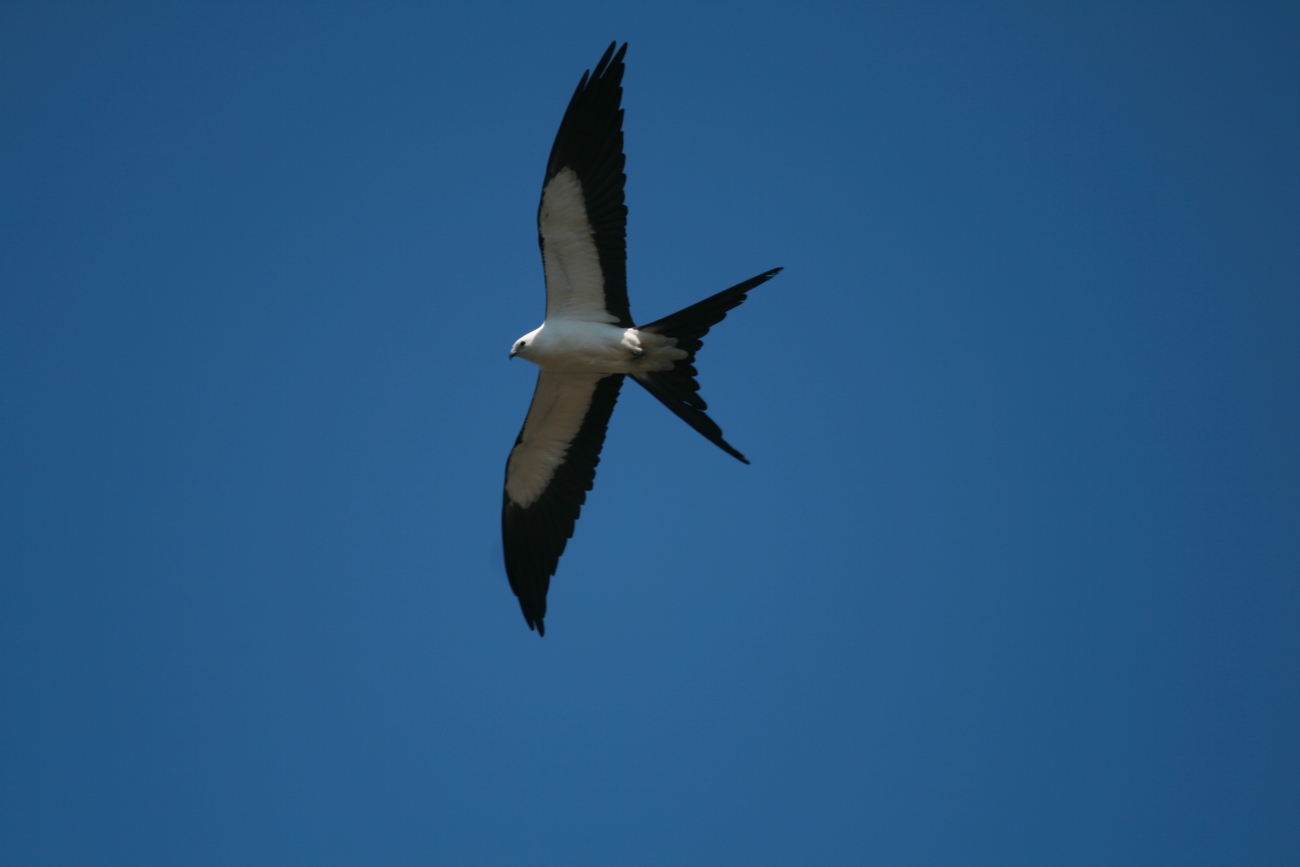
Biologists and birders are celebrating the successful return of a pair of vulnerable swallow-tailed kites from their annual migration to South America.
In an Instagram post this week, Palm Beach County Environmental Resources Management officials announced the March arrival of two tagged males, named Cypress and Martin, back to their nesting grounds in Palm Beach County. Their safe return is ecologically significant because the species’ population took a skydive in beginning in the late 19th century, according to the Florida Fish and Wildlife Conservation Commission (FWC).
FWC describes the sight of the bird as unforgettable: “a black-and-white raptor with a deeply forked tail.”
The historic range of the kite stretched as far up the Mississippi River as Minnesota, but populations plummeted by the early 1900s. Now, they mostly live in Florida, although they can be seen in several other southeastern states, FWC notes.
The Palm Beach County birds flew 5,000 miles south to Brazil, where they typically spend six to seven months in the Southern Hemisphere during the Northern Hemisphere’s winter. Cypress was the first to return home in early March, taking a route across the Gulf of Mexico to the panhandle before flying south almost the full length of the state until reaching Palm Beach County March 9.
Martin followed Cypress’ journey a week later, crossing the Yucatan March 8 and arriving in Pensacola about 35 hours later and finally arriving home March 16.
“Martin’s story is significant because his tracker did not upload any location data since August 2025, thus it was a big surprise to ‘hear’ from him once again,” the environmental resources office said. “His tracker had recorded and stored all the GPS data while he was traveling through Central and South America, and when he was able to connect with a cell network again, all that data was downloaded so we could see where he has been.”
It’s not all good news, however, as two other tagged kites still haven’t been accounted for, with no data recorded for months. Luckey Lox, a female tagged in 2023, last reported from the Yucatan in late February. Researchers believe she might have left for Palm Beach County only hours before Cypress, but cold fronts and headwinds crossing the Gulf of Mexico during that time may have thrown her off course.
“She could have encountered deadly headwinds preventing her from reaching land,” researchers further noted. “We are hopeful that she was carried by the wind to a remote area where she is resting and that we will get data from her again.”
Luckey Buck, Lox’s mate who researchers tagged last year, has been out of contact since October 2025. Researchers noted many kites are still en route to South Florida, so they’re still hopeful Luckey Buck could fly back within cell range where they can track him once again.
Researchers track the kites’ movements to tract roosts, foraging areas, stopover sites, winter destinations, and to see how they use public and private lands to survive throughout the Southeastern U.S.