
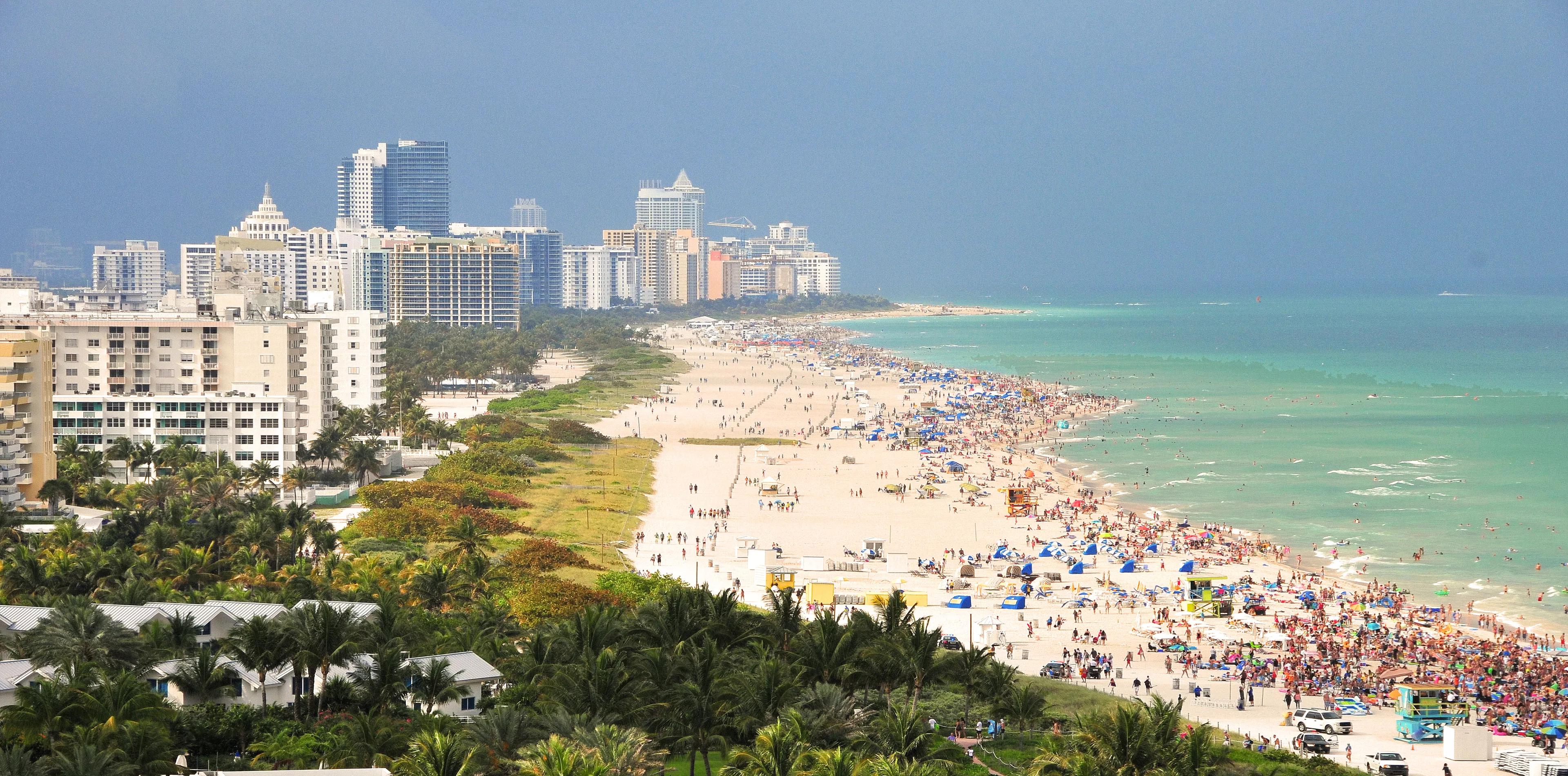
Photo by Mike McBey/Flickr

Audio By Carbonatix
A water quality advisory from the Florida Department of Health (DOH) is warning about an, erm, number two problem at several Miami beaches.
On Friday, the DOH issued an advisory indicating that testing completed the day prior revealed that water quality at Golden Beach, Bark Beach (79th St.), and North Shore Ocean Terrace (73rd St.) does not meet the department’s recommended recreational water quality criteria for Enterococcus bacteria — naturally occurring bacteria that typically live harmlessly in the human intestines and genital tract. Sampling conducted during regular water quality monitoring showed that bacterial levels exceeded the threshold established by state guidelines.
In other words, the beaches have too much poop to swim in.
“DOH-Miami-Dade advises against any water-related activities at these locations due to an increased risk of illness in swimmers,” the department said in an advisory.
The results indicate that “contact with the water at this site may pose increased risk of infectious disease, particularly for susceptible individuals,” according to the DOH’s website. Enterococci can cause urinary tract infections, bloodstream infections, meningitis, and wound infections, among other illnesses.
This advisory will remain in effect until bacterial levels fall below the accepted health threshold. For more information, call DOH-Miami-Dade at 305-324-2400.
The advisory comes amid a separate fecal-related public health concern in South Florida.
A microscopic parasite that causes weeks of watery diarrhea is making people sick across the country — including in South Florida, where health officials have reported more than a dozen cases in recent months. Investigators have yet to identify the source of this year’s cases, but past outbreaks have been linked to contaminated fresh produce, including lettuce, basil, cilantro, salad mixes, and raspberries.
While the parasite is rarely deadly, health experts warn that an infection can be far more miserable and long-lasting than a typical stomach bug. According to the Florida Department of Health’s reportable disease database, there have been 60 cases of cyclosporiasis reported statewide between January 1 and July 4. Sixteen of those cases were reported in South Florida, including 9 cases in Miami-Dade County, 5 cases in Broward County, and two cases in Palm Beach County.
This is a breaking story and will be updated as events warrant.