Photo by Joe Raedle/Getty Images

Audio By Carbonatix
Reader support matters more than ever
We're in the final stretch of our summer campaign. Our goal is to raise $10,000 by August 9 to support the journalism our community relies on. Reader support is helping shape the future of local news.
On paper, it appeared to be one of South Florida’s most lucrative real estate deals.
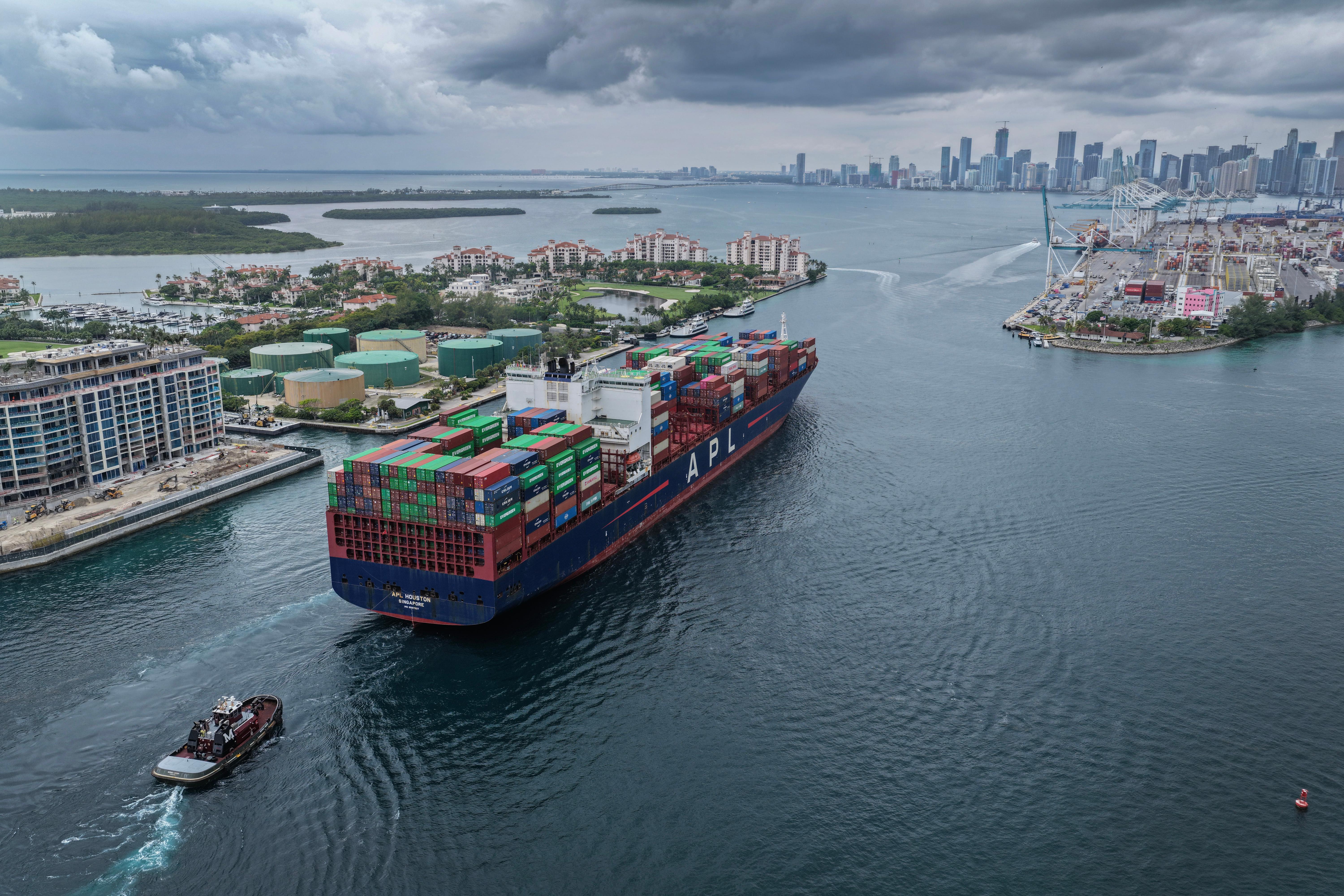
In the fall of 2025, HRP Fisher Island LLC, a development joint venture led by the Chicago-area HRP Group, paid $180 million for a 9.6-acre waterfront property on the north shore of Fisher Island, the private residential enclave just south of Miami Beach. The property includes a nearly century-old fuel depot that supplies PortMiami’s cruise industry.
Under the terms of the purchase, the partnership planned to remove the fuel storage tanks and replace them with two 13-story condominium towers expected to cost about $2 billion. The redevelopment plan also would have eliminated a facility that many Fisher Island residents had long viewed as an eyesore.
The purchase immediately raised concerns among Miami-Dade County officials because the fuel depot serves the cruise line industry, one of the region’s largest economic engines.
Led by County Chief Operating Officer Jimmy Morales and PortMiami Director Hydi Webb, county officials spent roughly eight months negotiating with HRP after the property changed hands. By May 2026, the two sides had reportedly reached an agreement in principle: Miami-Dade County would pay HRP Fisher Island LLC $200 million upfront to acquire the property, preserving the fuel depot. The county also agreed to pay another $200 million over the next 20 years, bringing the total value of the proposed agreement to up to $400 million.
But it unraveled within days.
Details first surfaced in a lawsuit filed May 28 by the Fisher Island Community Association and the Fisher Island Club, which maintain much of the island’s infrastructure and amenities. During the following weekend, The Guardian , which described the ordeal as a “three-way tug-of-war” and The Wall Street Journal reported on the proposed agreement. By the following Wednesday, Morales and Webb had submitted their resignations.
On June 5, Miami-Dade County Mayor Daniella Levine Cava announced that she was canceling the proposed agreement, citing its cost to taxpayers.
In an interview with New Times three weeks later, Cava said she believed the developer was attempting to use its ownership of critical infrastructure to secure an excessive payout from the county.
“It was simply too high a price,” Cava said. “I will not allow developers to hold our infrastructure hostage that we know is critical to PortMiami, that is critical to our jobs, to our economy. That is why I took the action I did.”
The deal falls apart
During the county commission’s June meeting, Cava explained her decision in greater detail. Commissioners voted 12-1 to support pursuing eminent domain to acquire the property, with compensation to be determined through the legal process.
State law requires the county and HRP to negotiate for 30 days before an eminent domain case can proceed. If negotiations fail, a jury would determine the property’s fair market value. Those negotiations had not begun by press time.
HRP executives sharply criticized the county’s decision.
In a June 16 statement issued after commissioners backed Cava’s decision, HRP Group CEO Roberto E. Perez argued that Miami-Dade officials had missed earlier opportunities to purchase the property from its previous owner, Denver-based TransMontaigne Partners, before it was marketed to developers.
“The former owner provided extensive notice to the County and Port that the property would ultimately be sold to a developer …(and) the property was marketed to real estate developers in the public sale,” Perez said.
Perez said HRP acquired the property “through a fully transparent, publicly advertised process” and that the company “made our intentions to build a world-class residential development clear from day one.”
Perez said HRP would “aggressively fight this unconstitutional seizure of our property,” adding that the dispute would ultimately cost taxpayers. Perez declined an interview request from Miami New Times.
The dispute has since expanded beyond the county and HRP.
Board members of the Fisher Island Club and Fisher Island Community Association allege that HRP promised to transfer four acres of the property to island residents for their exclusive use after the partnership completed its purchase in September 2025.
According to a lawsuit filed May 28, that transfer never occurred. The organizations instead allege that HRP negotiated the proposed agreement with Miami-Dade County without informing them.
Lawyers representing both organizations also sought to block the county’s planned use of eminent domain.
Cava told New Times that she was not involved in negotiations over the property until shortly before the proposed agreement became public.
According to an HRP spokesperson who cited information from TransMontaigne Partners, preliminary discussions between county officials and the property’s previous owner began in June 2022. Formal negotiations continued after HRP purchased the property in late 2025, but she said she was not directly involved.
“I was not included or involved in those discussions,” Cava said. “It wasn’t until the weekend (of May 30-31, 2026) in which I reviewed the full mediated deal … that I thoroughly understood the full breadth and total final cost of the deal and questioned the validity of the deal.”
Cava said Deputy Mayor Roy Coley played a key role in reviewing the proposed agreement after she directed staff to reexamine it.
During that review, Coley identified a 1978 county covenant covering part of the property that restricts its use to fuel-related operations.
Coley told reporters the restriction was originally requested by the company operating the fuel depot at the time. According to Coley, removing the covenant today would require approval from two-thirds of the county commission.
An HRP spokesperson disputed Coley’s interpretation, telling New Times that the covenant applies to only about one-third of the property and “does not affect any portion of the property where our redevelopment will occur.”
The spokesperson also rejected suggestions that the partnership purchased the property primarily to resell it.
“The suggestion that our plan was anything other than real estate professionals pursuing one of the most exciting development opportunities in the country is illogical and absurd,” the spokesperson said.
People familiar with negotiations between HRP and Fisher Island organizations offered a different account.
According to James Ferraro, chairman of the Fisher Island Community Association, two members of the partnership favored selling the property to the county rather than developing it.
Ferraro identified those partners as Patrick Dovigi, the Canadian businessman and former professional hockey goaltender, and Russell Galbut, co-founder of urban development firm Crescent Heights.
“From the get-go, Galbut and Dovigi were flippers, they were just out to make a buck,” Ferraro said. “Others warmed up to the idea when they saw the pot of gold that they were going to get.”
Galbut declined to comment. Dovigi did not respond to multiple interview requests.
An HRP spokesperson disputed Ferraro’s account, saying he had made “multiple wildly inaccurate statements that directly contradict his prior statements and the agreements he signed on behalf of FICA.”
Former U.S. Rep. Joe Garcia was among the earliest public critics of the proposed agreement, holding a press conference on May 21 to oppose it.
Garcia said the dispute illustrates the importance of balancing private development interests with public infrastructure needs.
“There is a difference between piracy and capitalism,” Garcia said. “One is based on maximum gain for the least investment and removes all moral and ethical boundaries. The other is precisely based on rules and ethics that maximize gain for the private and community good. Fortunately, our political and community leaders may have learned the difference after this fiasco.”