

Audio By Carbonatix
South Florida is already home to iguanas, crocodiles, and alligators, and all manner of dangerous animals (looking at you, Burmese pythons), but few likely know we also have dragons.
Invasive species hunters are noticing Nile monitors on their ventures through South Florida’s waterways while searching for other dangerous reptiles. According to Florida Fish and Wildlife Conservation Commission (FWC) officials, Nile monitors have been in South Florida since the 1990s and were first noted in Miami-Dade County in 2008, but hunters say they’re increasingly encountering the lizards.
South Florida-based invasive species hunter Mike Kimmel (AKA python cowboy) describes the Nile monitor as essentially a smaller version of a Komodo dragon, according to Outdoor Life. The Komodo dragon and Nile monitor belong to the same genus (Varanus) and family (Varanidae). While the Komodo dragon is the largest living monitor lizard, the Nile monitor is the largest African monitor.
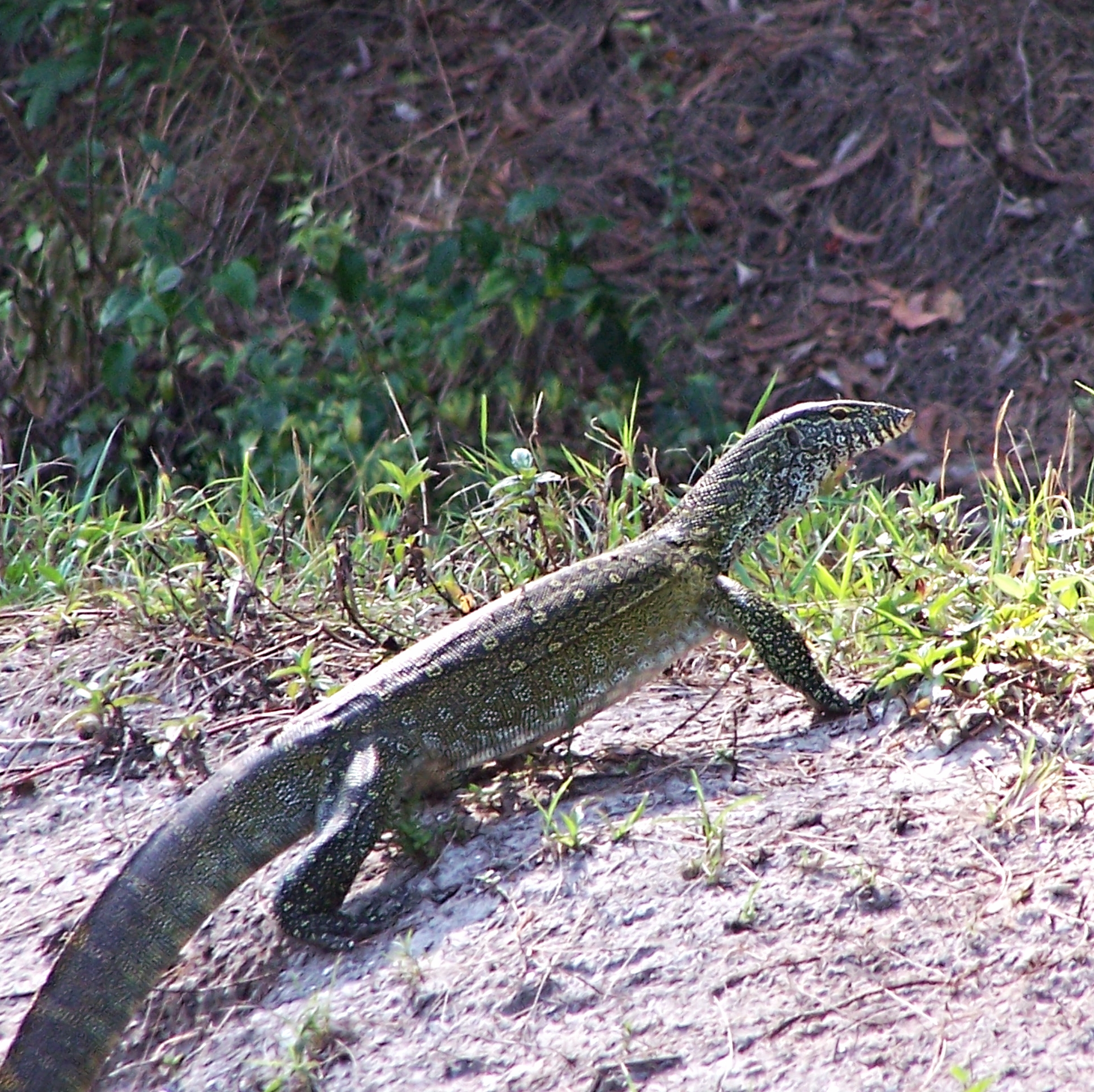
FWC describes the lizard as a semi-aquatic animal with olive-green/black skin with cream-colored or yellow stripes. Their tails are usually one-and-a-half times longer than their bodies and are rudder-shaped to help navigate waterways.
“Nile monitors may be observed basking on rocks and branches and are often seen in or close to water,” according to FWC. “They are mostly active during the day. At night they may sleep on branches or submerged in water in warm weather or retreat to burrows in cooler weather. Nile monitors are skillful climbers and adept swimmers. They can remain under water for 12-15 minutes.”
Their diet, like many invasive species, is broad and includes many of Florida’s native species, including crabs, crayfish, mussels, snails, slugs, termites, caterpillars, beetles, spiders, grasshoppers, crickets, frogs, fish, toads, lizards, turtles, snakes, young crocodiles, birds (and their eggs), as well as small mammals, according to FWC.
“While they’ve been in the area a little while, they’re just starting to become a problem where people are seeing them more, and they’re starting to have an effect on our native wildlife,” Kimmel says in a YouTube video.
People have spotted the Nile monitor in Lee and Palm Beach counties for years, but are now seeing them more often in Broward and Miami-Dade counties, according to FWC and hunters like Kimmel.
Like other invasive species, including Burmese pythons and green iguanas, it’s legal to humanely kill Nile monitors on private property without a permit, with landowner permission, or on one of 32 commission-managed lands in South Florida.
“It’s a predatory lizard and they don’t mess around,” Kimmel says in the video. “They’re not dumb. They’re more like a python mixed with an iguana. That’s a good way to think of them.”