
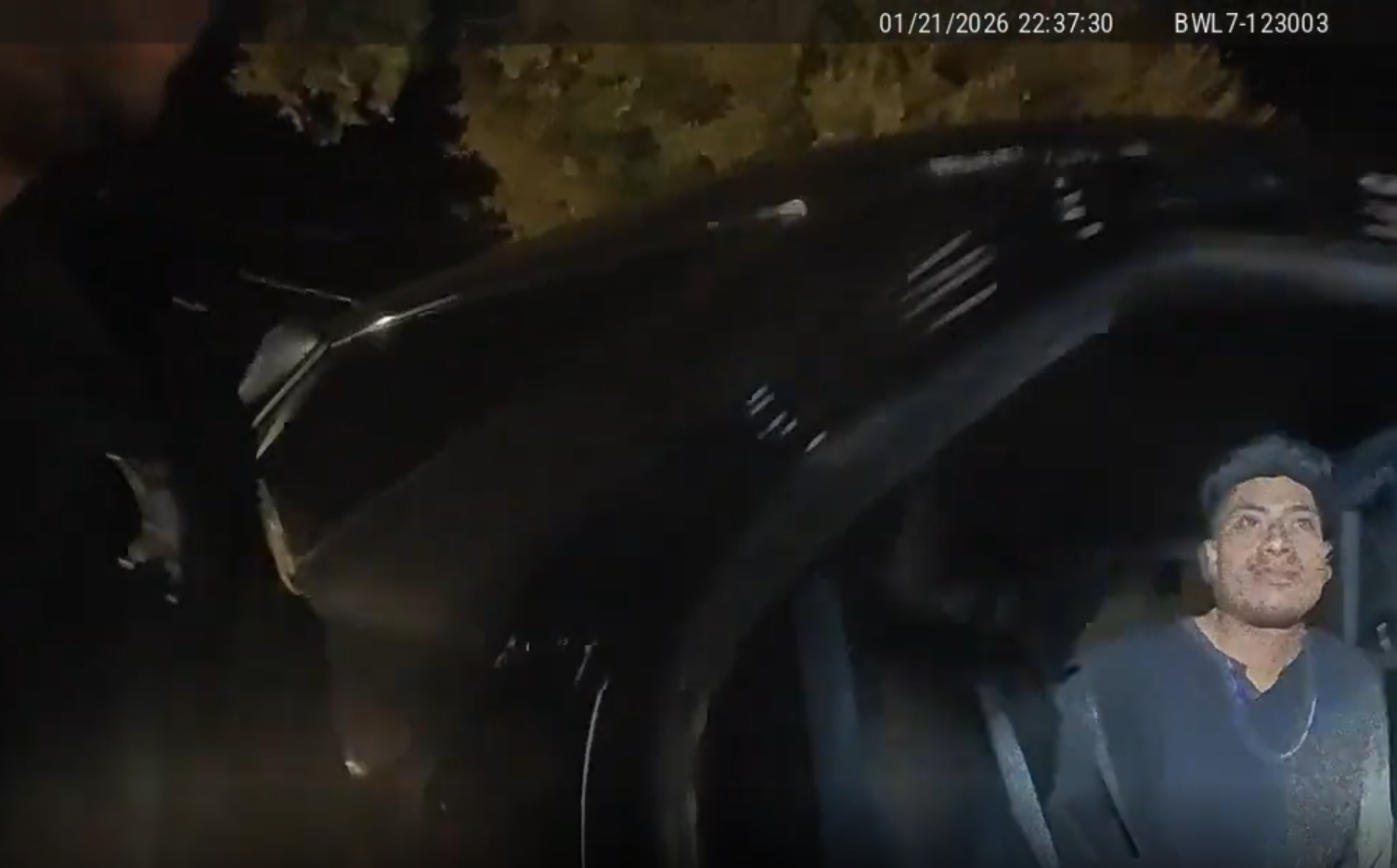
Screenshot via Edgewater Police Department body camera footage

Audio By Carbonatix
The police encounter that led up to a 19-year-old becoming one of the youngest people to die in U.S. Immigration and Customs (ICE) custody started with him riding a scooter and escalated into officers shoving him to the ground, body-camera footage obtained by New Times shows.
On the evening of January 21, Royer Perez-Jimenez — who was born in Mexico — was arrested by Florida’s Edgewater Police Department and charged with impersonation and resisting an officer, both misdemeanors, according to an arrest report obtained by New Times. (An ICE statement erroneously characterized the impersonation charge as a felony.) Police say they attempted to stop Perez for crossing traffic lanes without using a crosswalk, but he allegedly refused to pull over.
The newly released footage shows the rough arrest near Daytona Beach that set off a chain of events leading to his transfer into ICE custody at the Glades County Detention Center, where officials say he died suddenly last week, drawing international attention and scrutiny. ICE authorities have described his death, which remains under investigation, as a “presumed” suicide.
In the footage, officers are heard yelling at Perez to stop. Then, two officers are seen tackling Perez to the ground and struggling to communicate with him. He eventually tells them through a Spanish-language translator that he speaks Tzotzil, a Mayan language spoken by Indigenous communities in the Mexican state of Chiapas, where he is from.
The footage begins around 10 p.m. on January 21, showing officers exiting their patrol cars and approaching Perez, who is holding a black scooter, before tackling him onto the sidewalk.
Perez is then seen lying face down as officers kneel on his back and restrain him in an attempt to handcuff him.
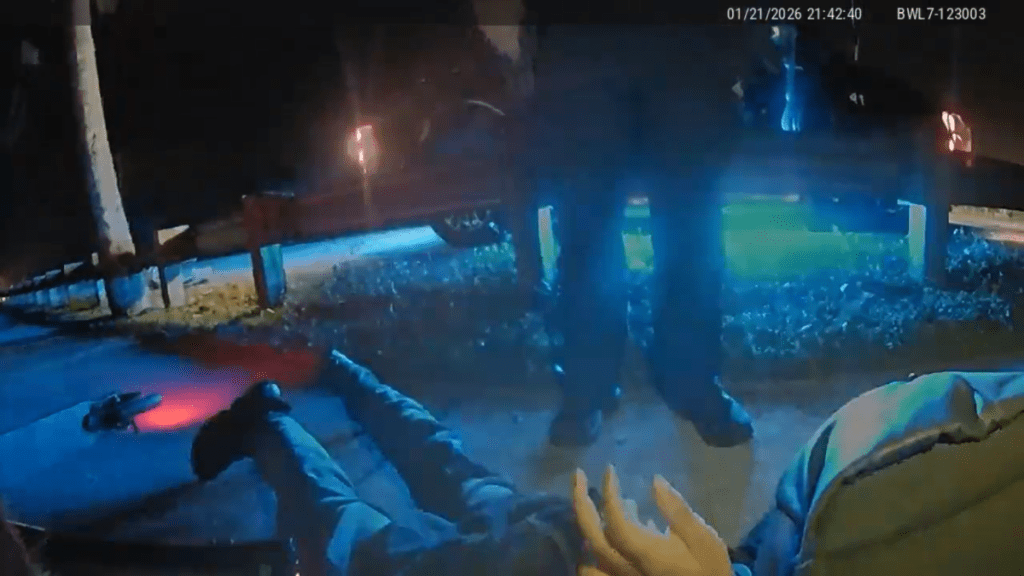
Screenshot via Edgewater Police Department body camera footage
“Put your hands behind your back,” an officer identified in public records as Vincent Castellano demands.
“I no speak English,” Perez says.
“OK, hands — uh, manos — behind your back. Let me see hands,” Castellano says.
Perez is heard grunting and crying out in apparent distress while being held on the ground by the officers.
“Ay, what happened? Ay, no,” he cries. “Ay, please, ay.”
After handcuffing Perez, officers are seen searching his pants and pockets. At one point, one officer claims he smells marijuana. (Marijuana was not among the items found on Perez, and there is no mention of it in the arrest report.)
“How old are you?” Castellano asks.
“Huh?” Perez responds.
“How old are you?” Castellano asks again.
“I don’t understand,” Perez replies, to which Castellano asks, “17, 18, 19? What’s your age?”
“Oh, 19,” Perez answers. He then asks the officers again: “What happened?”
Minutes later, an officer escorts Perez over to a patrol car. Castellano proceeds to search Perez’s backpack with a flashlight, where he finds a Bible.
“He’s a holy man,” Castellano quips.
“Should probably heed the word a little bit more,” another officer replies, without elaborating.
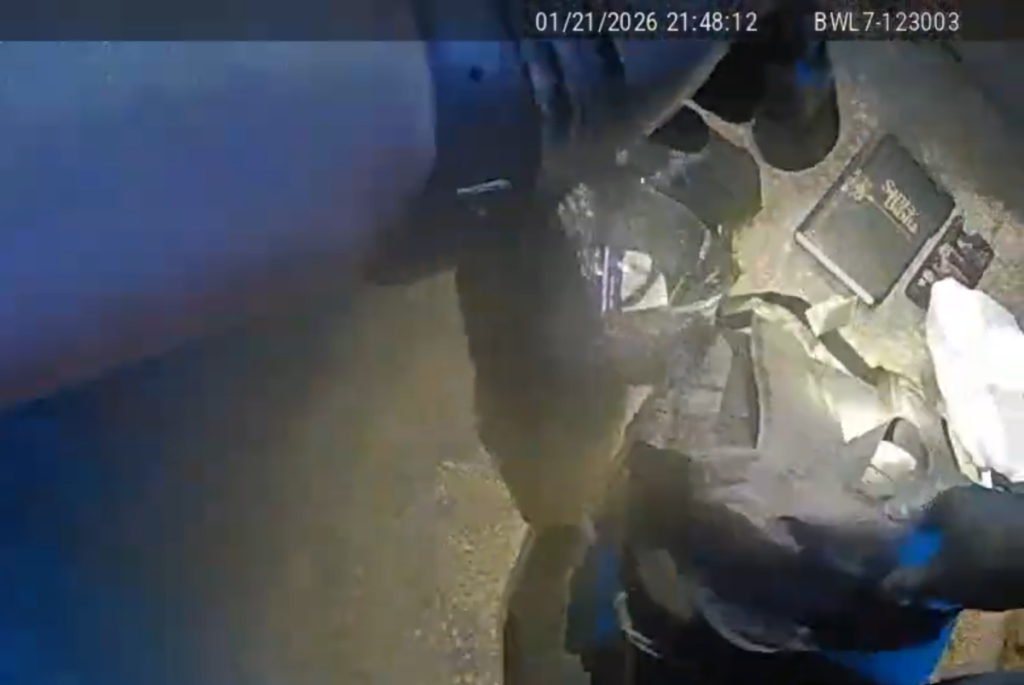
Screenshot via Edgewater Police Department body camera footage
Castellano then pulls a plastic bag out of the backpack, which appears to contain a bag of Takis chips.
“It’s weird. Everything about it is weird. Like, why wouldn’t [Perez] stop?” Castellano says. “I smell weed, but I haven’t found any.”
He continues, rifling through the backpack: “Literally, nothing, bro. Nothing.”
Another officer then asks: “Maybe this is a task force opportunity?”
“What do you mean?” Castellano replies, before the other officer clarifies: “The ICE task force.”
“Oh, oh, you mean you think that’s what this is all about?” Castellano asks.
“I mean, the media has demonized ICE to the point where we’re terrified of them, so,” one officer says.
In a separate body-camera video, a Spanish-speaking officer from the Volusia County Sheriff’s Office, identified as Deputy Garcia, assists with translation while Perez sits in a patrol car. Perez tells the deputy his full name, “Rogelio Perez,” and again explains that he speaks Tzotzil. (Although Perez is listed as “Rogelio Perez” in his arrest report, ICE identifies him as “Royer Perez-Jimenez.” The reason for the discrepancy is unclear.)
“He speaks Tzotzil, it’s like…there’s no English equivalent. It’s like Native American English,” Garcia relays to Castellano.
When Castellano asks why Perez resisted, the deputy relays his response:
“He thought you were going to beat him,” Garcia says. “This has never happened before. He was scared.”
“Well, I was close,” Castellano replies.
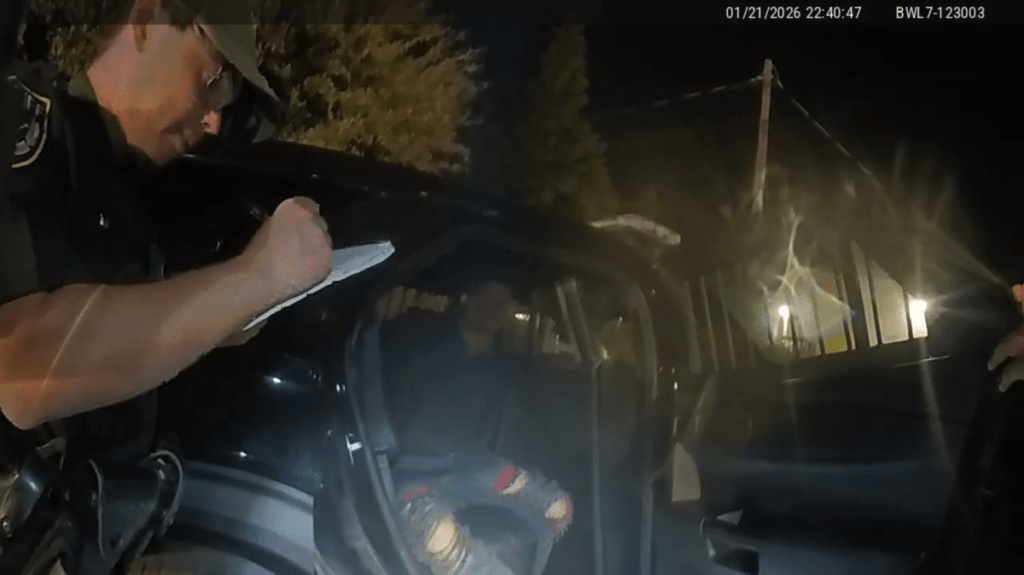
Screenshot via Edgewater Police Department body camera footage
Perez later admits to officers that he is not legally in the United States. Minutes afterward, officers are seen contacting ICE. He was booked into the local jail that night, where ICE placed a detainer on him.
Weeks later, on February 21, Perez was transferred to ICE custody and then moved to the Glades County Detention Center on February 26, according to ICE.
A spokesperson for the Edgewater Police Department did not respond to New Times‘ request for comment, including questions about whether the officers are under investigation for their use of force.
Death in ICE Custody
On March 16, Perez died of a “presumed suicide” at the Glades County Detention Center — a jail on the western shore of Lake Okeechobee that has long housed immigration detainees and faced allegations of abuse. His official cause of death remains under investigation.
He appears to be the youngest person to die in ICE custody since President Donald Trump took office again in January 2025, according to ICE records. At least 36 people have died in ICE custody since January 2025, ICE has reported.
According to ICE’s statement, at around 2:30 a.m. on March 16, a Glades County detention officer found Perez “unconscious and unresponsive.” Staff began CPR, and medical personnel arrived minutes later, determined he was without a pulse, and took over resuscitation efforts before requesting emergency medical services.
At around 2:40 a.m., fire rescue officials arrived and “initiated-life sustaining interventions” on Perez, according to the agency. He was pronounced dead at 2:51 a.m.
ICE says that Perez was evaluated by medical staff at intake at Glades County Detention Center and didn’t report any behavioral health issues, including answering “no” to all suicide screening questions.
According to ICE, Perez first entered the United States in February 2022 and encountered U.S. Border Patrol; he was “granted a voluntary return” to Mexico the same day but later “illegally reentered” the U.S., although it’s unclear when, exactly.
Glades County Detention Center, where Perez died, has long faced allegations of abuse. In 2022, 17 members of Congress asked that it be closed, citing immigrants being “subject to racist abuse, often resulting in verbal abuse and violence; sexual abuse, including sexual voyeurism by guards who have watched women shower; life-endangering COVID-19 and medical neglect, including a near-fatal carbon monoxide leak last November; and regular exposure to highly dangerous levels of a toxic disinfectant chemical spray linked to severe medical harms and long-term damage to reproductive health.”