Photo by Osvaldo Espino

Audio By Carbonatix
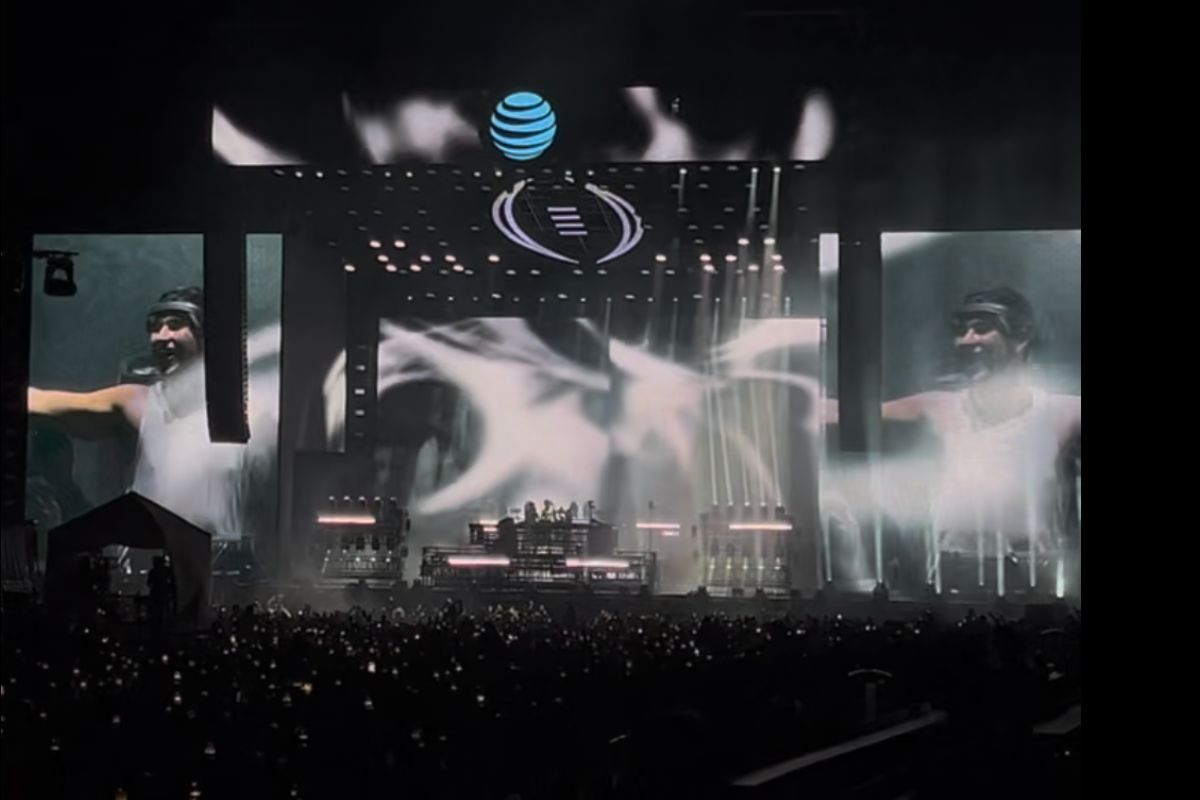
Even before the show began, the free Miami Beach event featuring Calvin Harris and John Summit raised some flags. The concert, hosted by AT&T in partnership with the College Football Playoff (CFP) National Championship, was originally designed to accommodate roughly 20,000 people. Members of the event staff told New Times that organizers had planned for approximately 150 bathrooms, a few concession stands, a large VIP and sponsor section, a small media area, and enough space between Seventh and Tenth Street to accommodate the crowd.
As the days passed, however, hype around the event continued to grow. In response, the production team added more fencing and temporary structures to maintain some level of crowd control. They appeared to underestimate the fact that this was a free, all-ages event on Miami Beach featuring two of the city’s most popular DJs. People began lining up as early as 10 a.m. for a concert scheduled to start at 7 p.m.
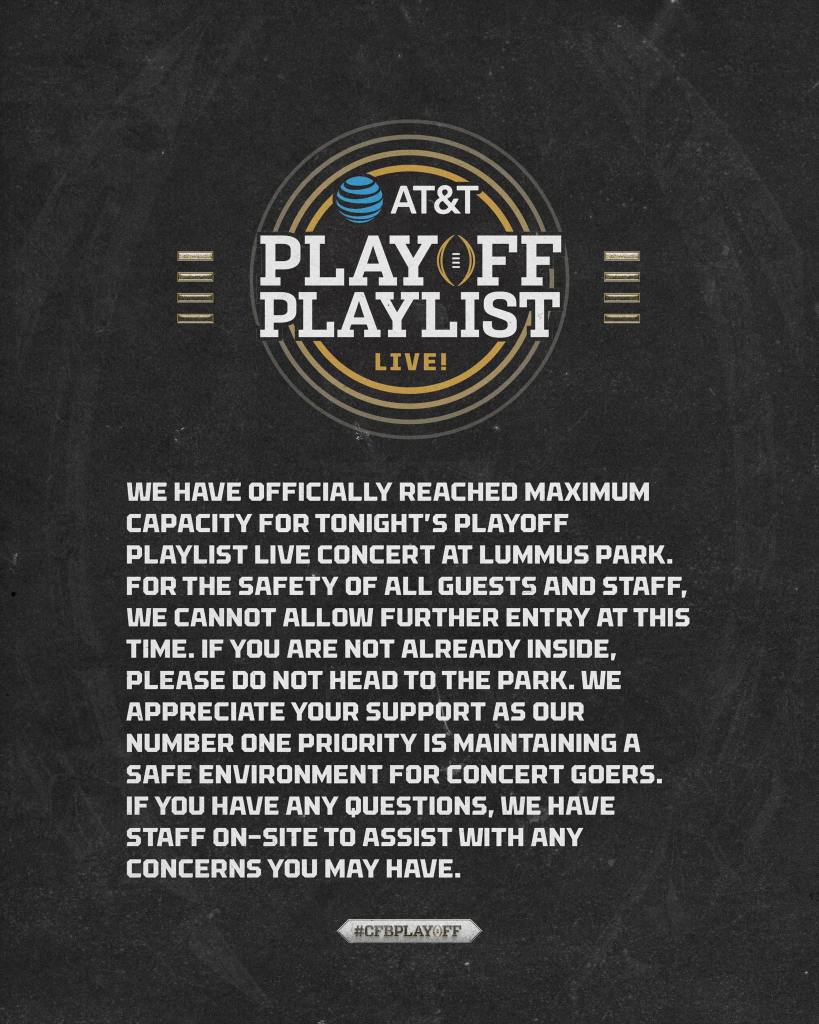
From a concert-goer’s perspective, the event was a logistical nightmare. By the end of the night, an estimated 30,000 people had shown up. With capacity already strained, crowds began rushing security as soon as the gates opened. This behavior quickly became a trend throughout the night, with sections of fencing repeatedly taken down as people from outside forced their way into the event. Various structures across the grounds were overtaken by fans desperate to get even a glimpse of two of the biggest DJs in electronic music.
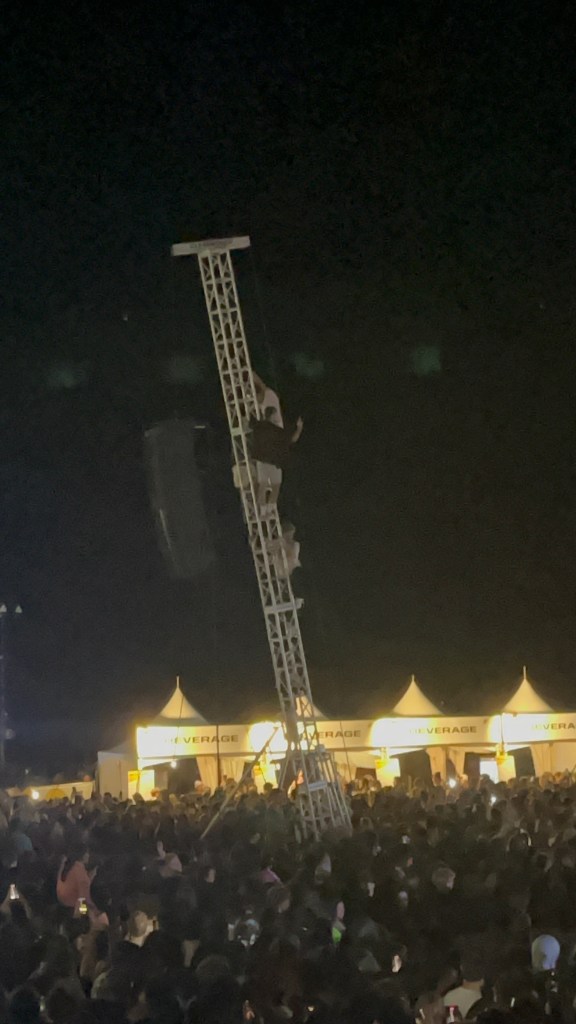
Photo by Osvaldo Espino
As the night unfolded, the scenes grew increasingly alarming. People were passing out and scrambling to escape the main crowd. Others climbed onto temporary structures and speaker towers, at one point causing the speakers to swing dangerously back and forth before they were lowered to prevent a catastrophe. Reports later indicated that police arrested several individuals who climbed the structures.
Screenshot via Facebook
Law enforcement and fire marshals were heavily present throughout the night, particularly during Calvin Harris’s set, when the crowd became so dense it seemed impossible to manage without risking a serious disaster. Despite the chaos surrounding logistics and safety, the performances themselves ran smoothly. John Summit delivered a phenomenal set, and Calvin Harris followed with an equally strong performance. Production and sound quality were solid throughout.
The real fallout came afterward. Thousands of kids, teenagers, and young adults flooded the streets of South Beach, making it nearly impossible to leave the island. Uber prices skyrocketed, buses were packed beyond capacity, and many people were left stranded for hours. Reports continued to surface of people hopping fences and tearing down more structures well into the night.
At times, the scene felt reminiscent of Woodstock ’99, a violent event marked by riots and fires, while the lack of organization evoked comparisons to Fyre Festival, a failed luxury music festival. Watching Calvin Harris turned nerve-racking, with attention divided between the music and the fear that the steady stream of people breaking into the event area could end badly.
It remains unclear what kind of agreement CFP and AT&T reached with the city of Miami.
A spokesperson for the event didn’t immediately respond to New Times‘ request for comment.
This is a breaking story and will be updated as events warrant.