Photo by Jason Kempin/Getty Images

Audio By Carbonatix
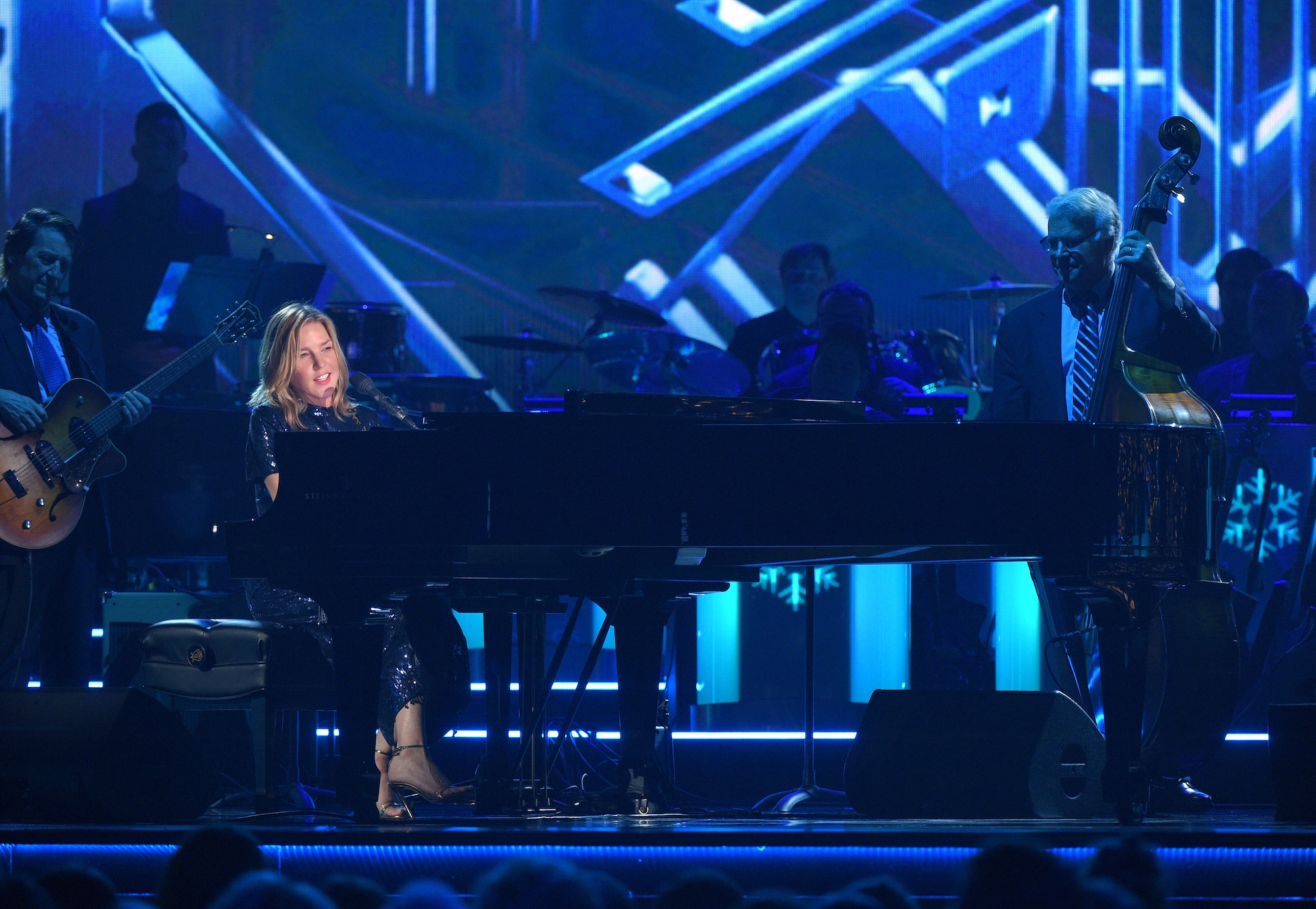
Diana Krall took the stage at the Adrienne Arsht Center’s Knight Concert Hall on Sunday evening with the quiet confidence of an artist who has nothing left to prove. Dressed in understated black and bathed in warm amber light, the Canadian jazz icon was met by an audience eager to hear the familiar textures of a career spanning more than three decades. What followed was not a glossy nostalgia act, but a performance shaped by time, vulnerability, and the evolving realities of a voice that has lived a full musical life.
Krall, who burst onto the jazz scene in the early 1990s, remains one of the genre’s most commercially successful figures. With more than 15 million albums sold worldwide and Billboard naming her the second-best-selling jazz artist of the 2000–2009 decade, her mainstream appeal has long set her apart from many of her peers. Early in her career, Krall built her reputation through interpretations of jazz standards, drawing heavily from the Count Basie Orchestra catalog and channeling her reverence for Nat King Cole. Those influences helped catapult her into crossover stardom, bringing jazz to adult contemporary radio formats and suburban living rooms across North America.
At the Arsht Center, that legacy was present from the opening notes. Backed by a tight, understated ensemble, Krall leaned into a repertoire that balanced romantic standards with fan favorites. When she launched into “The Look of Love,” the Burt Bacharach classic that has become a signature piece in her catalog, the room softened. Couples leaned closer in their seats, heads nodded gently in rhythm, and the hall seemed to collectively exhale. It was one of the evening’s most emotionally resonant moments, not because of technical perfection, but because of its familiarity and emotional weight.
A particularly human moment arrived during her rendition of Nat King Cole’s “L-O-V-E.” Early into the song, Krall stopped and restarted the arrangement, smiling sheepishly as the audience laughed along with her. “Sometimes this one crumbles,” she joked, before adding, “but at home when it does, glasses are usually clinking.” The remark drew warm applause and eased the room into a relaxed, cocktail-lounge intimacy, a reminder that jazz, at its core, thrives on spontaneity and imperfection.
Still, time has left its mark. In 2014, Krall battled a severe case of pneumonia that left her bedridden and forced her to cancel performances. More than a decade later, the effects remain audible. Her voice no longer carries the crisp clarity of her early recordings. There is a rasp now, a grainier texture, and moments where sustained notes waver or fade sooner than expected. Yet rather than detracting from the performance, these imperfections added a sense of intimacy. The voice felt lived-in, weathered in a way that mirrored the emotional complexity of the songs she has spent years interpreting.
Krall compensated with phrasing and timing, hallmarks of her musicianship that remain intact. Her piano playing was especially compelling, alternating between minimalist accompaniment and expressive flourishes that highlighted her technical prowess. During instrumental breaks, she often closed her eyes, swaying slightly, fully immersed in the conversation between keys, bass, and brushed drums.
Her personal history also hung in the background throughout the evening. When Krall married British songwriter Elvis Costello in 2003, in a ceremony held at Elton John’s estate outside London, her musical direction shifted. Costello co-wrote several of her original songs, helping her move beyond standards and into more personal material. That evolution was reflected in Sunday’s setlist, which blended classic jazz interpretations with later-career compositions that leaned more toward singer-songwriter territory.
Yet Krall’s towering commercial success also raises uncomfortable but necessary conversations about race and recognition in American music. While her talent is undeniable, her ascent highlights a broader industry pattern: white artists often receive disproportionate acclaim when engaging with genres rooted in Black culture. Jazz, like blues, rock and roll, R&B, hip-hop, and even country music, is built on Black innovation and struggle. Meanwhile, equally gifted artists such as Cassandra Wilson, Shirley Horn, and Rachelle Ferrell, whose technical ability and emotional depth rival or exceed many mainstream stars, have not received the same level of commercial backing or mass-market visibility.
This reality does not diminish Krall’s artistry, but it complicates the narrative around her success. Her polished image, accessible interpretations, and industry support made jazz more palatable to mainstream audiences, while many Black innovators remained confined to niche markets. The Arsht Center performance, therefore, existed not only as entertainment but as a reminder of how the music industry continues to shape which voices are amplified and which are sidelined.
Despite these broader cultural tensions, the audience response was overwhelmingly warm. Standing ovations punctuated the evening, and Krall seemed genuinely appreciative, offering soft-spoken thanks between songs. There was no extravagant staging or visual spectacle, just musicians, instruments, and a room full of listeners hanging onto every note.
In the end, Diana Krall’s Miami performance was less about chasing perfection and more about presence. It was about an artist who has endured illness, industry shifts, and decades of scrutiny, still showing up with grace and emotional honesty. Her voice may no longer soar the way it once did, but what remains is something equally compelling: a storyteller who understands the power of restraint, vulnerability, and connection.
At the Knight Concert Hall, Krall reminded Miami audiences that jazz is not frozen in time. It evolves with the people who carry it — imperfections, contradictions, and all.