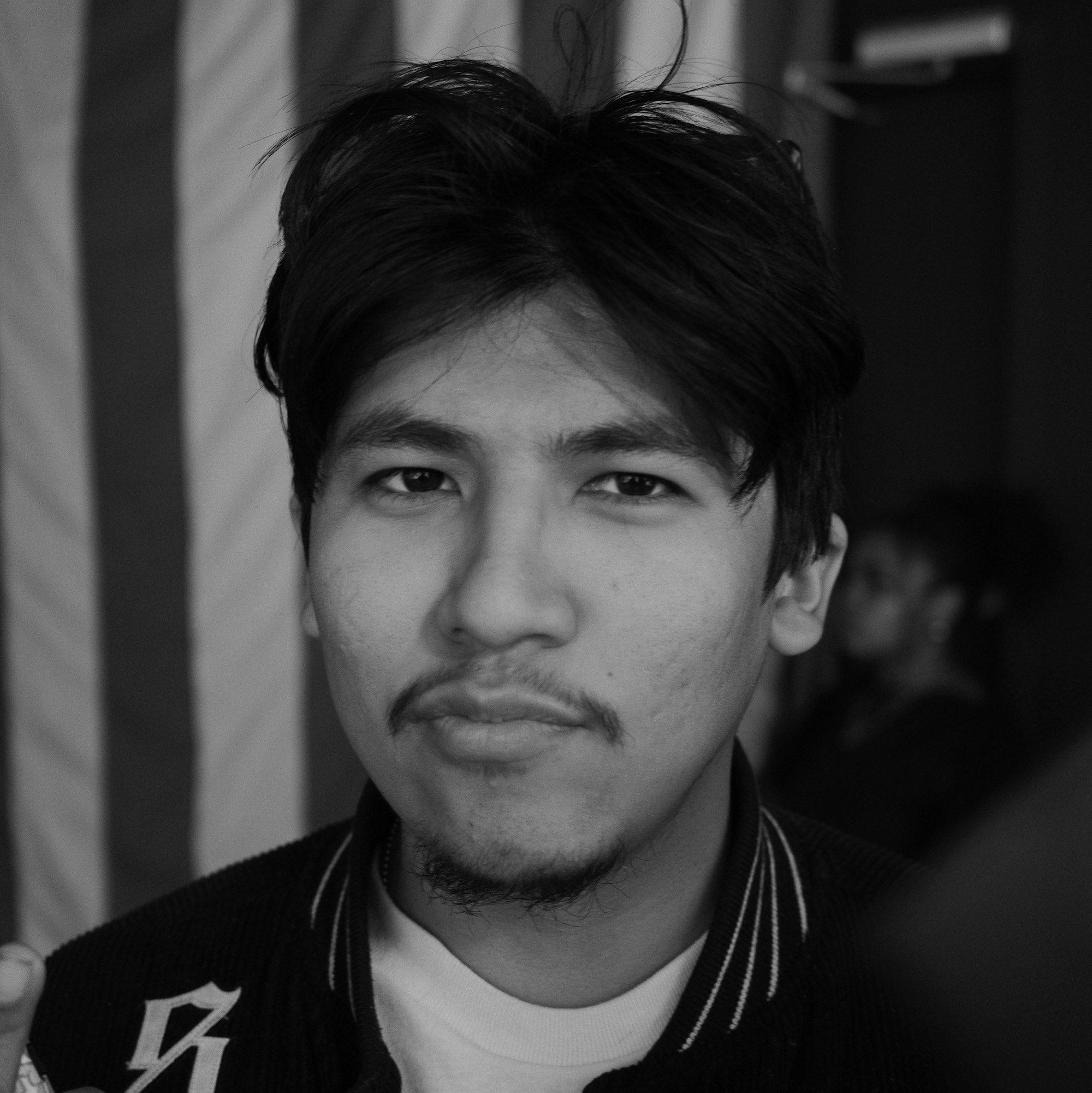
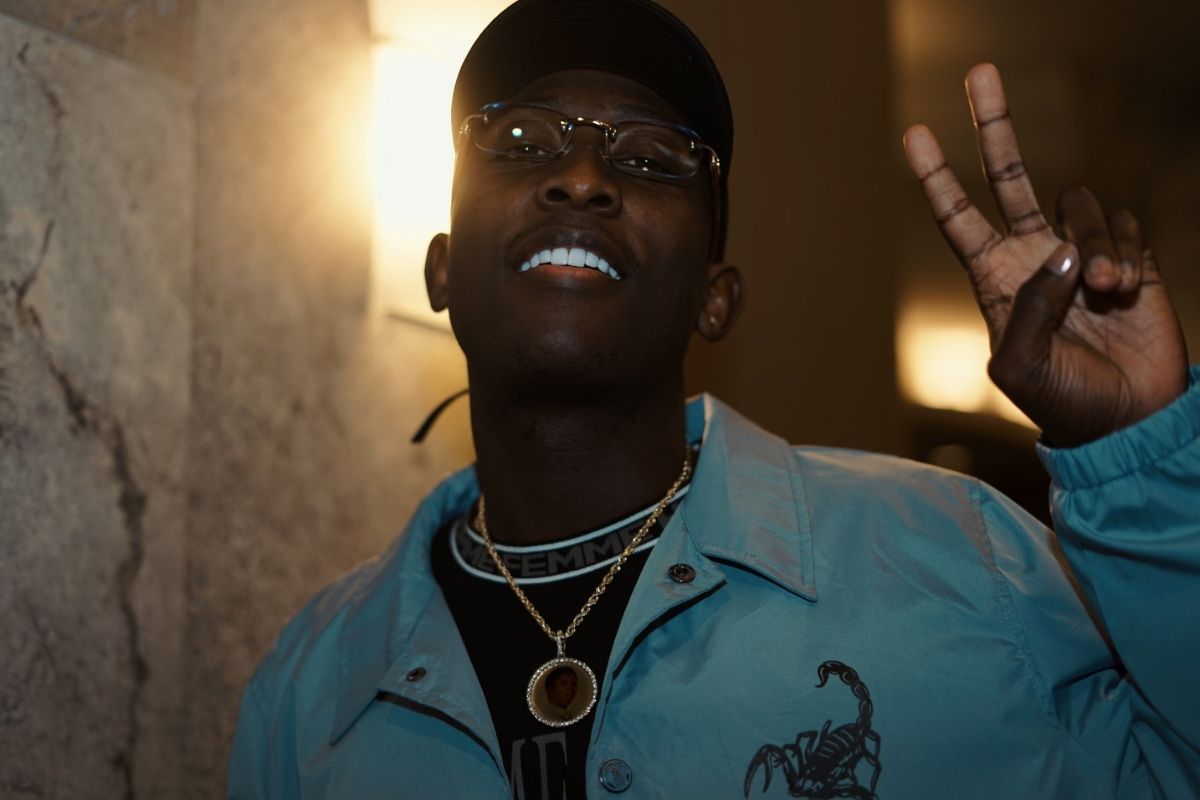
Flokid press photo

Audio By Carbonatix
For years, Flokid has existed in a space that feels increasingly rare in Miami’s rap ecosystem. He is too reflective to lean fully into the city’s party reputation, too grounded to chase trends, and too intentional to rush releases. With Nobody Cares, Work Harder, the North Miami Beach native delivers a project that feels less like a bid for attention and more like a personal thesis. It is an album shaped by vulnerability, faith, cultural pride, and an unwavering belief that longevity is earned through patience.
“This isn’t an album out, onto the next,” Flokid says. “These records are strong enough to stand on their own. We’re taking our time with this.”
That mindset is present from the project’s opening moments. On “More Than an Intro,” Flokid opens the album with a chopped-up voice message from Cedric the Entertainer, setting the tone before a bar is ever rapped. It is not used as a flex or a novelty but as a framing device, positioning the album as something meant to be listened to closely.
“Cedric is an OG,” Flokid explains. “He listened to the music and understood my vision. He sent me a message telling me to keep pushing my art and growing as an artist. Once I heard it, I knew it had to live in the song. I don’t just want to give people the ball. I want to give them the metaphor too.”
That sense of intention defines Nobody Cares, Work Harder. The album does not rely on shock value, but it does not shy away from difficult subject matter either. On “Sirens,” featuring the Game, Flokid confronts police brutality while also addressing violence within his own community. The record feels urgent without feeling exploitative.
“For some reason, I always feel like I have to carry that message,” he says. “Life moves so fast now. Something tragic happens, and the next day everybody’s distracted by something else. I never want injustice to be something that gets swept under the rug.”
It is a recurring theme throughout the album. Flokid understands the appeal of escapism in music, but he is not interested in pretending reality does not exist.
“We cannot always just talk about how amazing life is,” he says. “Sometimes you have to remind people what is really going on.”
That same honesty drives one of the most vulnerable records on the project, “Pray For Me.” Raised in a deeply religious household, Flokid admits the song emotionally pushed him in ways hip-hop rarely allows.
“In hip hop, it feels illegal to be vulnerable,” he says. “You are supposed to be hard all the time. But once I stopped caring about that and just told the truth, it became easier to write.” The song also delayed the album’s release after creative issues with its original vocalist. Rather than rush it, Flokid chose to start over, a decision he now views as necessary.
“I really believe it was God’s doing,” he says. “The second version hit way harder. It came out exactly how it was supposed to.”
While the album grapples with heavy themes, it is also deeply rooted in place. Nowhere is that more evident than on “NMB,” a nostalgic tribute to North Miami Beach that feels more like a memory than a statement.
“That song was not even meant for the album,” Flokid admits. “I made it to promote my high school’s picnic. But the reaction was so strong that it had to make the project.”
The record captures a softer side of Miami, complete with a skit pulled from an old YouTube video of graduating seniors celebrating their last day of school. It gives the song a warmth that feels lived in rather than manufactured.
“That is why it feels like a cookout,” he says. “That after-school energy. That is real.”
Cultural pride also plays a major role in the album, particularly on the Creole-influenced track, “Tetcho”, featuring Billy Blue and Haitian artist Tafia. Billy Blue’s verse was freestyled in the studio moments after Flokid reached out to him, inspired by a viral freestyle clip.
“I saw that video and said I need him,” Flokid recalls. “No pen, no pad. Just energy.” Even for listeners who do not understand every word, the emotion carries through. “Language is not as big of a barrier as people think,” he says. “If the feeling is real, people connect.”
One of the album’s most striking moments arrives on the track, “How Come”, built around a viral clip of a homeless man named Ronald Davis declaring his humanity. The moment left a lasting impact on Flokid.
“When he said, ‘I’m not a bum, I’m a human being,’ that stuck with me,” he says. “We are so quick to label people when they are down, but they are still human.”
The subject matter hits close to home. Flokid is regularly involved in food drives and community outreach, particularly in downtown Miami. “That record fits my life,” he says. “It is sad, but it is real.”
Now that Nobody Cares, Work Harder is finally out, Flokid does not see it as a finish line. Instead, he views it as a blueprint for the year ahead.
“This album is my syllabus for 2026,” he says. “Every record gets its moment. Videos, content, performances. We are going through it properly.”
One of his goals is an intimate live show centered entirely around the album, designed for listeners who truly connect with the material.
“Only people who really resonate,” he says. “Limited tickets. No rush.” The album’s title is a tough and true statement that serves as both a mission statement and a personal reminder.
“That quote changed my life,” Flokid says. “Stop worrying about how people receive things. Just work. You are the only one who can save yourself.”
Fame and accolades are not the driving force behind the project. “I just want this album to resonate with the people it is meant for,” he says. “If it motivates someone, if it pushes them forward, then it did what it was supposed to do.”
For Flokid, that is enough.