Photo by Elastic Peopl

Audio By Carbonatix
When Luis Fonsi decided his next chapter would begin with a salsa record, it wasn’t part of a calculated reinvention or a genre pivot designed for playlists. It was instinct. A feeling. A song that refused to be anything other than what it was meant to be.
“I don’t really have a specific answer,” Fonsi tells New Times, laughing slightly when asked why salsa, why now. “Sometimes songs come along that make you think differently. No two songs are ever the same, no two writing sessions are the same. This one just happened.”
That sense of surrender to the music has quietly defined Fonsi’s longevity. Over a career spanning nearly three decades, the Puerto Rican singer-songwriter has built his reputation not by chasing trends, but by trusting his ear and his emotional compass. Even now, as Latin music dominates the global mainstream more than ever, Fonsi remains guided less by strategy and more by authenticity.
Releasing a salsa record was never on his to-do list. Professionally, he has long lived in the singer-songwriter and pop ballad space, a lane where vulnerability and melody reign. But personally, salsa has always been home.
“I’m about as big of a salsa fan as it gets,” he says. “It’s the genre I listen to the most in my personal life. I grew up with it. It runs through my blood.”
Born and raised in Puerto Rico, Fonsi’s earliest musical memories are tied to car rides with his father, the radio tuned to classic salsa records that never seemed to age. That foundation resurfaced naturally as he began shaping the new single, even as he and his producers initially experimented with different production approaches.
“The song wasn’t having it,” he recalls. “It needed to be a straight-up salsa record.”
Rather than overthink it, Fonsi leaned in. The result is a track that feels both reverent and refreshing, grounded in traditional salsa melodies while delivered through his unmistakable vocal tone. It is not a costume or a detour. It is a reminder of where he comes from.
“I’m not changing genres,” he clarifies. “This song just needed to be like this. I wanted to do it with respect and do it correctly.”
That respect extends to the details. Writing soneos, improvised melodic phrases common in salsa, was new territory for Fonsi. He wrote far more than made it onto the final cut, already imagining how the song might evolve onstage with a live band.
“It was actually fun,” he says. “You step into this new world inspired, but humble. That’s what makes it exciting.”
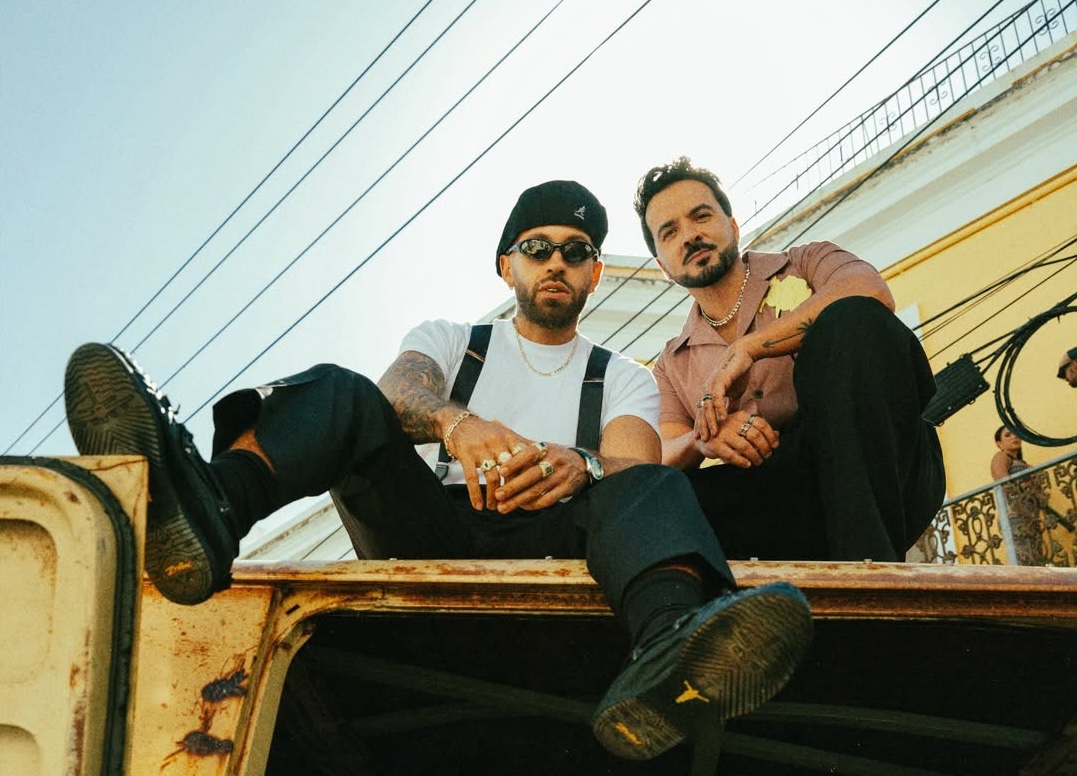
If the salsa foundation raised eyebrows, the featured collaboration with Colombian superstar Feid pushes the record even further into unexpected territory. Known primarily for his work in reggaeton and urban pop, Feid might seem like an unconventional choice on paper. But for Fonsi, that tension was the point.
“The obvious move would’ve been to call a salsa artist,” Fonsi explains. “But I didn’t want it to feel predictable.”
Instead, he imagined the song opening itself up to a second voice, one that would elevate the track by contrast rather than conformity. Feid, whose versatility as a singer, songwriter, and producer Fonsi deeply admires, fits perfectly.
“I wanted to push the envelope,” he says. “We were already doing something different, so why not take it further?”
The cultural connection was deeper than genre. Colombia holds a rich place in salsa history, and both artists grew up immersed in the same sounds through their families. Conversations between the two quickly turned into shared nostalgia, discussions of influences, and mutual respect for the tradition they were stepping into.
“We both approached it humbly,” Fonsi says. “Just trying to put our flavor into it.”
The result is a collaboration that feels organic rather than forced, blending two worlds without diluting either.
That balance between honoring the past and embracing the present feels especially resonant as Fonsi reflects on the current moment in Latin music. Watching Bad Bunny’s historic Puerto Rico residency unfold, Fonsi speaks with visible pride about what it means for the island and for future generations.
“What he’s doing is historic,” he says. “The fact that we’re even talking about Spanish music at the Super Bowl is insane. That’s something we never imagined.”
For Fonsi, it is a reminder of how far things have come since another pivotal moment in his career. As nostalgia for 2016 resurfaces online, he looks back at that year with clarity and gratitude.
“2016 was a beautiful year,” he says. “My son was born that year. That alone makes it unforgettable.”
It was also the year “Despacito” was written, recorded, and filmed. Though released in early 2017, the song took shape during a period of reflection and transition for Fonsi, who had stepped back from touring to recalibrate creatively. Collaborating with Daddy Yankee marked a shift toward urban sounds, one that once again felt risky at the time.
“The song called for it,” he says simply. “When it feels right, you go for it.”
What followed needs little retelling. “Despacito” became a global phenomenon, the most viewed music video in YouTube history, and a cultural touchstone that placed Puerto Rico front and center on the world stage.
“What I’m most proud of isn’t just the success,” Fonsi says. “It’s what the song represents. The island, the flag, the culture.”
As he steps into this new era, Fonsi resists the urge to define it too narrowly. The upcoming project, still in progress, will reflect the freedom he feels in today’s musical landscape.
“There are no rules anymore,” he says. “People don’t listen by genre. They just listen to what they like.”
That openness will shape an album that blends pop foundations with tropical influences, stripped-down ballads alongside songs designed to make people dance. Some tracks may never top playlists, but Fonsi is comfortable with that.
“It’s who I am,” he says. “I’ll never abandon that.”
This moment marks the beginning rather than the conclusion. The salsa single is not a destination, but a door opening. As Fonsi begins rolling out new music, he remains guided by the same principle that led him here.
“Everything comes from an honest place,” he says. “When it does, people feel it.”
Nearly thirty years into his career, that honesty continues to be his most enduring sound.