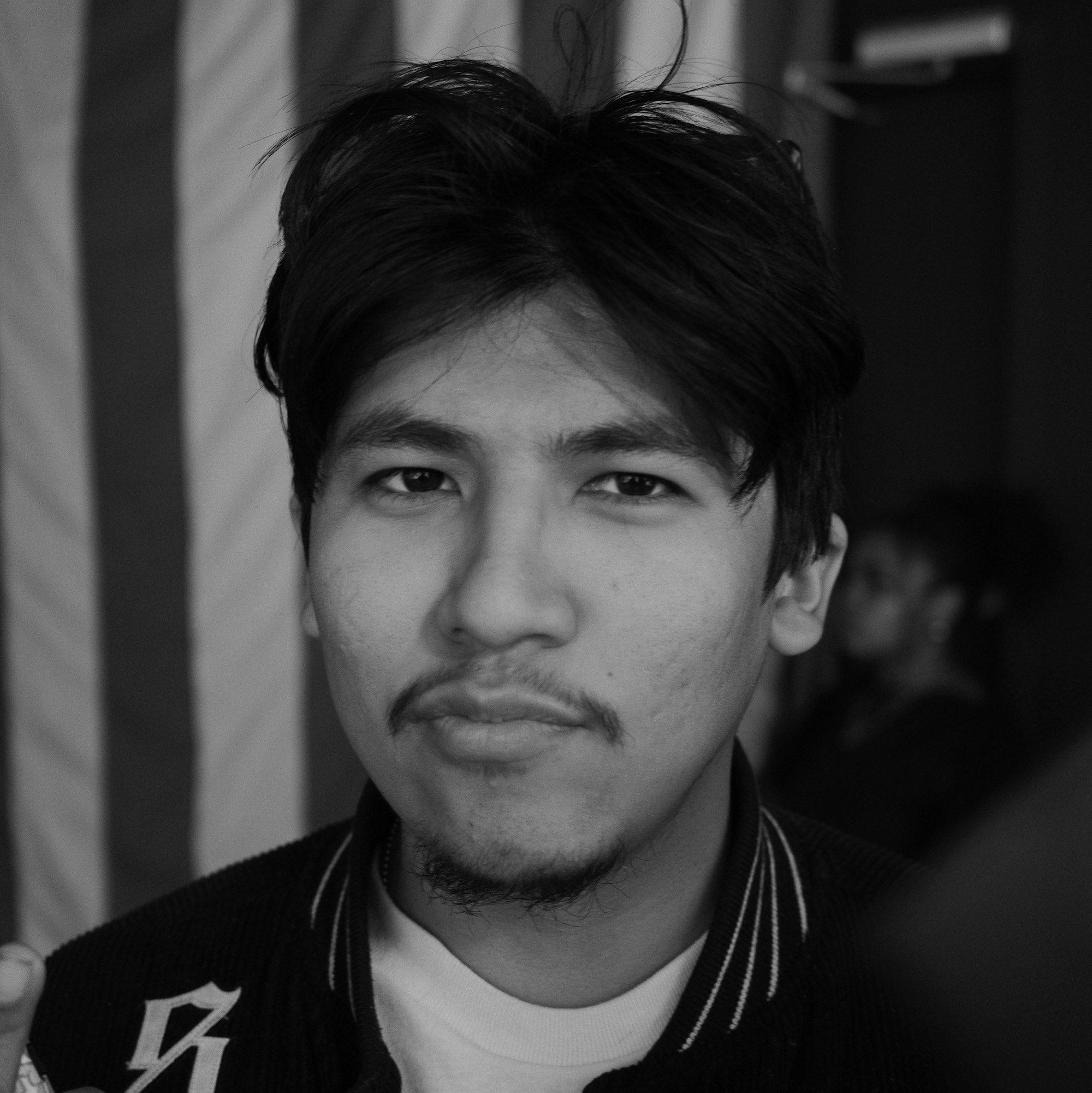
Photo by @lowiegraph

Audio By Carbonatix
We sat down with Kybba at Manolo’s in Downtown Miami. Over Cuban coffee and a packed schedule, the Italian DJ and producer reflected on his early influences, the global rise of his sound, and how a dancehall record from Colombia turned into an international moment.
Kybba was born and raised in Salento, a peninsula in southern Italy known for its strong sound system culture. While reggae and dancehall might not be the first genres people associate with Italy, Salento has had a deep connection to Jamaican culture since the early ’90s.
“Everyone had their own sound system,” he said. “All the young kids were into it.” By the time he was 10 or 11 years old, he was already listening to artists like Shabba Ranks and immersed in reggae and dancehall. His father, a vinyl collector with a love for DJ culture, played a major role too.
“My father always had a passion for being a DJ,” Kybba explained. “He never really tried to make it, but he loved the culture. That influenced me a lot.”
At 13, after his confirmation, a major milestone in southern Italy, his family pooled money together to buy him a Denon DNS 3000 and a small two-channel mixer. That’s when he started DJing seriously.
Producing came later. “I started with remixes and mashups,” he said. “Then I wanted to understand how to actually make beats.”
From Salento Sound Systems to a Global Dancehall Movement
Without formal music training, he taught himself through sampling and drum machines. From the start, his sound was rooted in dancehall and electronic music. Major Lazer, in particular, shaped a crucial period of his development.
“When I was around 20 or 21 and starting my label, they were a huge inspiration,” he said.
The label itself began as a YouTube channel. Over time, it evolved into a proper imprint, first through mixes and Spotify playlists, then official releases. His first official release under the label came in his early twenties.
On the electronic side, Diplo and Skrillex were early inspirations. Today, he points to Fred again, as someone he looks up to creatively. He’s also a big techno fan, though he notes that he’s more of a listener than a producer.
“I love going to techno parties,” he said. “But it’s not what inspires my music. I just enjoy it.”
While his foundation was built in Jamaica, influenced by dancehall and European electronic music, Latin America became a turning point. “The first place where people were actually buying tickets to see me was Colombia,” he said.
At first, his visits to the country were exploratory as he was trying to build an audience. It didn’t click immediately. That changed when he began uploading DJ mixes to YouTube and short clips to TikTok and Instagram. Suddenly, the next tour sold out. “That’s when we knew something was happening.”
From there, the collaborations grew. Colombian artists, Latin vocalists, and Caribbean influences were where everything began blending more naturally into his sets and productions.
How “Ba Ba Bad” Turned Colombia Into a Global Launchpad
That momentum crystallized with “Ba Ba Bad.” The original record featured Busy Signal. Kybba sent him the beat and, within a day, received vocals back. “I knew immediately it was special,” he said.
Before its official release, Sean Paul joined the track. Kybba had already been in conversations about collaborating with him, and the record felt like the perfect match. The song exploded during a DJ set in La Comuna in Colombia. Videos of the crowd screaming the lyrics went viral. That energy helped propel the remix, which later featured Ryan Castro.
“I really wanted him on it,” Kybba said. “He sent the vocals while I was in Paris. I mixed it, and we knew we had to shoot the video in La Comuna because that’s where everything started going crazy.”
The record became global. Right now, Caribbean and Afro influences are blending heavily across Latin music. Kybba sees it clearly but distinguishes his approach. “My sound is more club-driven,” he explained. “Straight dancehall basslines. It’s different.”
His shows reflect that global reach. Interestingly, his streaming numbers don’t always align with ticket sales, which tend to be higher than his streaming. In the UK, for example, he sells out 3,000 to 4,000-capacity venues, yet the country isn’t even in his top streaming territories.
Colombia, Costa Rica, Panama, Spain, Italy, the Netherlands, and France are all strong markets that have taken into account his sound. He’s sold out shows in New York, San José, and Bogotá multiple times. “It’s very well distributed,” he said. “It’s worldwide.”
Miami had long been a goal, especially because of its Caribbean and Latin blend. Visa issues delayed that debut for years. “People were always commenting, ‘Come to Miami,’” he said. “But I couldn’t.”
Now, finally able to tour the U.S., he’s excited. Beyond touring and hit records, his long term goal is creative freedom.
“The more I do, the more I want to be able to do whatever I want musically,” he said. “Sometimes people expect you to stay in one lane. I don’t want to feel boxed in.” He wants to continue building bridges, not just between genres, but between regions.
He speaks passionately about smaller scenes like Mauritius and Martinique, where subgenres like Shatta dancehall originated. Those percussive elements and chord progressions have influenced tracks like “Ba Ba Bad,” yet often go unrecognized globally.
“There are so many talented producers around the world,” he said. “I like being the bridge that is connecting them to bigger platforms.”
Sitting in Downtown Miami it’s clear that Kybba sees himself not just as a DJ or producer, but as a cultural connector.
And if “Ba Ba Bad” proved anything, it’s that when the right sounds collide, borders don’t really matter.
Kybba. 4 p.m. Sunday, March 22, at Wynwood Marketplace, 2250 NW 2nd Ave., Miami. Tickets cost $66.40 via dice.fm