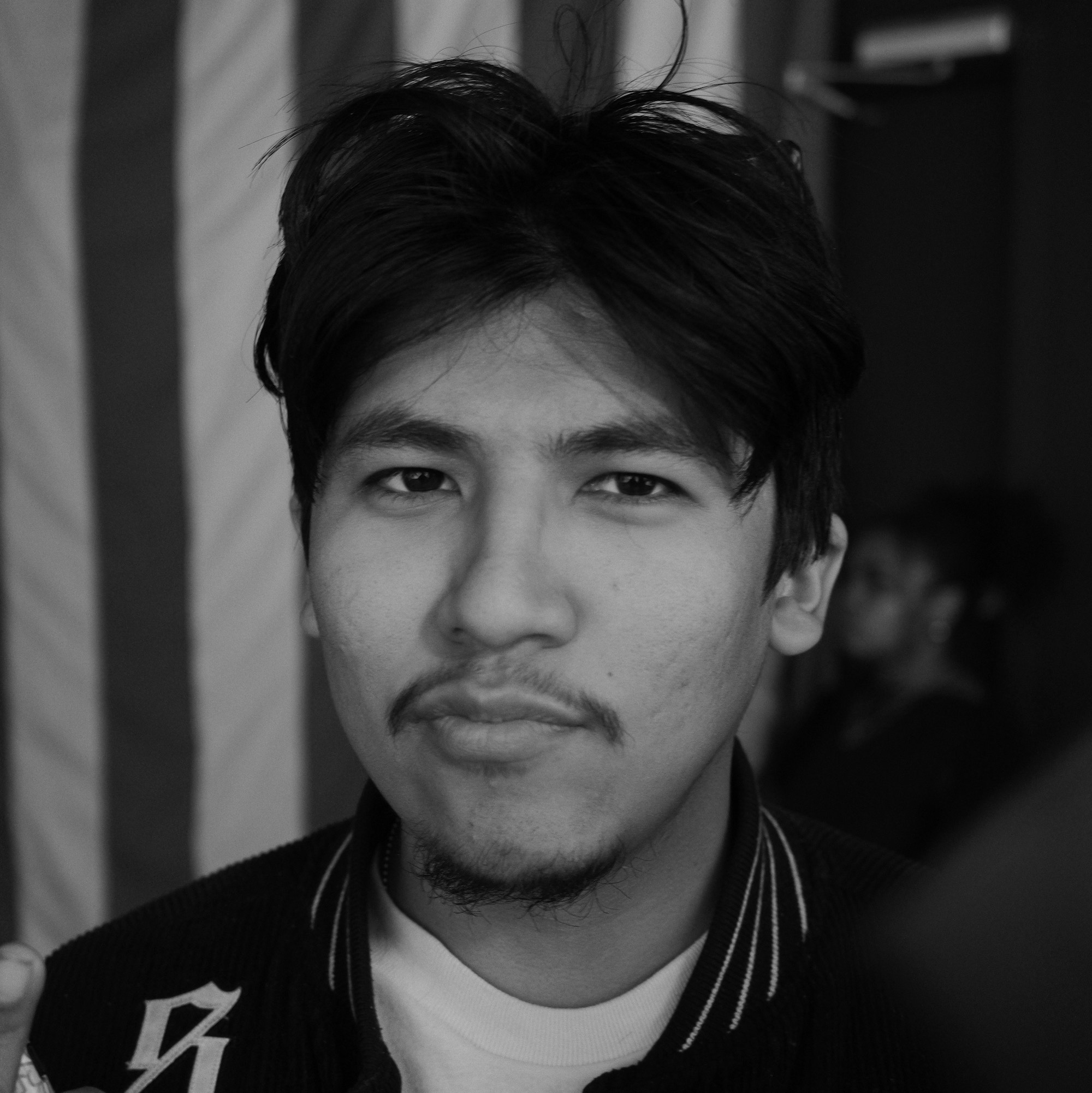

Photo by Manuel Velez

Audio By Carbonatix
When Jorge Drexler turned 60, he found himself at a strange midpoint. The Uruguayan singer-songwriter had spent roughly half his life in his native country and the other half living abroad, primarily in Spain, where he moved three decades ago. He never truly left Uruguay behind. Drexler says he still returned three or four times a year, but he had not recorded an album there in two decades.
That changed with “Taracá,” his latest album and one of the most distinctly Uruguayan projects of his career.
“I wanted, at some point, to get in touch again with a music scene in Uruguay, which happens to be amazing these days,” Drexler says. “It’s a very special moment for Uruguayan music right now.”
But his return home was about more than music. While Drexler was making “Taracá,” his father, Gunther Drexler, died. Suddenly, returning to Uruguay became intertwined with questions of family, memory and what remains after someone is gone.
“When those things happen, you tend to try to reinforce those links with your roots,” Drexler says. The result is an album filled with percussion, candombe and the sounds of the country where Drexler was raised. Yet beneath its rhythmic energy sits something more somber.
“Although it doesn’t sound like one, it’s a mourning record,” he says. What makes “Taracá” unusual is the form that mourning takes. Drexler did not respond to loss by retreating into darkness. Instead, his grief pushed him toward celebration.
His father survived the Holocaust, leaving Germany with his family when he was four before eventually building a new life in Uruguay. Drexler remembers his parents as two people from dramatically different backgrounds who nevertheless built a family together. “They showed us that love has no boundaries,” he says. Remembering that life changed the emotional direction of the record.
“It just made me celebrate life,” Drexler says. That celebration can be heard throughout “Taracá.” Rather than sounding weighed down by loss, the album often feels warm, physical and communal. Drexler describes it as a tribute to his parents’ way of looking at the world.
It is also the product of an artist looking backward in an unfamiliar way. For much of his career, Drexler says he was not particularly interested in digging through abandoned ideas. On “Taracá,” he opened his archives. Several songs began as fragments recorded a decade or even 15 years earlier, ideas he could not finish at the time.
“I had now the perspective and the circumstance that somehow helped me understand what I wanted to say,” he says.
Perspective is a word Drexler returns to repeatedly. For an artist whose career has crossed languages, countries and musical traditions, “Taracá” could easily have become an exercise in nostalgia. Instead, Drexler seems more interested in discovering how much his idea of home has changed.
That curiosity extends beyond Uruguay. Half of the production team behind “Taracá” came from Puerto Rico, while the producers ranged in age from their early ’20s to early ’30s.
“Some of them could be my grandsons,” Drexler jokes. At a point when he could comfortably settle into the songwriting style that has brought him an Oscar, Grammys and numerous Latin Grammys, Drexler instead continues putting himself into unfamiliar musical situations.
One of those situations involved Young Miko. Drexler had admired the Puerto Rican artist since early in her career and initially reached out through Instagram. The two spent years trying to find an opportunity to work together before finally meeting around one of Young Miko’s concerts in Madrid, which Drexler attended with his younger children, who were already fans.
When they eventually met to record in Puerto Rico, Drexler arrived expecting Young Miko to pull him into her world. “I have to confess that my plan was to work more in the urban aesthetics,” he says. “I wanted to make a trap.”
Instead, Young Miko wanted to enter his. “She wanted to sing the kind of songs that I write,” Drexler says.
He showed her the unfinished “Te llevo tatuada,” and the collaboration quickly took shape. The remaining section was written and recorded in roughly three hours.
Drexler came away particularly impressed by something beyond Young Miko’s ability as a rapper. “She’s a great singer,” he says. “She has truth. And that’s not easy to achieve when you sing.”
Working with younger artists has become one way Drexler keeps searching for that same sense of discovery in himself. He recalls collaborating with C. Tangana on “Tocarte” and confronting lyrics that initially felt completely foreign to him.
“I said, ‘I will never be able to sing this. This is really not my style,’” Drexler remembers. But overcoming that fear proved exhilarating. “You find that you have other selves,” he says. “Being 61 and finding new ways of saying things, it’s really exciting for me. It makes me feel really young, artistically.”
That willingness to remain a student connects naturally with “Que Será Que Es,” Drexler’s Spanish-language adaptation of Gonzaguinha’s Brazilian classic “O Que É, O Que É?”
Drexler became attached to the song during trips to Brazil, where he would hear it performed at samba gatherings. He was fascinated by how it confronted an enormous philosophical question: “what is life?” inside a piece of popular music. “The most difficult philosophical questions addressed in song,” he says. “I found that really heroic from a singer-songwriter’s point of view.”
He wanted Spanish-speaking audiences throughout Latin America to understand those lyrics, but translation alone was not enough. “I didn’t want to replicate the samba format,” Drexler says.
Instead, he moved the song into candombe, bringing a Brazilian composition into an Afro-Uruguayan rhythmic tradition and, in his words, “bringing the song to my own territory.” That balance, looking outward while becoming more Uruguayan, sits at the heart of “Taracá.”
It is a paradox Drexler seems increasingly comfortable inhabiting. The album follows “Tinta y Tiempo,” the 2022 record that earned him seven Latin Grammys. Yet Drexler deliberately tries to keep awards away from his creative process.
He remembers sitting beside Rosalía at one ceremony as his name continued being called. After another win, she joked, “Why don’t you leave some Grammys for the rest?”
Drexler still sounds surprised by the recognition. “This isn’t a massive project,” he says. “My numbers are not huge in streaming or record sales.”
He describes his career as having “a disproportionate number of recognitions,” and has even instructed his team not to tell him when Latin Grammy nominations are announced.
“I want to do my shows without that in mind,” he says. “I want to do my records without that in mind.” Expectations, he argues, can become “intoxicating” when an artist begins creating toward them. For Drexler, songwriting offers another kind of reward.
“I consider song as a form of art and as a form of human development,” he says. That search for understanding becomes especially complicated when the subject is identity.
Asked what he understands less now than he thought he did as a younger man, Drexler chooses nationality. “I don’t relate to national identity as much as I used to when I was younger,” he says.
It is a surprising answer from someone who has just made such a distinctly Uruguayan album. Drexler recognizes the contradiction. When he was in his 20s, defining himself through Uruguay felt essential. Now, after decades abroad and traveling throughout the Americas, his identity feels less contained by borders.
“I want to sound more Uruguayan, but from my openness,” he says. The farther he moved from Uruguay, the more perspective he gained on it.
Drexler compares the process to eyesight. As he has gotten older, he can no longer see things clearly when they are too close. He needs distance. “When I was younger, I could see things from a closer perspective, which didn’t give me a world perspective,” he says. “Now I need the whole picture.”
For someone from Uruguay, a small South American nation between Brazil and Argentina, Drexler sees that distance as a gift. “It’s very good to get out and then come back with a new perspective,” he says.
That may be the real homecoming inside “Taracá.” Drexler did not return to recover the songwriter he was 20 or 30 years ago. He returned as someone equally shaped by leaving.
Asked whether he still recognizes the artist who made his earliest records, Drexler invokes Heraclitus and the idea that a person cannot step into the same river twice. The river remains, but its water is always changing.
Age, Drexler says, has taught him that two apparently contradictory ideas can both be true: He is the songwriter he once was, and he isn’t. “I am and I’m not,” Drexler says. On “Taracá,” both versions have found their way home.
Jorge Drexler. 8 p.m. Wednesday, September 2, at the Fillmore Miami Beach at Jackie Gleason Theater, 1700 Washington Ave., Miami Beach; Tickets start at $67 via ticketmaster.com.