Photo by @oriolreverter

Audio By Carbonatix
Today is Local News Day
A national day of action to support and celebrate the trusted local journalism that strengthens communities. If you believe local news matters — this is the day to show your support. Make a contribution today to help keep our reporting free and accessible to all.
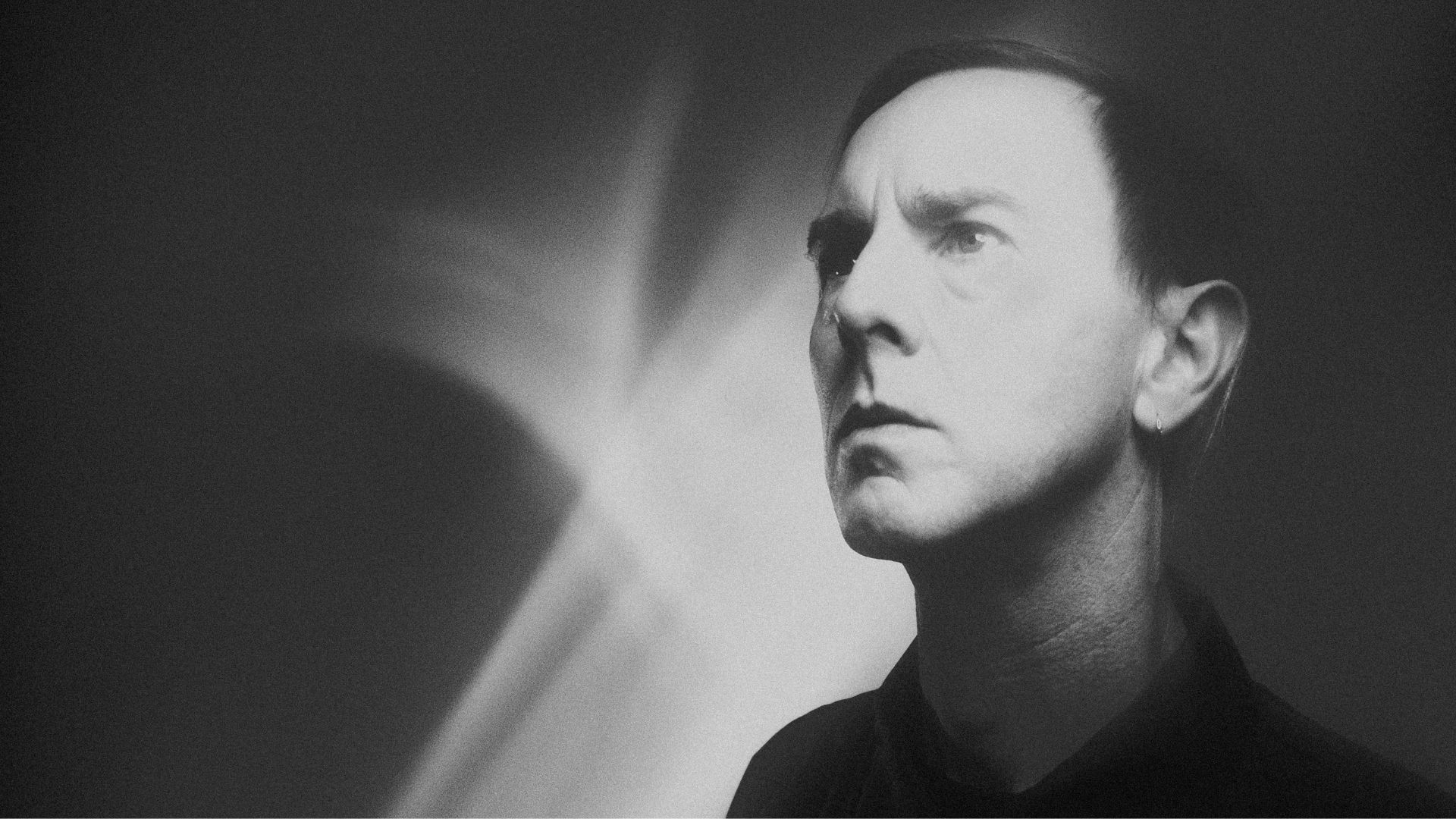
At first listen, Richie Hawtin’s production feels pulled from electronic music’s darkest corners. The frost-bitten minimalism, hypnotic spiraling delays and reverb, feverish vocals degraded to an indecipherable code.
The music is birthed from sputtering with kicks and claps and an undulating bass moving at every corner. Hawtin’s masterful minimal techno seems far away from commercial clubs and festivals. And that’s not even explaining Hawtin’s aliases like Plastikman, F.U.S.E., or UP! that transformed electronic music throughout the ‘90s to today.
Strangely, his sound has remained a pillar not just for underground gatherings but for the biggest stages, from Ultra and Coachella to Club Space and, for good measure, LIV. On April 25, he returns to Miami for Time Warp.
Even more puzzling is how the ’70s-born artist has remained one of the most authentic DJs in the field while still playing juggernaut clubs and festivals. Hawtin’s minimal touch has never succumbed to the sound de jour or commercial pressure. He’s instead a middle-ground DJ, leaving the listener wanting to either dive deeper, stay at surface level, or leave the pool.
“When I look back, there are definitely periods with different sounds, tempos, and vibes,” Hawtin explains to New Times while in conversation at the Biltmore Hotel. His all-black outfit and boots contrast with the bright Spanish Revival architecture, and guests who are ready for nine holes. We joke that no one here would recognize this techno legend until a young waiter comes by and thanks him for the years of music.
After the brief interruption, he continues: “But I hope there’s consistency. It all goes back to when I started clubbing in the late ’80s and early ’90s. I loved DJs who took me on a trip—who surprised me.”
Hawtin grew up in Windsor, Ontario, across the Detroit River. He discovered electronic music through Depeche Mode and New Order, and saw first-hand the techno renaissance in Detroit. He honed his craft on turntables and debuted Dimension Intrusion in 1993 under his F.U.S.E. alias. Around that time, he debuted in Miami at the Winter Music Conference.
“Coming up through the Detroit techno school, which was very futuristic, very rhythm-based, lots of percussion, and good bass lines, that’s what I try to keep consistent. My sets go up and down. Sometimes groovy, sometimes tough and stomping, and maybe difficult. I try to stand my ground and strive to stay connected to where I came from. What drives me more than anything is the spontaneity. You get in front of a crowd with a whole bunch of music that people don’t know, I try to play the newest music that I have, and you try to take them on a little journey.”
Time Warp Techno Festival Lands in Miami
The Mannheim techno festival Time Warp has remained a mainstay since 1994 (Hawtin first played the sophomore edition). The festival expanded into other countries and will now be hosted at Factory Town for its Miami edition. “It’s a very special event and organization for me because it’s been nearly consistent for thirty years; a place I perform at where I do extra preparation, and the people seem to be very open-minded. They let me play within my framework and to my extremes.”
A Hawtin newcomer should expect that sonic push and pull with moments that taper, surge, or collide. “When I was younger in my DJ years, I used to say, ‘It’s very important to make people stop dancing sometimes.’ You’re not trying to always make them dance; you need ups and downs. I think myself, and the scene, have lost that a bit. It’s to make people wonder what is happening and bring them back. Time Warp is a place where I can make that happen.”
Seeing Hawtin’s movement and curiosity in his setup is an experience in itself. He eschews CDJs and opts for hardware that keeps his hands — and feet via effect pedals — in constant motion, a real-life Kamaji from Spirited Away. He can layer myriad drum effects and loops, and manipulate tracks from a six-channel mixer and controllers, using heady concepts like “stem separation.”
The Detroit Way
“My dad was an electrical engineer, and he liked buying HiFi equipment and modifying it; he was a music lover. So my love for both was from the beginning.” He explains that the Detroit techno school of thought was to “Fuck those records up. Use an EQ, two copies, and two drum machines. Detroit has always had this futuristic spirit. Do more. Push forward, and that always inspired me.”
Hawtin remarks that just as much as a fresh track pushes him to perform, a new piece of technology to add to his setup is equally thrilling. “I honestly can’t say the music is the most important. Sometimes it’s the music; sometimes it’s the techno. It’s a pendulum that has been spinning for me for thirty years.”
Electronic music may be the only genre where what’s played is often hidden. Can you picture going to a rock concert, and the band refusing to tell you what they played? Indeed, entire websites are devoted to unearthing track IDs. Hawtin, who at Ultra last year listed each track he played in bright red lettering behind a massive LED screen, finds this practice disingenuous to the producer. He almost speaks of it in terms of the exploitation of the working class.
“I think it’s a disservice to the producer out there who are quite often the unseen stars in the scene, and we’re treating them as low-cost workers who have been farmed out by a multi-conglomerate and pretending that is not happening,” He points to a startling discrepancy between what a headliner may make playing a show to what the producer makes in return.
Transparency is the baseline for Hawtin. The least a DJ can do is brandish the song to the audience of thousands and millions online. “They are at our mercy if we choose to play their song, and then if we choose to tell people the song we played. I don’t think that should even be a choice for the DJ. Anything you play should be transparently listed to the audience. I truly believe that if there isn’t a fix, our music culture and scene won’t survive. You need a healthy ecosystem where the goods and services have a balance.”
Hawtin never entertained retiring. It’s one part that he wants to “open the doors to the next generation” of listeners, even if touring slows as he spends time with his young child. “I’m part of that first-wave of DJs who are now in their 50s or 60s, and there is no rule about retiring because no one has done this before.”
Like any tenured professional, he ties life itself to his craft. “DJ’ing is like living, you feel alive at that moment. I don’t think I will ever not want that feeling, and as I get older, I will probably want it more. I imagine, knowing me, that I will want to be doing that for a long, long time.”
Time Warp Miami. With Richie Hawtin, Honey Dijon, Marcel Dettmann, Tini, and others. Saturday, April 25, at Factory Town, 4800 NW 37th Ave., Miami; 305-484-6236; factorytown.com. Tickets cost from $75 – $159.99 via dice.fm.