
Photo by Nicole Lopez-Alvar

Audio By Carbonatix
I’ve always believed you don’t just visit Key West. You drift into it, sun-dazed and salt-streaked, until the island starts to feel like memory. Perhaps that’s why prolific author Ernest Hemingway never really left when he moved away in 1938.
His stories linger in the Conch Republic. You’ll find his presence in the salty breeze, in the chipped bar tops, and in the rhythm of a town that feels like a slice of paradise from a bygone era.
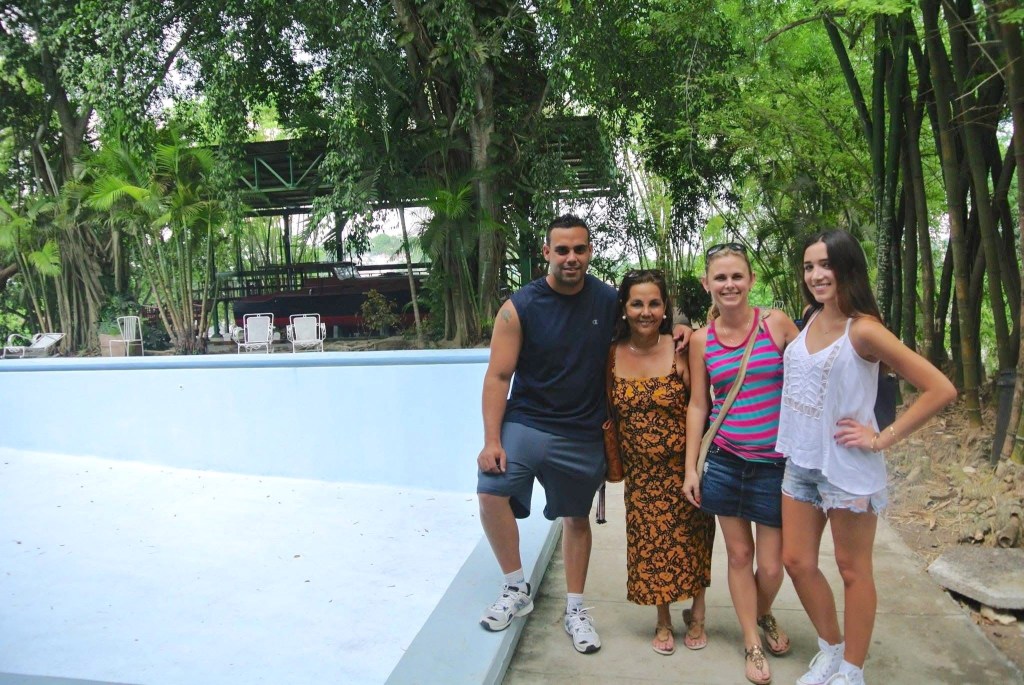
I felt an immense wave of nostalgia when I stood inside his home on Whitehead Street. I felt it again years later in Cuba at his former home, Finca Vigía, stepping onto his pool deck just across from his beloved fishing boat, Pilar.
Nicole Lopez-Alvar photo
My Personal Connection to Hemingway
As a first-generation American of Cuban descent and a Miami native, tracing his footsteps between Key West and Havana is extra special. He moved between the islands, chasing stories, embracing strangers, soaking up the sea, and, of course, having a drink at the end of the day.
Finca Vigía, located in San Francisco de Paula, 14 miles from Havana, was Hemingway’s home from 1939 to 1960. Now a national museum (Museo Hemingway), the Spanish-colonial home remains filled with his original belongings, books, and art. It’s also home to his fishing boat, Pilar. He wrote The Old Man and the Sea here. I was lucky enough to visit in 2014, when things were stable on the island.
However, some of his most meaningful days weren’t in Cuba. They occurred a decade before, down in the magical town of the Conch Republic.

Ernest Hemingway Photograph Collection, John F. Kennedy Presidential Library and Museum photo
Hemingway Calls Key West Home
Before his time in Cuba, Hemingway made the Southernmost City his home. Hemingway arrived in Key West in 1928, after his time in Paris. Those years, from 1928 to 1938, would later be called the “best decade of his life.” He wrote in the mornings, fished in the afternoons, and drank at night with a cast of characters that felt pulled straight from his own novels.
Pretty much anyone who knows anything about Key West knows that Hemingway once called the island home. He is arguably the most famous Key West resident of all time, hence the huge annual Hemingway Days celebrations held in his honor each July. (I experienced the annual Hemingway Look-Alike Contest in 2025, and I highly encourage you to make the trip, as well.)
In the 1930s, when he resided on the island, Hemingway, whom locals affectionately called “Papa,” became a major tourist draw. People were constantly trying to get into his home just to catch a glimpse of the famed author. Nearly a century later, that same pull still exists. His presence lingers in a way that feels almost tangible.
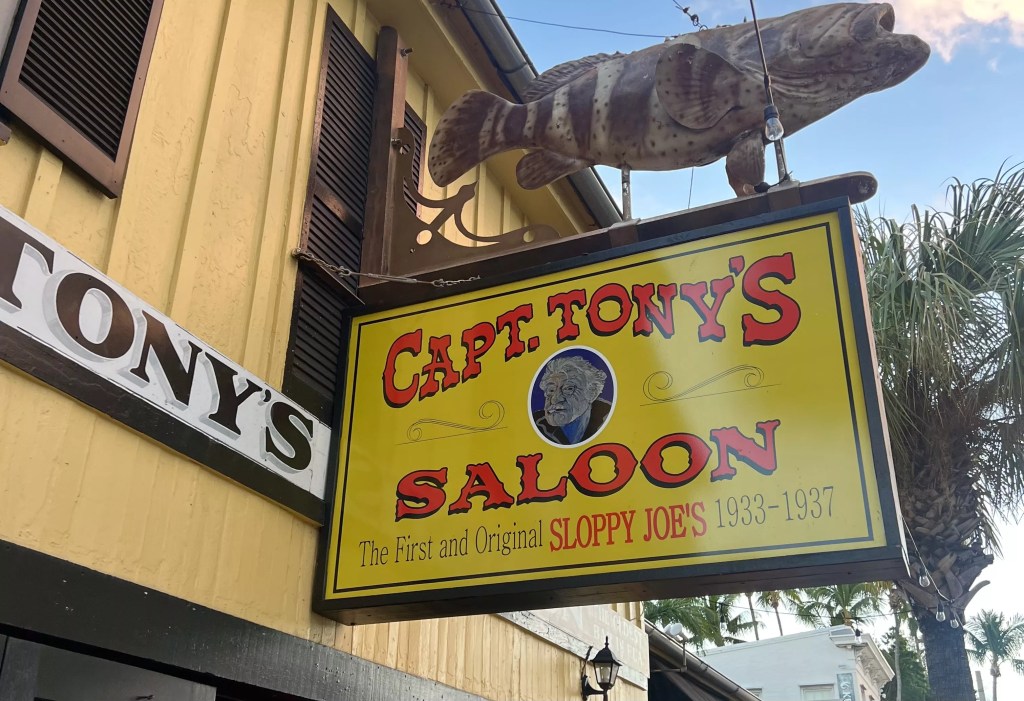
Photo by Nicole Lopez-Alvar
Visiting His Favorite Key West Spots Today
Some of the places Hemingway once frequented no longer exist, and others have quietly become private residences. However, there are still plenty of spots across Key West where his spirit feels alive, where you can walk the same streets, step into the same bars, and experience a version of the island that hasn’t entirely changed.
Below are some of those places, listed alphabetically, where you can still follow in his footsteps.
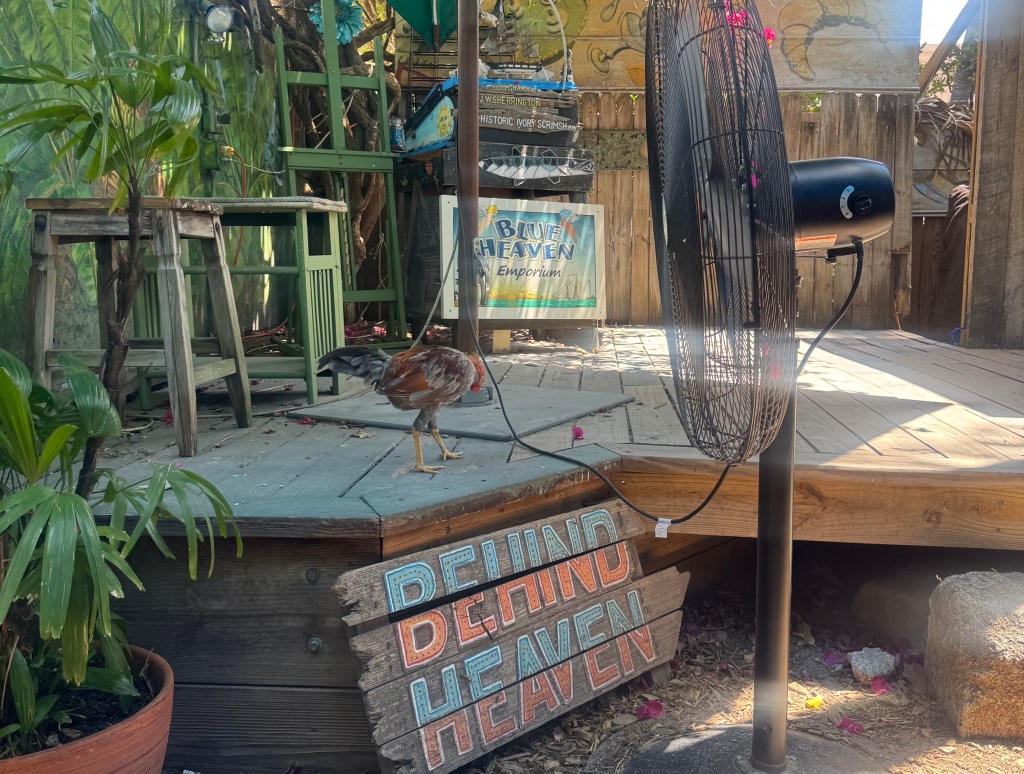
Photo by Nicole Lopez-Alvar
Blue Heaven
While Hemingway was not sitting down for delicious pancakes and Key lime pie like we are today, he was still very much a presence here. The backyard once hosted boxing matches, and after Pauline had the ring removed from their home to build her now-famous pool, Hemingway continued sparring and refereeing matches on these very grounds. Today, it’s lush, chaotic, and full of life, which somehow still feels exactly right. From their delicious Key West shrimp eggs Benedict to the fluffy, rich, and perfect banana walnut pancakes and sky-high Key lime pie, this restaurant is one of a kind. But it’s not just about the food. Throw in groovy live music, funky outdoor seating, and a chill island vibe all around the historic property, and you’ve got a breakfast or dinner experience you’ll be dreaming about long after you leave (trust me). 729 Thomas St., Key West; 305-296-8666; blueheavenkw.com.
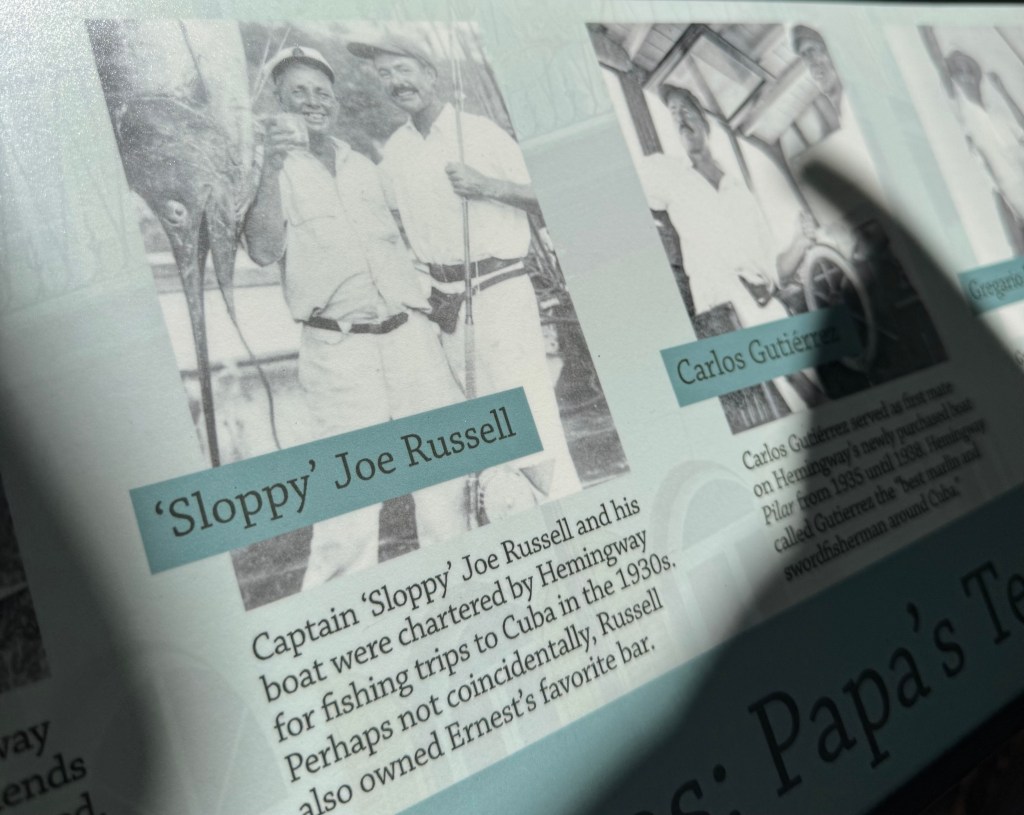
Photo by Nicole Lopez-Alvar
Capt Tony’s Saloon (The Original Sloppy Joe’s From ’33-’37)
If you ask around Key West, “Where did Ernest Hemingway drink?” someone will point you straight to Sloppy Joe’s Bar on Duval Street. Although it’s home to the legendary Hemingway Look-Alike Contest, has his face as its logo, and has original Hemingway photographs and newspaper clippings covering its walls, it actually came to fruition after his departure.
The historic bar Hemingway actually drank at sits at 428 Greene St., now known as Capt Tony’s Saloon. From 1933 to 1937, this was the original Sloppy Joe’s, owned by his close friend “Sloppy” Joe Russell, his fishing buddy and partner in a life built around the sea, long days on the water, and even longer nights after.
The building dates back to 1851, having lived multiple lives as an ice house, a morgue, a telegraph station during the Spanish-American War, even a bordello and speakeasy before becoming a legendary watering hole. Historians say this is where Hemingway did most of his drinking, and the second you walk in, you understand why. The ceilings hang low, the walls are layered with decades of memorabilia, and every inch feels steeped in stories, arguments, laughter, and a few regrets.
It’s also where Martha Gellhorn first met Hemingway in 1936, allegedly paying the bartender $20 for an introduction before the two sat down over “Papa Dobles,” setting off a relationship that would change everything. Today, with bras hanging from the ceiling, a tree growing straight through the bar, and a mix of locals and tourists swapping stories over cold drinks, Capt. Tony’s still feels like old Key West, untouched and unapologetically alive. 428 Greene St., Key West; 305-294-1838; capttonyssaloon.com.
Casa Antigua photo
Casa Antigua (Formerly the Trev-Mor Hotel)
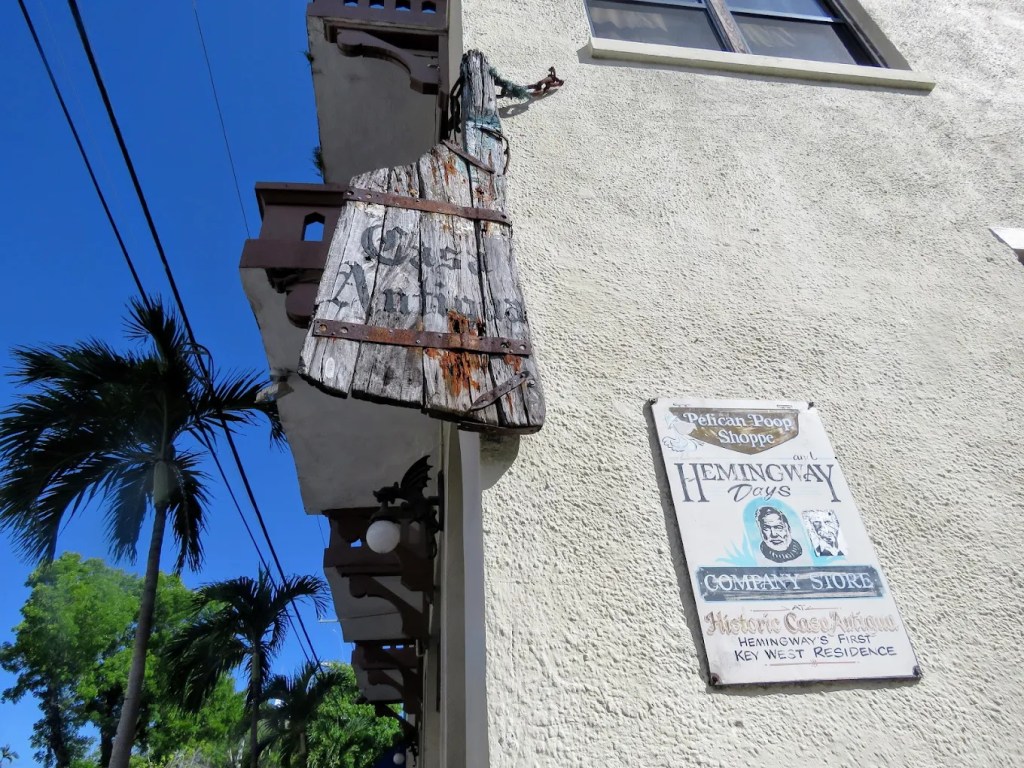
In April 1928, Ernest Hemingway arrived in Key West by ocean liner with his wife, Pauline, after several years in Paris, expecting nothing more than a brief stop to pick up a Ford he had ordered. The plan was simple: grab the car and drive up the Keys. But the car didn’t arrive. Instead, the couple found themselves unexpectedly stranded, taken in by the owners of the Trev-Mor Ford Agency and given a room upstairs while they waited. The car dealership was on the first floor, and hotel rooms were on the upper two floors.
What was supposed to be a short stay stretched into weeks, and in that time, something shifted. From their window, Hemingway could look out over the seaport, wander down to Mallory Square in search of fishing charters, and settle into a rhythm that felt instinctively right. He wrote in the mornings, explored in the afternoons, and by night, made his way to the bars that would soon become legend.
It was during this accidental pause that he penned A Farewell to Arms from his second-story room, unknowingly anchoring himself to the island in a way that would define the next decade of his life.
That first stay unfolded at what we now know as Casa Antigua, formerly the Trev-Mor Hotel at 334 Simonton St. It’s easy to walk past today without realizing its significance, but this was Hemingway’s introduction to Key West, the place where he first lived, wrote, and fell hard for the island. He and Pauline remained there for nearly two years before moving into their permanent home on Whitehead Street, but the foundation of everything began here. 314 Simonton St, Key West; keywesthistoricmarkertour.org.
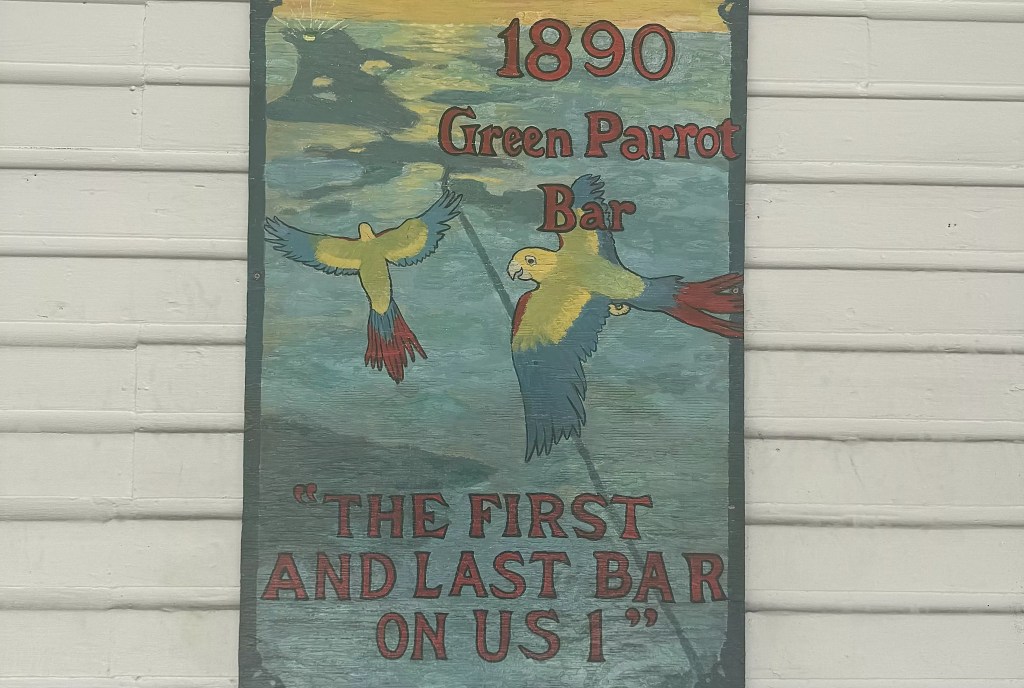
Photo by Nicole Lopez-Alvar
The Green Parrot (Formerly Brown Derby)
The Green Parrot Bar, the oldest bar in Florida, dating back to 1890, is a true Key West institution with a soul as colorful as the island itself. It was originally a grocery store before becoming the Brown Derby sailors’ bar.
At Brown Derby, you can imagine Hemingway tucked into a corner, watching everything. At the former Sloppy Joe’s (Cap’t Tony’s Saloon) and Green Parrot, he surrounded himself with what locals called “The Mob.” Fishermen, bartenders, writers, drifters. People who lived fully and loudly. They drank, they fished, they became characters. And then they became literature.
The bar transformed in the 1970s when visionary owner Judy Sullivan turned it into one of America’s “great freak-bars,” attracting hippies, bikers, and free spirits with its open-air shutters and legendary tequila specials. Later, owners Jim and Linda Bean cemented their legacy by making live music the bar’s heartbeat, earning national recognition from Playboy in 2000 as one of “The Best Bars in America.”
Today, under the stewardship of John Vagnoni and Pat Croce, the Green Parrot remains a rowdy, welcoming corner saloon where locals and tourists gather for free, old-school popcorn, the famous “Root Beer Barrel” shots (I personally am not a fan, but you gotta try it at least once), and unforgettable nights of music and memories.601 Whitehead St., Key West; 305-294-6133; greenparrot.com.
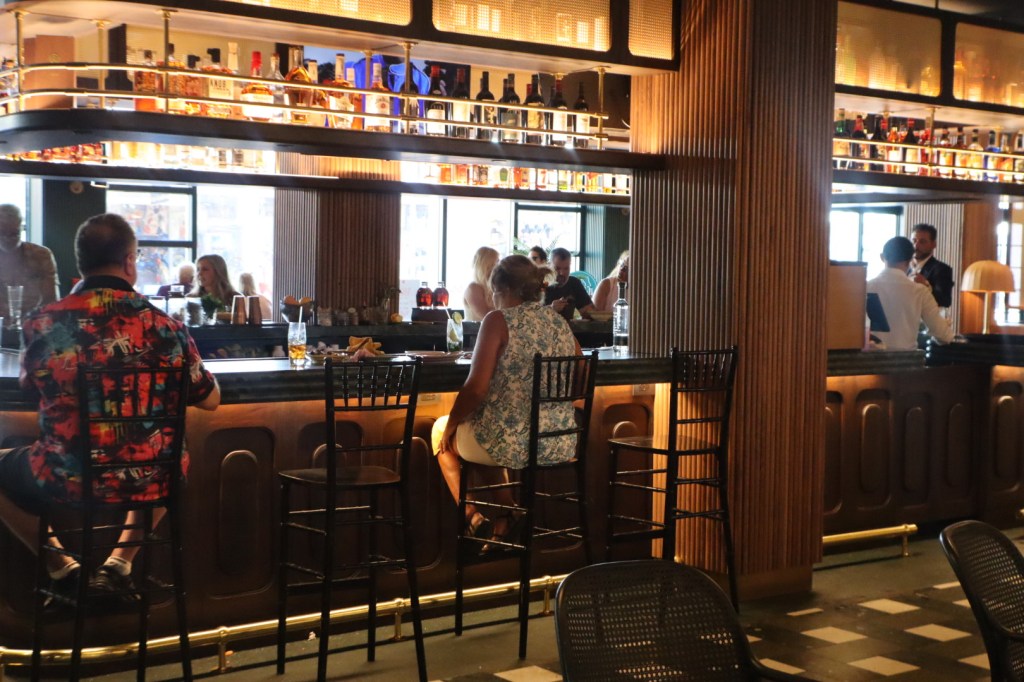
Photo by Nicole Lopez-Alvar
La Concha Key West (Formerly Key West Colonial Hotel)
In April 1928, when Hemingway arrived aboard a ferry from Cuba, the hotel was his first glimpse of downtown. The light pink, seven-story hotel was later referenced in two short stories. Plus, it’s referenced in his 1937 novel, To Have and Have Not.
Known as the Key West Colonial Hotel in Hemingway’s time, it became a gathering place for visiting friends and family. He and Pauline spent time here socializing and staying connected to people passing through the island.
Celebrating its 100th birthday in 2026, La Concha Key West holds a special place in my heart. It’s a landmark Old Town hotel I love for its Art Deco glamour, Cuban heritage, rooftop views, and unbeatable location.
Plus, you’ll find welcoming staff, a lively pool, a gorgeous wooden bar, and a one-of-a-kind seashell-inspired breakfast dining room. 430 Duval St.., Key West; 305-296-2991; laconchakeywest.com.
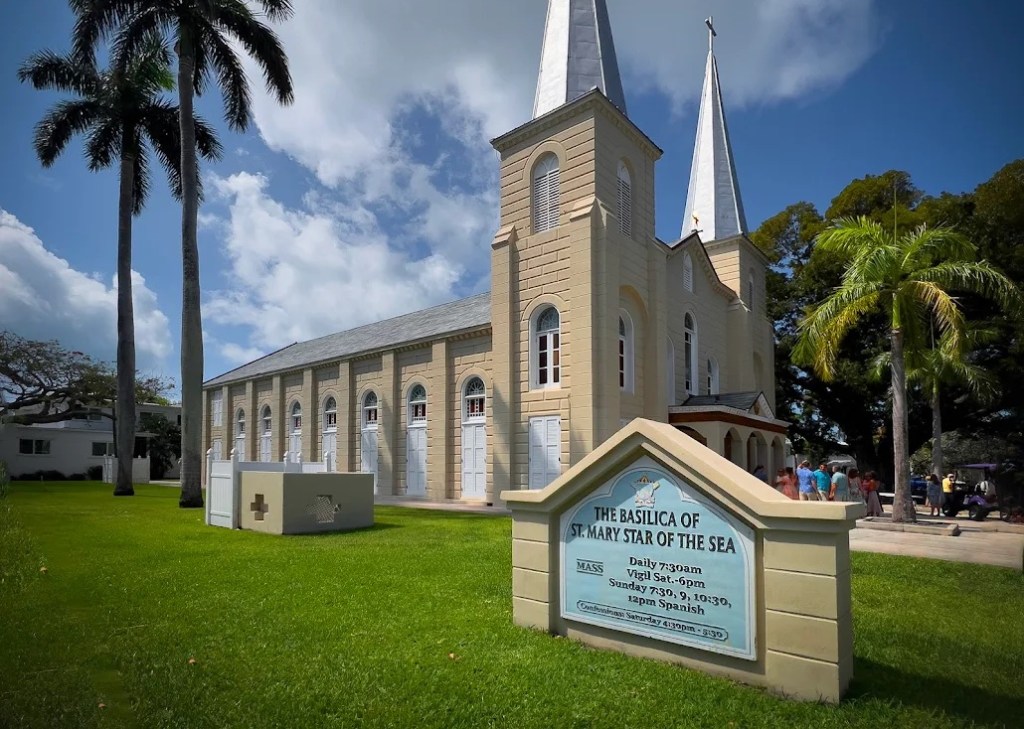
The Basilica of St. Mary Star of the Sea
The Basilica of St. Mary Star of the Sea
Tucked just a short walk from his home on Whitehead Street, the Basilica of St. Mary Star of the Sea offers a quieter, more intimate glimpse into the life of Hemingway.
Before marrying Pauline, Hemingway converted to Catholicism, as she was a devout Catholic. During their years in Key West, the two regularly attended mass here, often slipping into a pew on Sundays while the rest of the island buzzed outside. According to locals, Hemingway sometimes stood in the back “because of a bad knee.”
The church, with its serene interior and stone prayer grotto, reflects a more layered side of him, a man navigating faith, doubt, and devotion beneath the bravado. Locals have long visited the grotto to pray for protection during hurricane season, and the Hemingways were among them. Today, the basilica is listed on the National Register of Historic Places. His presence definitely still lingers here. 1010 Windsor Ln., Key West; stmarykeywest.com.
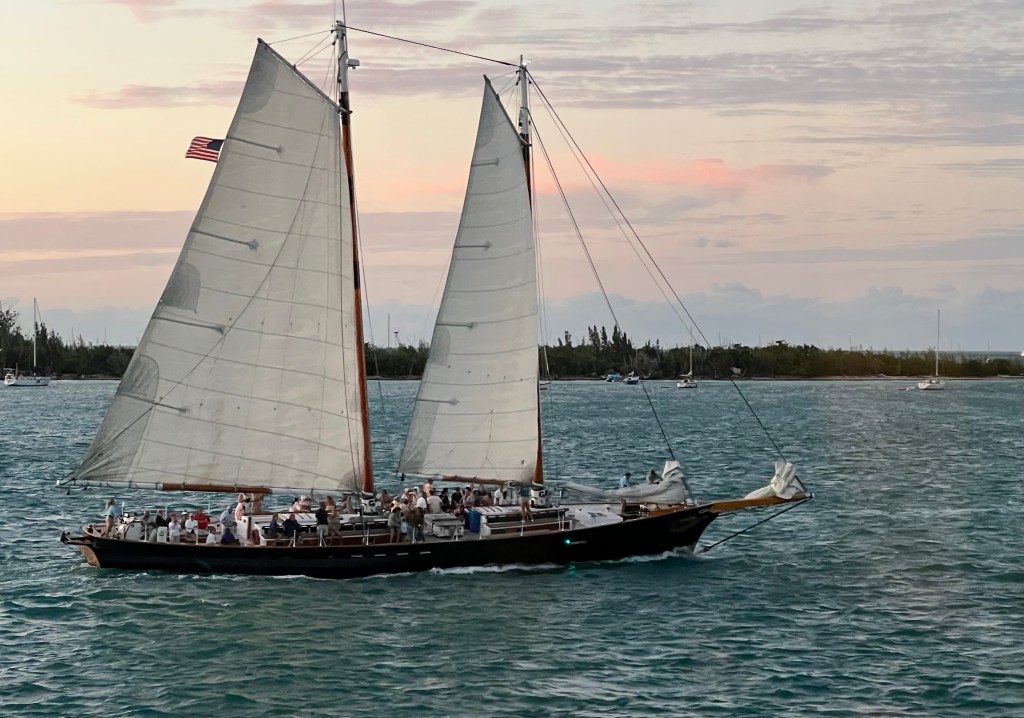
Photo by Nicole Lopez-Alvar
The Waters Surrounding Key West
This might be the most important “place” of all. Hemingway lived for the water. He fished these seas relentlessly, chasing marlin and meaning in equal measure. He even used the Pilar to patrol for German submarines during World War II. You can still head out on a fishing charter today and get a glimpse of what that life felt like, wind in your face, nothing but blue in every direction.
Or, you can feel his presence on the docks themselves, where the line between bar and ocean disappears. Fishing wasn’t separate from drinking for Hemingway. It was part of the same ritual.
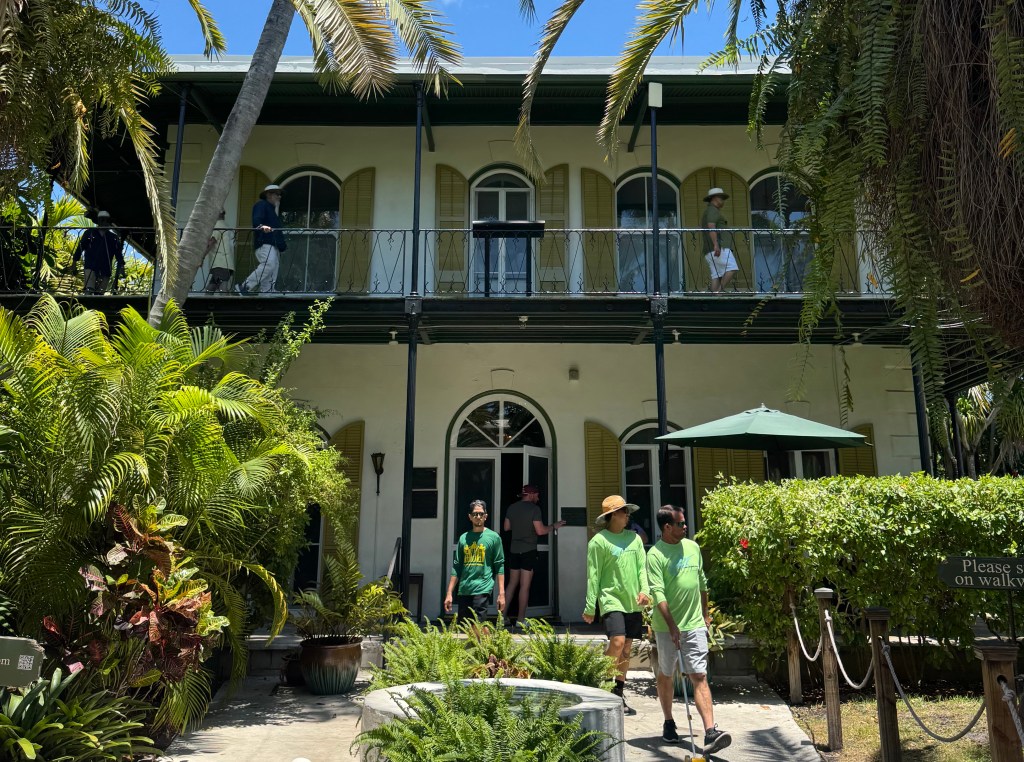
Photo by Nicole Lopez-Alvar
The Hemingway Home & Museum
Of course, everything began and ended at the house. The Hemingway Home & Museum isn’t just a tourist stop. It’s a window into how Hemingway actually lived.
Built in 1851 in Spanish Colonial style from native limestone, the home was in rough shape when Hemingway and Pauline took ownership in 1931. However, what followed was a full transformation in the early 1930s, turning it into the grand, storied property that still draws visitors today.
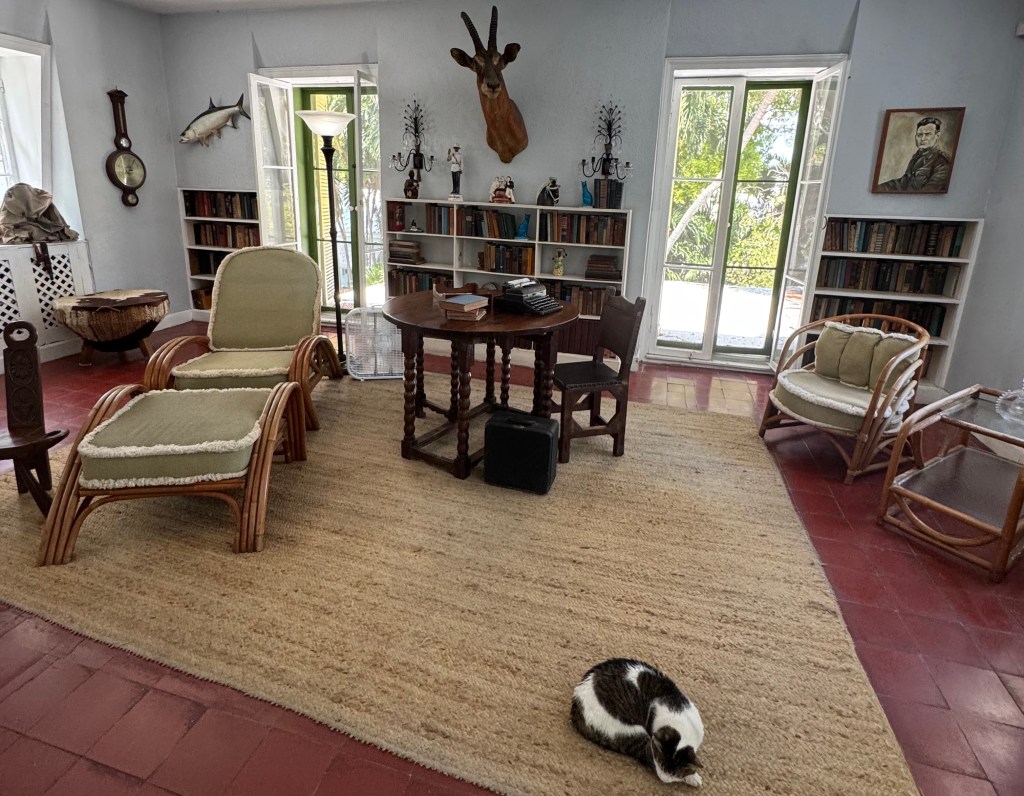
Photo by Nicole Lopez-Alvar
The writing studio sits tucked away from the main house, where Hemingway kept a strict routine, working in the early mornings before the island stirred.
Walk the grounds, and you’ll find traces of his life everywhere. From European antiques collected during his Paris years to the mounted trophies from his travels. And then there are the cats, dozens of them, many still six-toed, descendants of Snowball, a gift from a sea captain that somehow became one of the home’s most enduring legacies.
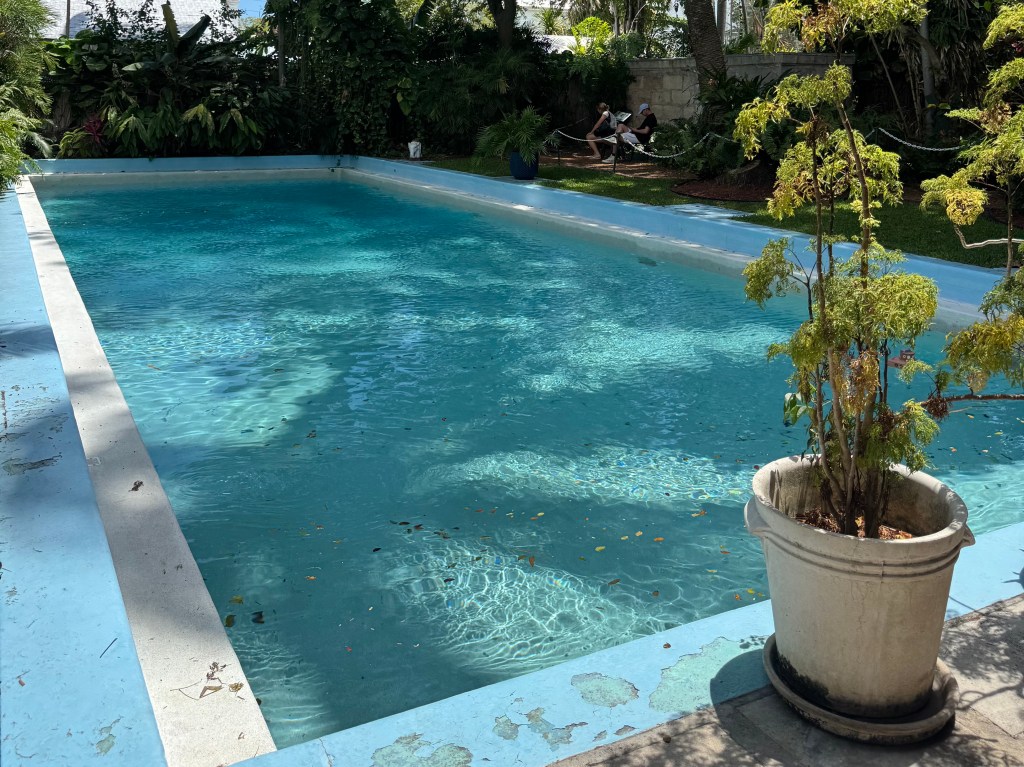
Photo by Nicole Lopez-Alvar
The pool, though, is where the stories really take shape. Built between 1937 and 1938 at the staggering cost of $20,000, it was the first in-ground pool in Key West and the only one within miles. (A luxury that nearly drained Hemingway’s finances.) Legend has it that in frustration, he pressed a penny into the wet cement and declared it his last. That penny is still there, tucked between the stones. He lived here until 1939, before leaving for Cuba. 907 Whitehead St, Key West; hemingwayhome.com.