
The Leiden Collection, New York photo

Audio By Carbonatix
From Alligator Alcatraz to tariff mania, 2025 has been a year of economic tumult and political chaos with South Florida at the reluctant center. But while everything else feels like it’s in a downward spiral, Miami’s art scene is still on the come-up. Underground spaces and upstart galleries are testing new narratives and changing the conversation about what art in South Florida can look like, while area museums continue to feature important contemporary artists, new and old. Private collections remain a critical facet of the region’s art scene in more ways than one: Museums turned to major collections for exhibitions, with one in Palm Beach making a case for South Florida as a destination for more than just contemporary art. And while Art Basel Miami Beach still serves as a stage for some of the cringiest confabulations the art world can throw at us (robot dogs, anyone?), the best of Miami’s art exhibitions proved once again the breadth and quality of its city’s art scene.
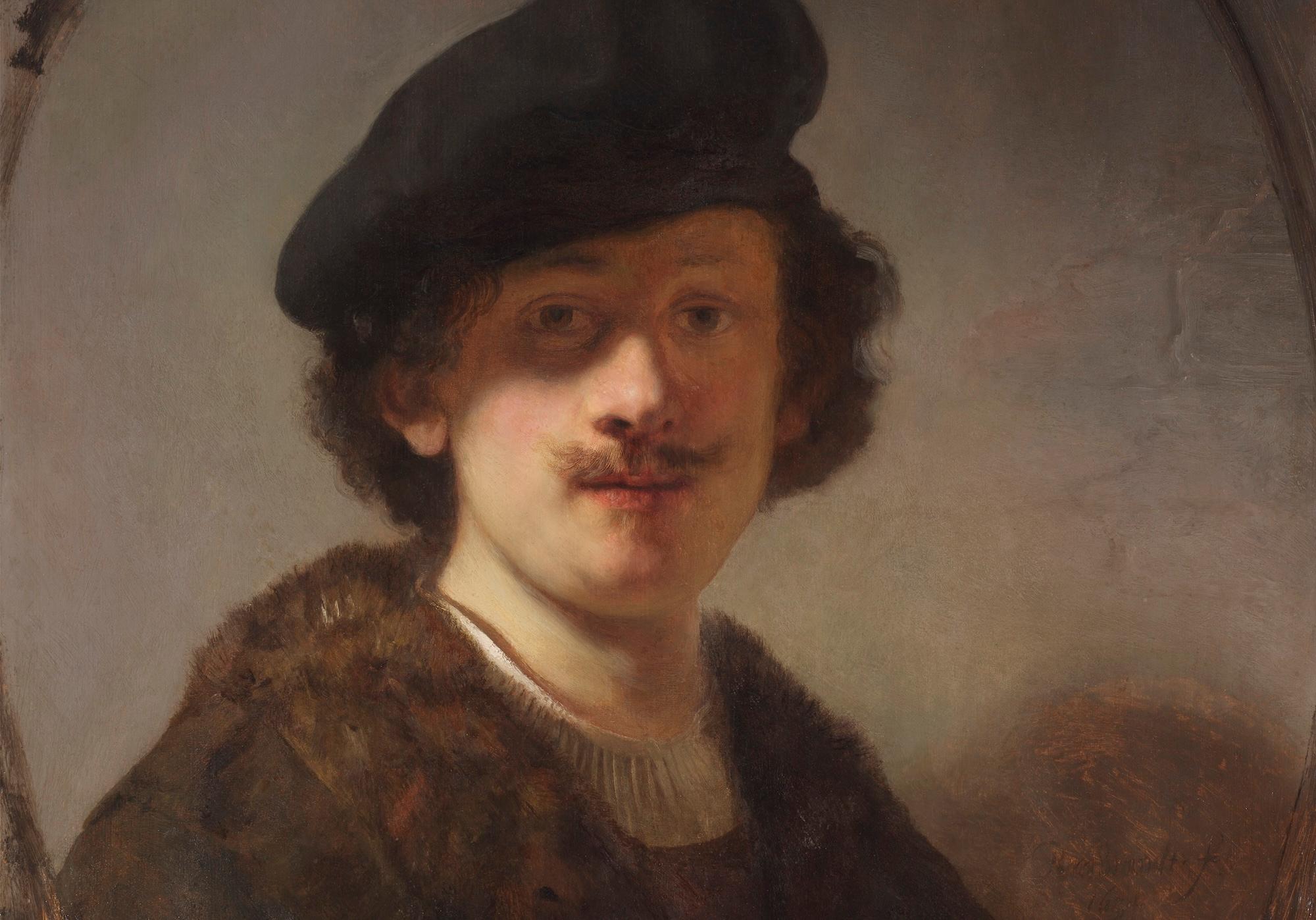
“Art and Life in Rembrandt’s Time” at the Norton Museum
A blockbuster, a destination show, and a landmark in South Florida’s art history, the Norton’s exhibition of masterworks by Rembrandt, Vermeer, and other painters of the Dutch Golden Age marks the first time these legendary artists have ever been shown in the State of Florida. But beyond providing further proof of the region’s growing importance in the art world, “Art in Life in Rembrandt’s Time” is an outstandingly curated show, revealing not simply the greatness of its name-brand painters but also providing deeper insight into their lesser-known peers like Gerrit Dou and Jan Steen, and the tumultuous time in which they lived. — Douglas Markowitz
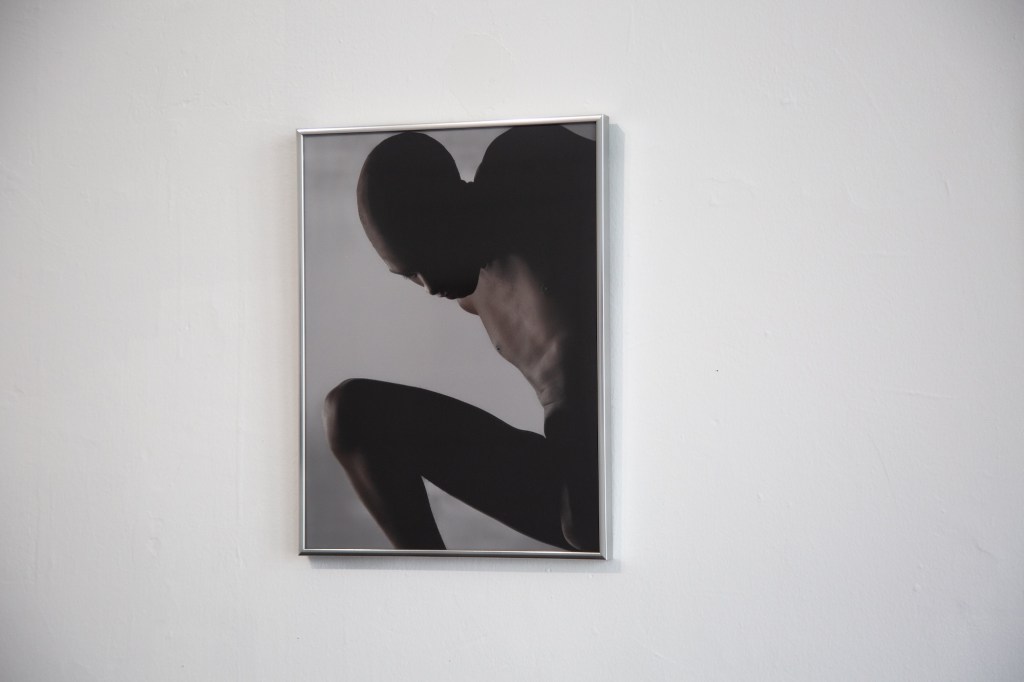
Photo by Torrance Hall/Queue Gallery
“Black Mans Shadow Work” at Queue Gallery
Who says all Miami art has to be sunshiny and bright? Alongside alternative spaces such as Tunnel Projects, downtown upstart Queue Gallery and its owner/curator, Catherine Camargo, has become a locus point for a growing scene of Miami art irascibles, programming work that’s more sophisticated, complicated, and monochromatic than the usual South Florida fare, to our benefit. Its best show so far has been a duo exhibition pairing New York-based artists Torrance Hall and Karryl Eugene, combining the former’s shadowy self-portraits with the latter’s photo collages, combining and critiquing celeb-centric imagery. — Douglas Markowitz
“Dreams Without Riders: An Exploration of Control, Featuring No Control” at Homework Gallery
Brigette Hoffman’s “Dreams Without Riders” was as much an exercise in world-building as installation art. Centered on a carnival motif, the paintings along the Homework Gallery walls hung like kinetic, kaleidoscopic portals through which the sculptures of riderless bikes, tents and spires, mice, and other assorted circus ephemera traveled to serve as three-dimensional symbols and refractions of deeper subconscious truths atop a central island stage. And, indeed, in her artist statement, the German-Nicaraguan multimedia artist references Carl Jung’s theory of the Self, Dolores Cannon, and Guy Debord’s The Society of the Spectacle. “Beneath the stage lights and the masks, there is the Self, the divine spark that watches, waits, and moves in its own rhythm,” the Homework one-pager adds. “Recognizing it is an act of resistance, a way of reclaiming authorship from the spectacle.” And, so, yes, “Dreams Without Riders” is magical and fanciful, but is clearly intended on a deeper level, to acknowledge and (hopefully!) facilitate the yearning for self-knowledge and higher actualization that can only come from transcending our limited corporeal POV — a beguiling new chapter in an ancient story. “For now we see through a glass, darkly, but then face to face,” Corinthians says. “Now I know in part; but then shall I know even as also I am known.” — Shawn Macomber
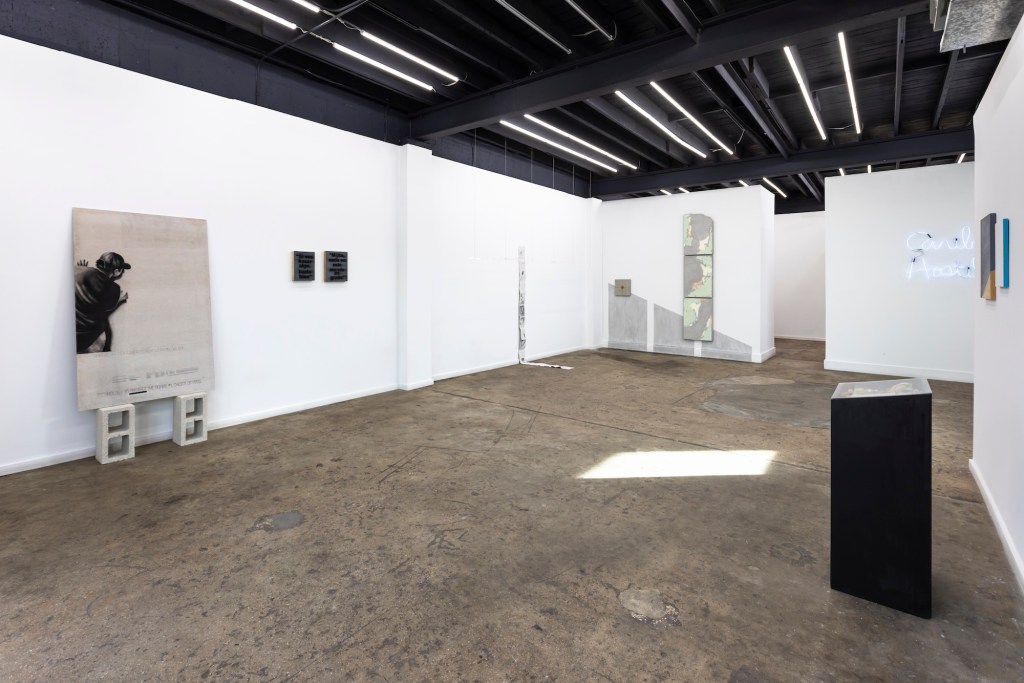
Photo by Evelyn Sosa
“Formas de Memoria y Reescritura (Forms of Memory and Rewriting)” at Mahara + Co.
Objects and images are not only an important way we encode, contextualize, and anchor our own individual memories, but they also make up our collective reality: A recent peer-reviewed study in the journal Science Advances found that when “a group of people encounter the same range of objects, individuals from that group tend to remember the same objects.” This is fertile ground for exploration — not to mention excavation and exhibition — and with “Formas de Memoria y Reescritura” Mahara + Co. dove fully into its implications, from the profound and thought-provoking to the droll and eclectic, tackling memory not “as a fixed archive,” but, rather, as “a territory in transformation”; “a space where materials, gestures, and words intertwine to rewrite what has been lived.” The resulting pieces from the show’s eight artists — wrought, alternately, from concrete, books, paint, dried flowers, rocks, paper, even repurposed tools and wood — is extremely powerful not only in its distillation and intra-exhibit conversation and juxtaposition, but also in the way its individual elemental tones create harmonies with our own personal and shared (obscured) histories. — Shawn Macomber
“In Between” at Miami Art Society
One of the leading lights of Miami’s next generation of fine artists, Natalie Galindo — who recently earned an M.F.A. in Painting at the University of Miami and now serves as the program manager at the Fountainhead artists residency — has put together an incredible body of work over the last decade that would be the envy of most artists with twice her experience. And after participating in group shows at venues ranging from the Lowe Museum of Art to the Museum of Contemporary Art of the Americas, Basel on the River, JF Gallery, the Convergence Gallery, and the Miami Dade Gallery, Miami Art Society finally gave her a richly-deserved full-on spotlight for “In Between,” a series of breathtaking and affecting narrative oil paintings drawing on her Cuban and Colombian heritage. Boasting evocative titles such as “Spirit Guide,” “Caballero Archetype,” and “A Twilight Dream,” Galindo actualizes her fluid and meditative work with a unique layering and brushwork process that recasts her subjects in a sort of ethereal expressionism. “This mirrors the way memories distort, layer, and dissolve over time,” she writes in her artist’s statement. “‘In Between’ serves as a meditation on presence and absence, on what is seen, what lingers, and what remains.” — Shawn Macomber
Opera Gallery
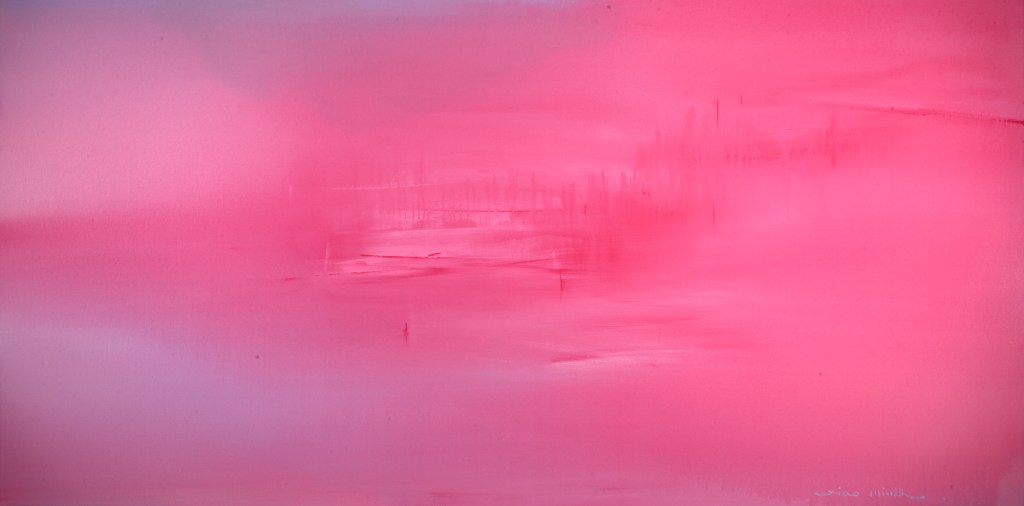
“In Dialogue with Color: Mid-20th Century to Now” at Opera Gallery
If all “In Dialogue with Color: Mid-20th Century to Now” offered was the opportunity to see a straight-up amazing lineup of heavy hitters in a relatively intimate setting, it would be worth the journey to Opera Gallery’s increasingly swanky corner of the Design District. The show features works by Pablo Picasso, Yayoi Kusama, Marc Chagall, Banksy, Keith Haring, Feng Xiao-Min, Claude Monet, Amoako Boafo, and Pierre Soulages. However, the work is not merely overhyped marginalia from icons — these pieces are all as wonderful and impressive as they are intriguing and substantive. Now, as to the theme promised in the title and press materials which promise “to explore the artists’ engagement with color as a way to symbolize meaning, convey identity, and provoke thought,” it’s a little difficult to tease out cohesion on that level, but the quotes interspersed on walls between the pieces — from, say, Chagall: “Color is everything, color is vibration like music; everything is vibration”; or Picasso: “Color, like features, follow the changes of emotion” — do give some further weight to the stated purpose. As with so many things, however, a trip through the show is all about the (multi-artist) journey, not necessarily the (color) destination. — Shawn Macomber
“Isa Zapata: Showcase” at the Colombian Consulate
From the zesty interpretation and externalization of the small-yet-mighty spirit of the Chihuahua via her Baba-Ji statue in the Dogs and Cats Walkway and Sculpture Garden downtown, to fanciful illustrations licensed by Target that redefine animal prints, to her work as a creative director building haute couture tableaus for Brickell and Key Biscayne magazines, Colombian-American artist Isa Zapata quite obviously follows her adventurous muse in whatever wild, whimsical direction it leads. The May show at the Colombian Consulate of a dozen or so of her pop-art paintings — think Lisa Frank and Pablo Picasso locked in the Crayola paint factory overnight — was no exception, kindling both the imagination and general good vibes. At the packed opening, sometime between Colombian Consul Fernando Marmolejo presenting an unsuspecting Zapata with an award for outstanding contributions to Colombian culture and the traditional Valle cuisine spread, a gaggle of salsa dancers in traditional garb spun out across the gallery. For a moment, it was difficult to discern the border between Zapata’s vision and our current, increasingly whimsy-free reality — a delightful waystation in which to discover oneself. — Shawn Macomber
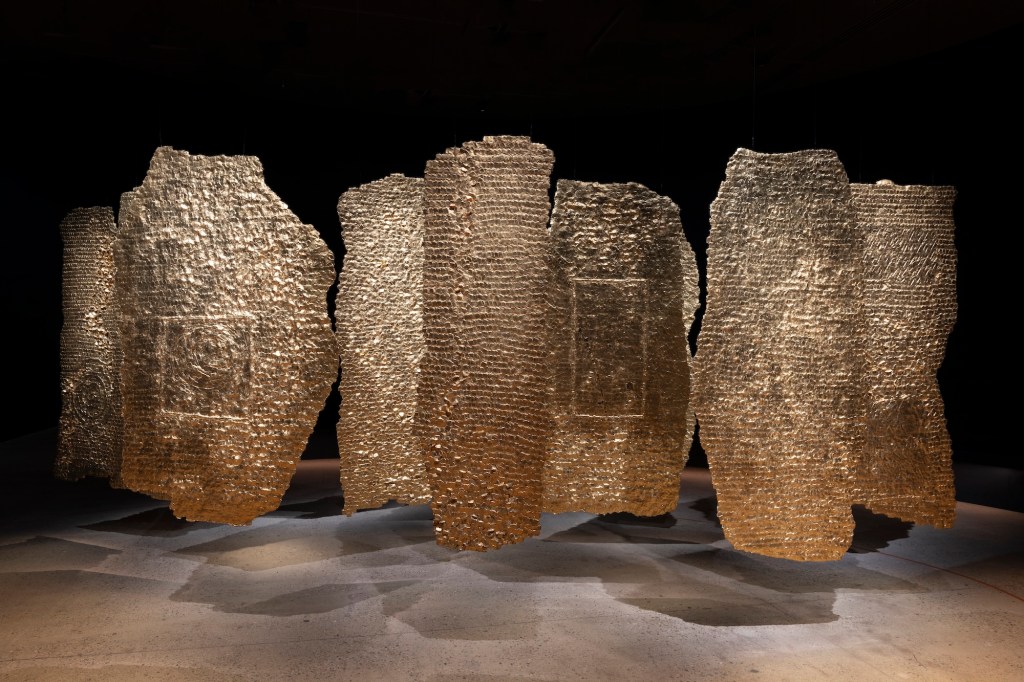
© Olga de Amaral/© Marc Domage
“Olga de Amaral” at the Institute of Contemporary Art, Miami
It’s not what you might expect when you think “fabric imported from Paris,” but ICA Miami’s staging of the Fondation Cartier’s major retrospective of Colombian textile artist Olga de Amaral was certainly cut from a different cloth. Rather than placing de Amaral’s works on standard white walls, the exhibition’s staging, designed by rising architecture star Lina Ghotmeh, suspended them from metal poles in the middle of the gallery space itself, allowing viewers to fully immerse themselves in the brilliant colors, varied textures, and multidimensionality of the artworks. — Douglas Markowitz
“Philip Smith: Magnetic Fields” at Museum of Contemporary Art, North Miami
A recent returnee to South Florida after a long career in New York, Pictures Generation painter Philip Smith’s show at MoCA NoMi is a career-capping homecoming for an underrated artist of an influential generation. Full of esoteric iconography backed by the artist’s mystical explorations into the supernatural, Smith’s paintings are a world unto themselves, and the show’s presentation of his recent work alongside older pieces displays an oeuvre still evolving in fascinating ways. — Douglas Markowitz
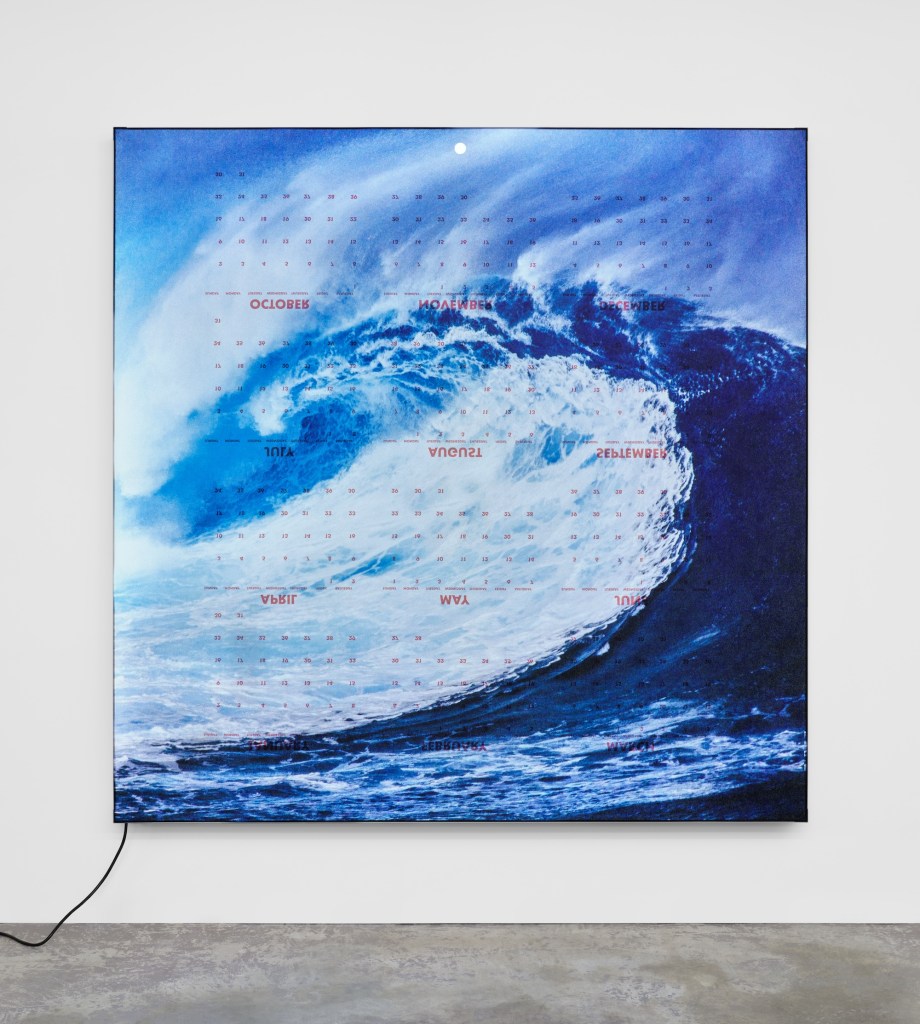
El Espacio 23 photo
“A World Far Away, Nearby, and Invisible” at El Espacio 23
Making sense out of a collection as massive as Jorge Pérez’s is always a challenge, but one that the curatorial team at El Espacio 23 has become quite adept at completing. Focusing this year on “Territory Narratives” as the show’s subtitle states, the space’s latest presentation once again takes a well-worn artistic theme (landscapes) and deconstructs it, discussing humanity’s fraught relationship with the lands we inhabit, venerate, and exploit. The roster of artists is massive and globe-spanning, with works from stars such as Leonora Carrington and Sean Scully cohabitating with locals like Nina Surel and Jennifer Basile, while immersive installations by Graciela Sacco and Tania Candiani steal the show. — Douglas Markowitz
Honorable Mentions:
- “Anastasia Samoylova: Atlantic Coast” at the Norton Museum: Roadtripping from Miami to Maine, the locally-based photographer and rising art world star takes a walk on the wild side of America’s “Forgotten Coast.”
- “Christo and Jeanne-Claude Surrounded Islands Documentation Exhibition” at NSU Art Museum: A brilliant restaging of the PAMM’s 2019 show at the new permanent home of the legendary installation’s archive.
- “Ilsse Peredo: Ojos que no ven” at Homework: The photographer beautifully renders journeys to far-off Bhutan and rural Mexico with a series of sheer, flag-like photo prints. — Douglas Markowitz
