
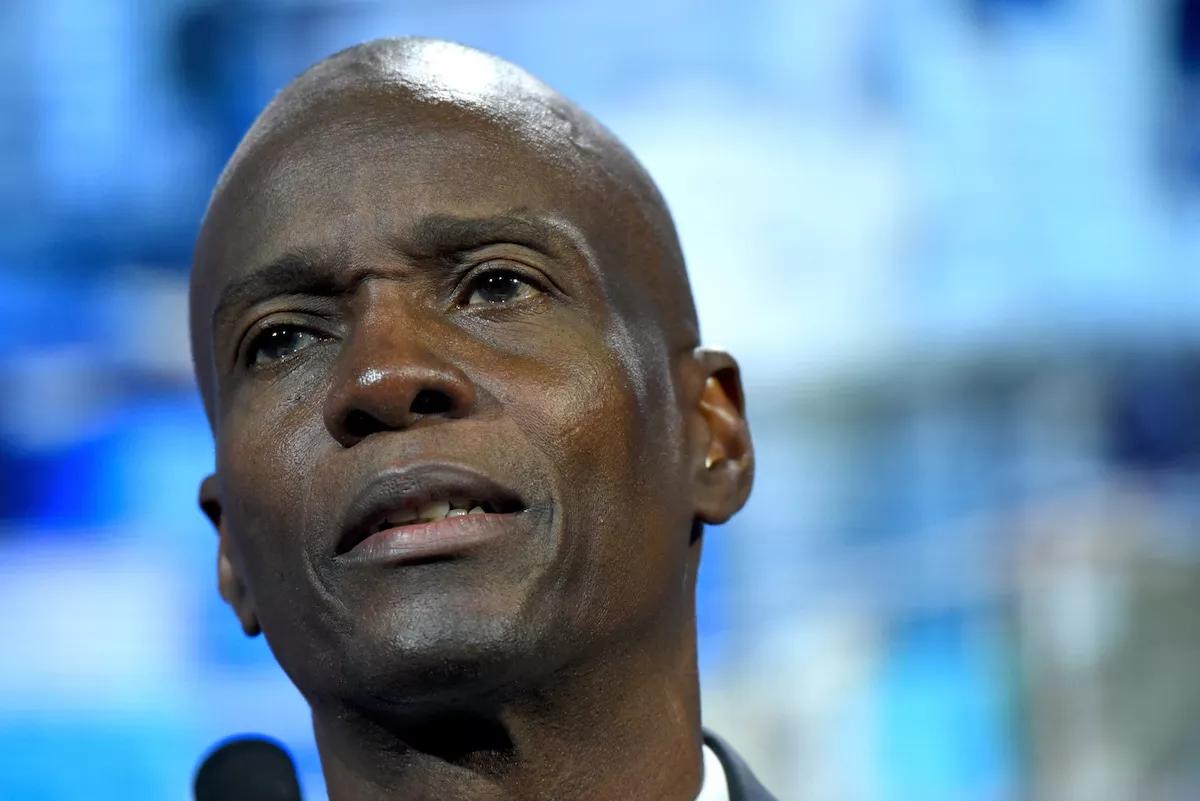
Photo by Riccardo Savi/Getty Images for Concordia Summit

Audio By Carbonatix
Independent Journalism in Miami Needs You
We need to raise $10,000 by August 9 to support the reporting our community depends on. Reader support keeps us independent and is playing a larger role in funding local journalism and shaping what comes next. If you believe independent local journalism matters, make a contribution today.
We’ve all heard the conspiracy theories: The United States government funded a political assassination in (insert nation here). And while there has been some truth to those theories over the years (see the Church Committee report), rarely does the federal government just come out and admit its money funded an assassin’s paycheck — like it did Thursday.
The U.S. Attorney’s Office for the Southern District of Florida Thursday announced a 20-year sentence for Keegan Harricharan, 42, of Coral Springs, after he pleaded guilty to conspiracy to engage in money laundering. Harricharan, along with several others, used pandemic-era Paycheck Protection Program (PPP) loans to finance “the conspiracy to overthrow the Haitian government and assassinate President Moïse on July 7, 2021, in Port-au-Prince, Haiti,” according to the U.S. Department of Justice (DOJ).
Beginning in June 2020, Harricharan and another man obtained about $840,000 in PPP loans, according to the DOJ. About a year later, they began meeting with other members of the conspiracy in South Florida to discuss plans to remove Moïse and install a new government.
“Harricharan agreed to use his South Florida company, TNR Holding Group Inc. (TNR Holding), to receive and distribute fraud proceeds in support of the conspiracy. Between May 18 and May 28, 2021, approximately $175,000 in PPP fraud proceeds and other funds were deposited into his TNR Holding’s bank account,” a DOJ press release reads.
Weeks later, a team of Colombian mercenaries (funded in part by the laundered PPP loans) broke into the president’s residence and fatally shot Moïse.
“This case is a stark reminder that financial crime is often the engine behind far more dangerous conduct,” U.S. Attorney Jason A. Reding Quiñones said. “This defendant did not simply commit fraud. He exploited pandemic relief programs meant to keep small businesses alive during a national crisis and laundered those stolen taxpayer funds to help advance a conspiracy that ended in the assassination of Haitian President Jovenel Moise. As a career federal prosecutor and former trial judge, I have seen how following the money exposes the true scope of criminal schemes. When fraud proceeds are funneled into political violence and bloodshed, the threat extends beyond financial loss to the stability of democratic institutions themselves. We will continue to follow the money, dismantle these networks, and ensure that those who finance violence face federal justice.”