

Audio By Carbonatix
Independent Journalism in Miami Needs You
We need to raise $10,000 by August 9 to support the reporting our community depends on. Reader support keeps us independent and is playing a larger role in funding local journalism and shaping what comes next. If you believe independent local journalism matters, make a contribution today.
In June of 2025, I wrote an op-ed for the New Times, arguing that elected officials across Florida were obeying in advance when signing into 287(g) agreements, which establish police-ICE collaboration.
The current state statute, as required by statute 908.11, is clear; a “sheriff or the chief correctional officer operating a county detention facility must enter into a written agreement with the United States Immigration and Customs Enforcement to participate in the immigration program established under s. 287(g)”
That means that any city, and for that matter, public university, that signed on to this agreement without operating a prison facility, did so needlessly, putting people at physical risk and neglecting fiduciary duties.
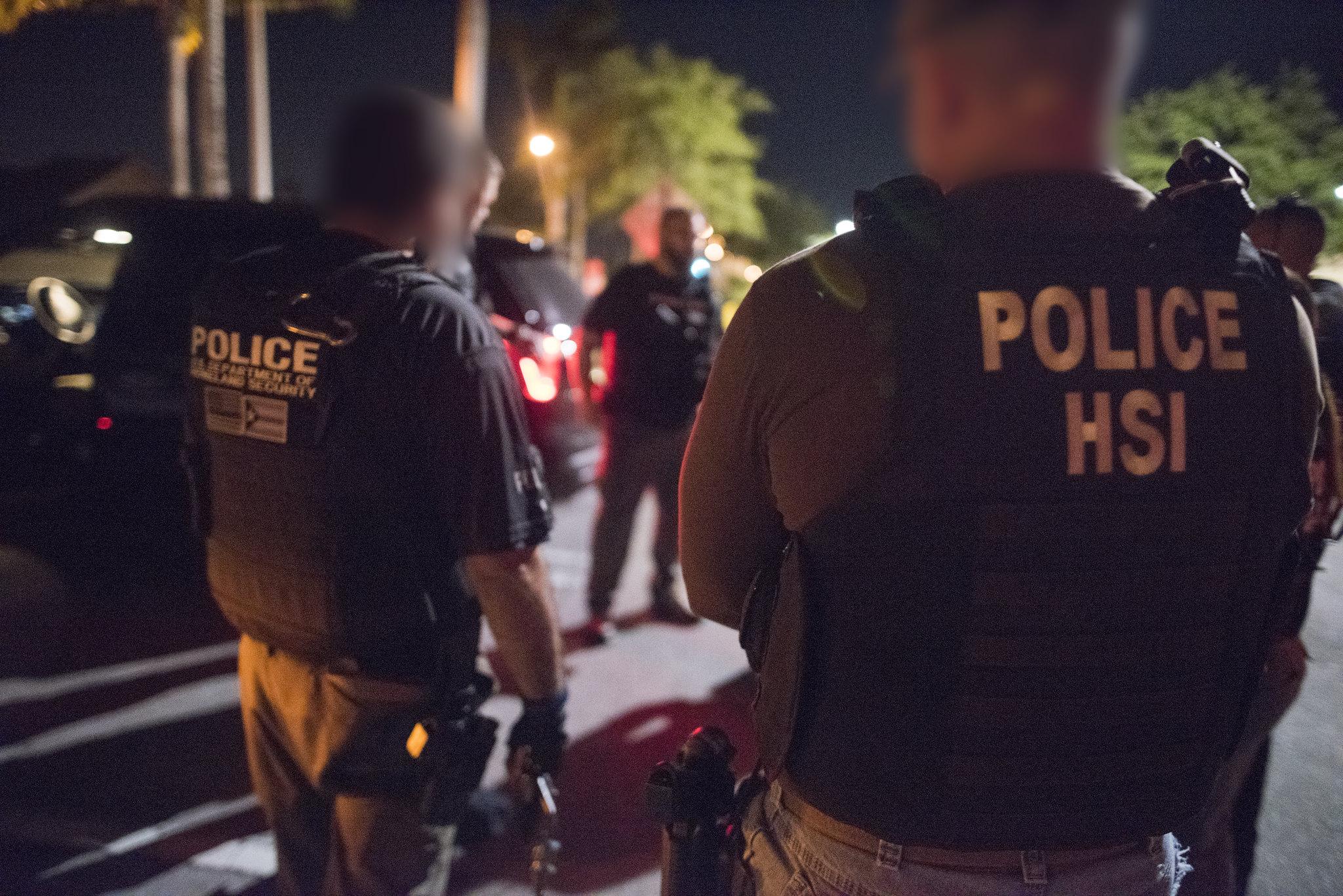
The City of Miami signed its own 287(g) agreement last year, while hundreds of residents lined up outside City Hall to express anger and urge commissioners to vote against it. Despite the public outcry, commissioners voted 3-2 in favor of the partnership, while former Miami Mayor Francis Suarez didn’t bother to show up to the scheduled meeting as usual. The agreement effectively allows Miami police officers to carry out immigration enforcement functions under the direct supervision of Immigration and Customs Enforcement (ICE), amid increased detention infrastructure.
Miami does not operate a jail and is therefore not required to sign on. Commissioners heard this repeatedly, both in private and through public comment, yet Ralph Rosado, Miguel Angel Gabela, and Joe Carollo (who was replaced by Rolando Escalona in a December 2025 runoff election) voted in favor of the 287(g) agreement. This was a reckless decision, and with hindsight, the commissioners’ vote looks even worse.
Federal agents shot and killed two U.S. citizens in broad daylight in Minneapolis. The Alligator Alcatraz detention camp, first established around the same time this vote was taken, has been the site of horrific mistreatment and abuses, to the point that an Amnesty International report qualified punishments inflicted on detainees as torture. Florida police agencies, particularly the Florida Highway Patrol, have been converted into a de facto “show me your papers” force, detaining thousands of immigrants, including U.S. citizens in some cases, across the state.
Miami voters are unhappy. Since the 287(g) vote in June of 2025, incumbents like the aforementioned Joe Carollo have been forcibly retired, and Democrat Eileen Higgins won the Mayor’s office for her party, the first time a member of her party accomplished this in nearly three decades. Disgust at the heavy-handed immigration enforcement taking place in South Florida seemed to weigh heavily on residents’ minds when casting their votes.
Hundreds of thousands of people are being de-documented by the Trump administration and are at risk of deportation and detention. Haitians, Venezuelans, Hondurans, Nicaraguans, and others have lost or are at serious risk of losing Temporary Protected Status (TPS). Cubans, who have historically enjoyed immigration privileges, have been hit hard by Trump’s anti-immigrant actions, with thousands losing protections under Humanitarian Parole while being subject to increased detention and deportation. Since taking office, Trump’s government has deported more than 1,600 Cubans, double the number of Cubans who were repatriated in 2024. In the years that Trump has been president, he has sent more Cubans back to the island than his three predecessors at the White House.
As the makeup of Miami’s city government changes, so too should its policy regarding the deputizing of its police force to conduct immigration enforcement. Higgins has gone on record to say she would support legislation undoing the city’s ICE agreement if commissioners choose to exit it. “I would happily sign it,” Higgins told the Miami Herald, while noting that she would not bring the proposal herself, calling instead for commissioners to take the initiative on the matter.
There’s now legal backing for Miami’s case in exiting its 287(g) agreement. A lawsuit filed by the city of South Miami against Gov. Ron DeSantis and Florida Attorney General James Uthmeier sought clarity on whether that jurisdiction was obligated to sign on. The judge dismissed the suit, ruling that South Miami lacked standing because it had never signed the agreement. However, during oral arguments, attorneys representing the state acknowledged that existing law does not require every municipality to enter into a 287(g) agreement with ICE.
Whatever the circumstances, the agreement must be rescinded. Tens of thousands of people in South Florida — many of them members of mixed-status families — face the real risk of being swept into extrajudicial detention at Alligator Alcatraz. Politically, the conditions favor ending the 287(g) contract. Legally, the city has firm standing to do so. And morally, it is the only responsible course of action for the residents it serves.