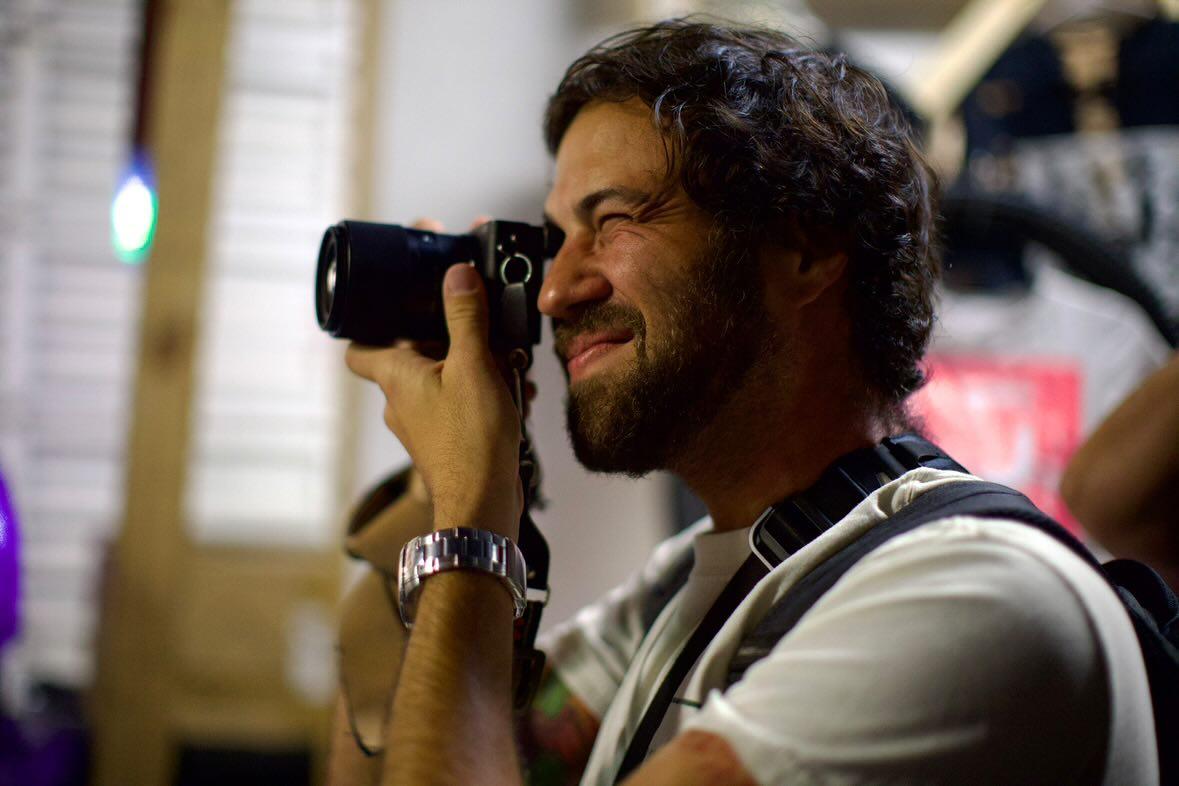

Photo by Steve Agee

Audio By Carbonatix
Comedian Pete Holmes has spent more than a decade inviting people to listen in as he figures life out on his long-running podcast, You Made It Weird. His roots as a stand-up comic and his spiritual journey have been reflected in the podcast, his HBO show Crashing, and his onstage material. Over the years, he’s evolved from being “the most interested, least experienced person” in the room to someone who leads with curiosity, bringing to bear the mileage of thousands of conversations with comics, actors, and spiritual teachers.
That balance of silliness and sincerity — part comedy and part late-night dorm-room philosophy — is at the heart of his new stand-up show, Pete Here Now. The tour was originally branded “PG-13,” a marketing move intended to reach a broader audience by pushing a “semi-clean” set. After a show in Austin, Holmes realized the label, born of his deep-rooted desire to be a “good boy,” was boxing him in. “Why am I asking people to grade the set?” he says. “Just fly the plane.” The new name, a wink at Ram Dass’s Be Here Now, feels much more fitting. It’s Holmes in the present moment, covering the whole spectrum of human experience, from the sacred to the profane.
Pete admits part of him still feels pressures that were embedded during his upbringing in the church ecosystem. But his comedy feels best when he’s honest in his exploration of parenting struggles or when he gets into raunchier human topics. “My intention is always to delight,” he tells New Times. “Never to shock or upset.” He grins and adds a line that could double as his thesis statement: “Holiness comes from wholeness.”
Make It Weird
That philosophy is baked into his podcast, which started with a simple hook — ask three questions about “weird things” — and evolved into sprawling conversations about comedy, sex, and God (the title of his 2019 book is derived from these topics). Over time, the show became less about chasing answers and more about enjoying the questions. Holmes credits the podcast with helping him grow up in public, from newly divorced and spiritually lost, to a married dad with a more robust sense of what faith means to him.
The comedian knows You Made It Weird doesn’t fit neatly into any single category. As he once joked years ago on the show, there’s no section on streaming platforms for “pseudo-spiritual, somewhat funny podcasts.” But today, there might as well be, given the multitude of shows that fit that label, with his arguably serving as the prototype. To be clear, Holmes isn’t aspiring to be anyone’s guru; the way he sees it, he’s just passing along what’s helped him in the hopes that it may be useful to others on their own journeys. “The best way to learn something is to teach it,” he says, before laughing at how lofty that sounds. “I’m not a leader. I’m an enthusiast.”
Still, there’s no denying the podcast expanded his role in the cultural conversation beyond simple joke-telling. Holmes wrestles with that tension. On one hand, he’ll defend comics’ right to “work it out” onstage and push into uncomfortable territory. On the other hand, he’s quick to point out that the microphone makes you the leader of the room, which comes with a degree of responsibility. He brings up a bit he used to hear from road comics, the kind of closer that goes, Don’t drink and drive — but hey, they can’t catch us all. “That’s dangerous,” he says. “You’re talking to drunk people deciding whether or not to drive home. You’ve just given them permission. I wouldn’t make that joke.”
Preaching to the Choir
The truth is, rather than aspiring to fulfill his adolescent dreams of preaching from the pulpit, these days Holmes is more interested in laughing at his own mistakes than in doling out lessons. He’d rather tell a story about losing his temper or falling short as a dad than about doing the right thing. “Nobody wants to hear me brag about helping somebody,” he says. “It’s way funnier and more helpful to hear me mess up. Because when you laugh at me, you’re loosening some guilt in yourself too.”
That willingness to show the dents and scratches has contributed to the continued expansion of his reach, both on social media and other outlets. It’s not about shock value, it’s about solidarity: The feeling of a roomful of strangers realizing they’ve all made the same bad choices and can laugh about them together. “When you’re laughing, you’re not stressed, you’re not worried, you’re not even you,” Holmes says. “You’re gone. And that’s one of the greatest experiences you can have.”
It’s also why live performance remains central to him. A podcast can dig deep, a Netflix special can look good, but neither can capture the collective high of a crowd coalescing together in laughter. “People should come because it’s a shared experience of joy and connection,” he says. “You’ll leave feeling lighter, less alone, and, ideally, less afraid.”
For Holmes, that’s the real service of comedy: not preaching answers, but creating space where everyone feels a little less burdened. And if that sounds suspiciously like a sermon, well, that’s for you to decide.
Pete Holmes. 8 p.m. Friday, February 20, at the Miami Improv, 3450 NW 83rd Ave., Doral; 305-441-8200. Tickets cost $36.90 to $46.90 via miamiimprov.com.