
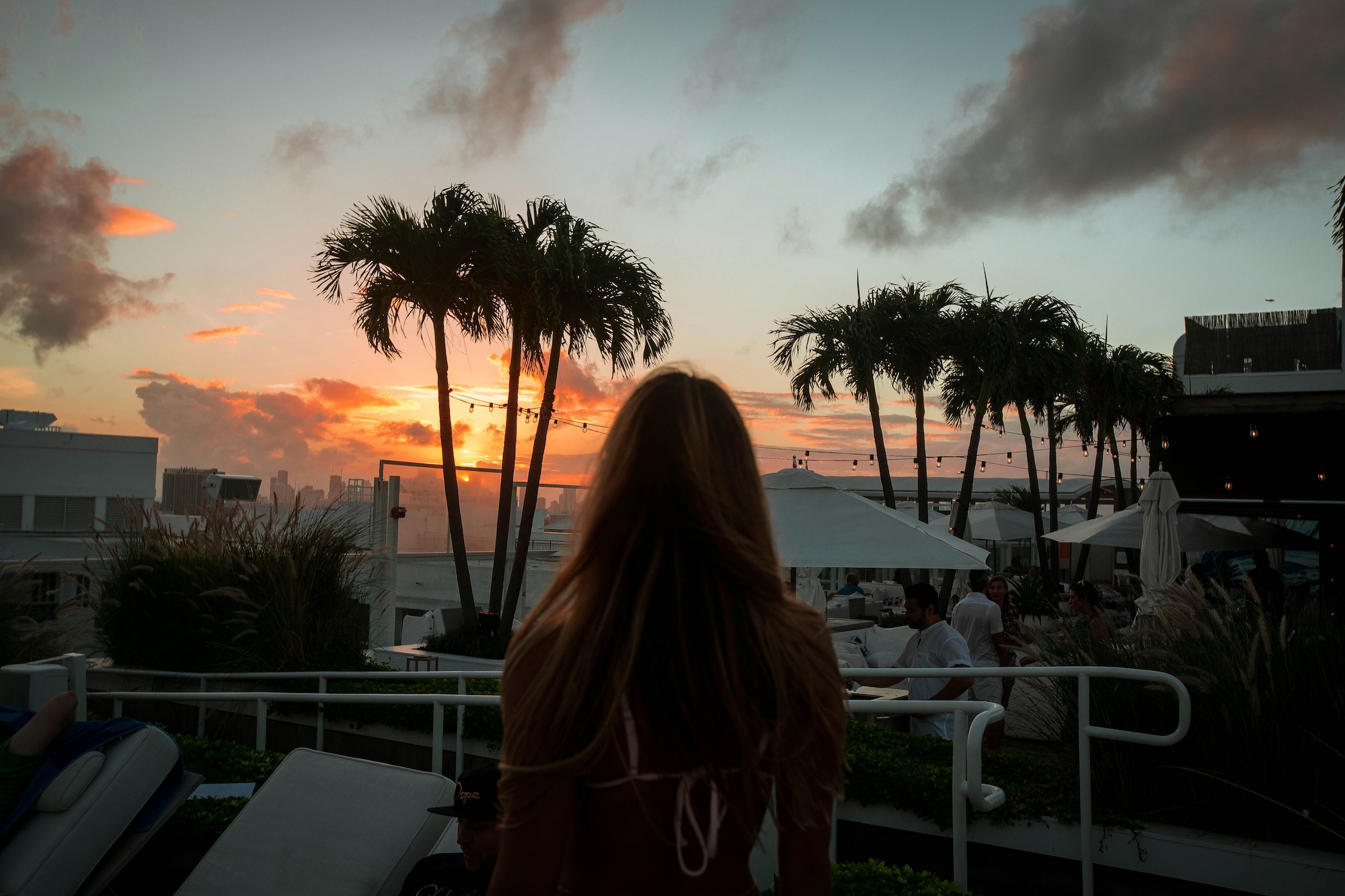
Photo by Roberto Nickson/Unsplash

Audio By Carbonatix
It’s easy to become cynical about so many things in Miami — the endless construction, the dating scene, the politics — but there’s one aspect of South Florida living that’s as exciting to transplants as it is to longtime residents: our gorgeous winter sunsets.
As the days get shorter, our social feeds are inundated with images of red and orange backdrops behind skyscrapers, and try as we might to be too cool to “like” these photos, they always elicit a “heart.” So, why, exactly, are we powerless to the allure of a good ol’ sunset pic? We asked Brian McNoldy, a senior search associate at the University of Miami Rosenstiel School of Marine, Atmospheric, and Earth Sciences, and New Times‘ go-to meteorologist.

Photo by Eliezer Muller/Unsplash
For starters, the sun’s location makes a difference. “The sun stays lower in the sky in the winter, and spends more time closer to the horizon,” he says. “That increases the amount of time that reds and oranges could be present.”
“If you imagine the arc that the sun makes across the sky during a day, from sunrise to sunset, in the winter, it’s a much more gradual increase above the horizon,” he adds.” So, at sunrise, the sun creeps up to a lower point on the horizon in the mid-afternoon, and then creeps back down slowly towards sunset.”
When the sun spends that amount of time at low angles, McNoldy says, it gives viewers more of an opportunity to take in the spectacle. “When the sun is really, really low on the horizon, you’re more prone to have the reds, and then as it rises, you move up in the spectrum into the oranges and then brighter oranges. By the time it’s high enough on the horizon, you’re done getting the neat colors, and it’s just too bright. So you only see the fun sunrise and sunset colors when the sun is really low.”
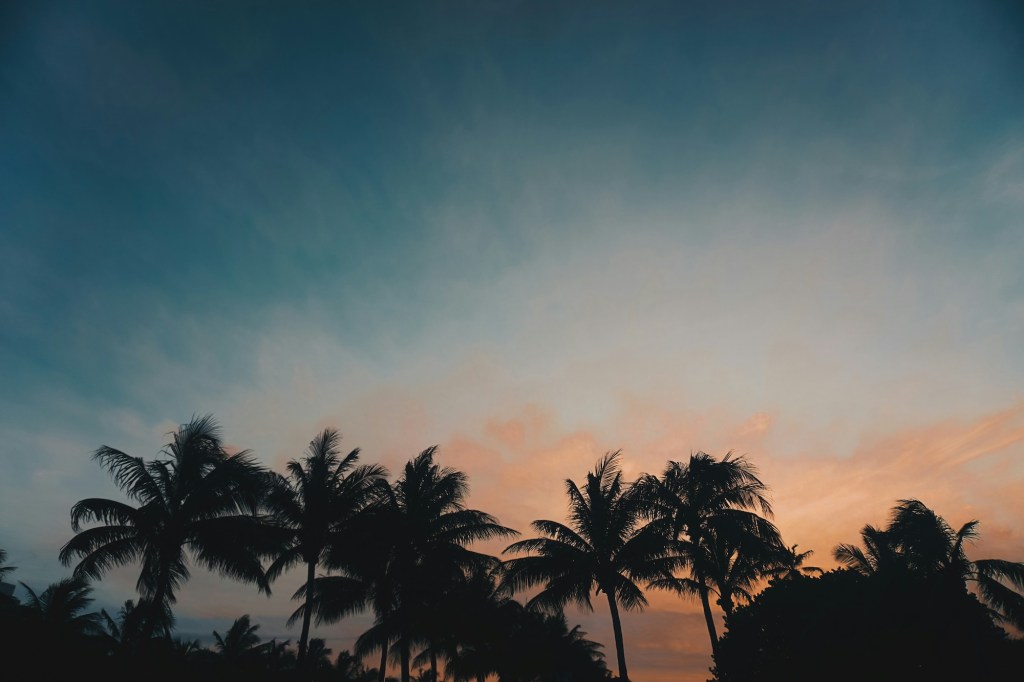
Photo by Marcos Rivas/Unsplash
Despite the seasonal variations, McNoldy says cooler temperatures do not affect the colors or vibrancy of Miami sunsets. Instead, certain air components or particulates — dust, smoke — can affect the appearance of the sunset. Still, there aren’t many of those in the winter. “The atmosphere in South Florida is generally very, very clean,” he says, “because the air is coming across the Atlantic for the most part.”
And then, there are the variations you get no matter the season. “If there are clouds at just the right level, you get that nice reflection off the cloud,” says McNoldy. He’s glad people — even those who aren’t in his line of work — are noticing seasonal and day-to-day fluctuations: “It’s just nice that people are outside and looking up at the sky.”