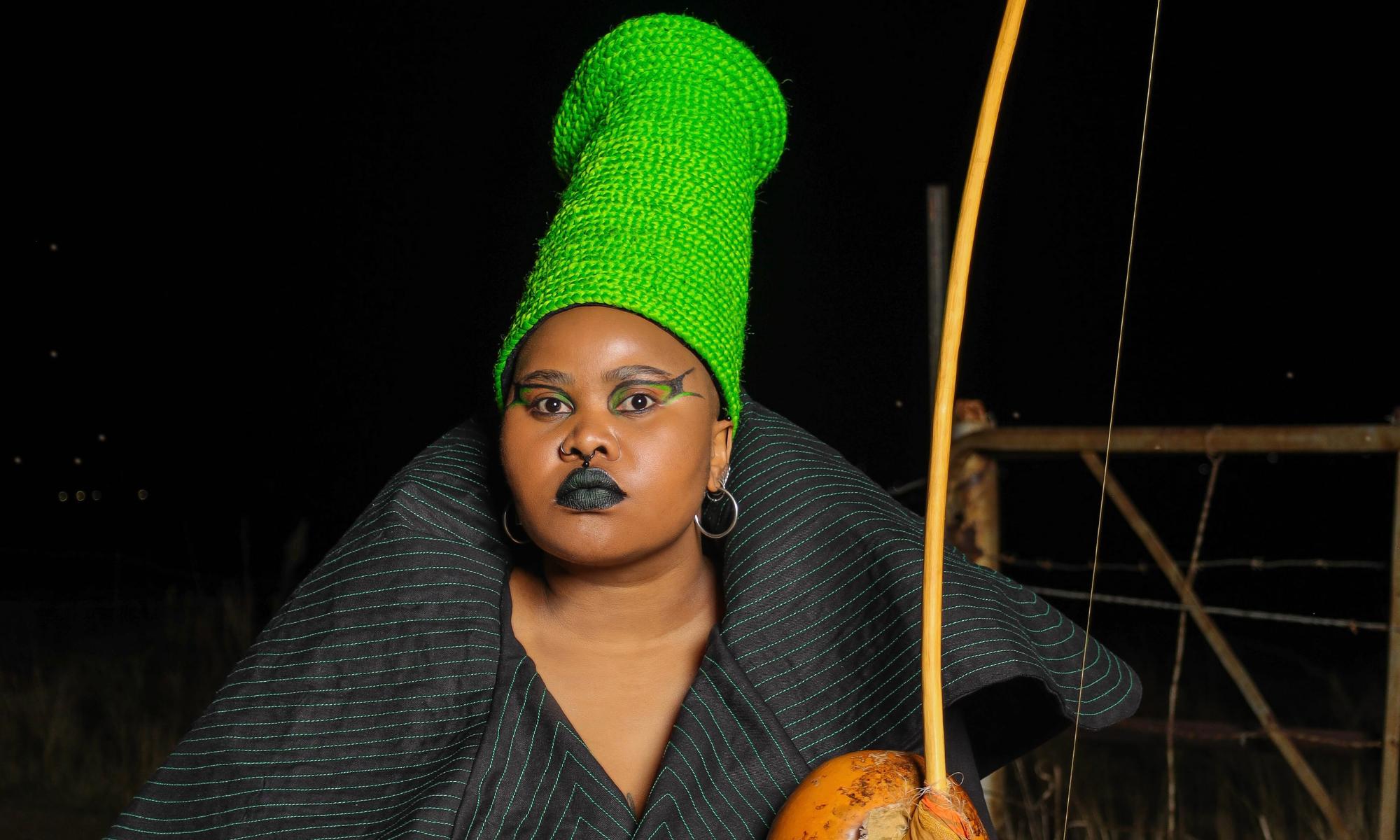
Thandeka Mfinyongo press photo.

Audio By Carbonatix
Thandeka Mfinyongo didn’t need an entire month in the Everglades to feel its impact. The Cape Town-born musician — known for her mastery of the Xhosa uhadi and umrhubhe — spent just one week immersed in the watery wilds of Everglades National Park as an AIRIE fellow, but the experience reverberated throughout her music.
“I started to hear the pauses in my music differently, as spaces that hold meaning and memory,” Mfinyongo reflects.
Part of AIRIE’s 25th-anniversary cohort, Mfinyongo was one of 20 fellows selected from a record-breaking pool of 500 applicants worldwide. The residency brings creatives into Everglades National Park to live and work, facilitating dialogue between artists and the land. Since 2001, AIRIE (Artists in Residence in the Everglades) has hosted more than 190 artists at the intersection of environment and expression. This year, the milestone anniversary brings renewed focus to AIRIE’s mission of bridging art, ecology, and community.
Though visa delays meant Mfinyongo spent most of her residency based in Miami, including three weeks hosted by artist Tracey Robertson Carter, she eventually made it to the Flamingo Lodge. That brief time in the Everglades was transformative.
“The water and the stillness made me slow down and listen differently,” she says. “My instruments carried echoes of home into this new environment, and in turn, the Everglades offered textures and silences that expanded my practice.”
Those sounds — birds, wind, water — didn’t show up as samples or motifs. Instead, they shifted her approach entirely. “I allowed them to shape how I played; slowing down, leaving more space, and letting the land co-compose with me.”
That co-composition birthed “Umhlab’ Uyathetha” (The Earth is Speaking), a new track Mfinyongo premiered in Miami alongside musicians Dyani, Mikah, and Brenda. It will appear on her forthcoming album.
“It was a moment of collaboration and gratitude.” Even the unsettling presence of Alligator Alcatraz cast a shadow over her experience. “Just hearing about its existence brought a sense of sadness and even fear,” she says. “That emotional weight became part of the atmosphere I was moving through.”
Still, the AIRIE residency expanded her understanding of her role as an artist. “These exchanges have expanded how I think about uhadi as an ideogrammatic archive… and instruments as bridges between memory, environment, and people,” she says, referencing a concept from her near-complete PhD at Rhodes University.
In Miami’s art spaces and Everglades’ silences, Mfinyongo found both challenge and affirmation. “My time at AIRIE reminded me that music is not only about sound, but also about listening; listening to place, silence, history, and each other.”
From Cape Town to South Florida, her practice remains rooted in indigenous tradition while always evolving, shaped by land, by memory, and by the communities she meets along the way.