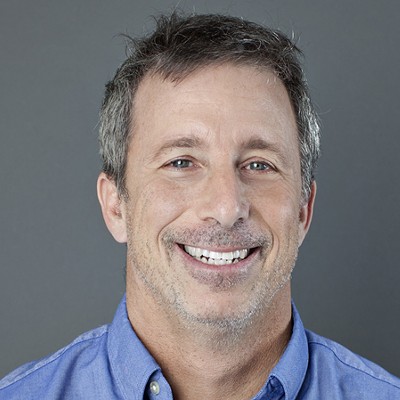

Gonzalo Guillén is on the lam. His wife and son are in hiding.
Colombian President Álvaro Uribe publicly belittled the reporter. Strangers repeatedly threatened to murder him. His bodyguard disappeared.
"I got a call at my home ... a guy said, 'We can kill you,'" Guillén recalls from Lima, Peru, where he's been laying low for five days. "Then the threats started coming fast. Five calls at my home, e-mails, 24 death threats in 48 hours. I was afraid for me, for my family. I left the country in a sprint."
Sound like a spy thriller?
It ain't.
Guillén has for seven years been a reporter for Miami's El Nuevo Herald, one of America's top Spanish-language publications. He's one of two Colombian journalists whom President Uribe has dumped on in the past two weeks. Daniel Coronell, a columnist for the well-known magazine Semana, also went abroad after the president publicly called him "a coward, a liar, a swine, and a professional slanderer." In this South American country, where vigilante justice rules, insults can mean bloodshed.
"Outrageous," comments Joel Simon of New York's Committee to Protect Journalists (CPJ). "President Uribe knows that to say this kind of thing opens the doors for [thugs] to potentially kill."
Venezuela and Cuba got most of the ink and opprobrium at last weekend's meeting of Latin American journalists in Miami. News of Hugo Chávez's closing an opposition TV station in Caracas, as well as restrictions on reporters and jailing of critics in Havana, was lapped up like milk by a gatito.
But it's even more difficult to report the truth in Colombia, which will receive $756 million in U.S. foreign aid this year. At least 39 journalists have been whacked for doing their jobs there in the past 15 years. These days, many reporters avoid criticizing the government. Why risk being murdered? More than 3000 cases of self-censorship were recently documented in the country.
The heart of the Colombian problem is a longstanding civil war — as well as Uribe's ties to paramilitaries and drug lords. This might sound familiar. Al Gore refused to come to Miami in April to share the stage with Uribe because the Nobel Prize winner found reports of the Colombian president's violent rep "troubling."
There's no question Uribe is a jerk. In 1980, when only 27 years old, he took over the Colombian ministry of aviation. Traffickers were flying out cocaine by the ton back then. Uribe probably helped them. Indeed his aviation deputy, César Villegas, was later sentenced to five years in prison for ties with the narcotics trade. Even Uribe's successor in the ministry, Rodrigo Lara, called the now-Colombian prez negligent with regard to drug flights.
In 1983, when left-wing rebels killed Uribe's father and wounded his brother, he tried to take a helicopter that belonged to coke kingpin Pablo Escobar to the site. He claimed not to know it was Escobar's. (Coronell, who could not be reached to discuss this, posted photos of the copter with a recent column about Uribe on the Semana Web site.)
Uribe would become mayor of Medillín and then climb to the presidency. He was identified in a 1991 U.S. Defense Intelligence Agency report — later disavowed by the government — as "a close personal friend" of Escobar's. Colombian investigators also claimed right-wing wackos stayed at his ranch and that Uribe had many other paramilitary ties.
Indeed, besides Gore, reporters in and outside Colombia have continued to question Uribe. And the president has continued to both lash out at them and react with paranoia. A few examples:
• In 1994, when author Simon Strong questioned the Colombian president in a restaurant, he jumped up, ran into a crowd of bodyguards, and screamed, "I am honest!"
• In 2002, he accused Newsweek reporter Joe Contreras of trying to "slander" and "smear" him.
• This past spring, Ignacio Gómez, director of investigations for Noticias Uno, a TV news program, received threats and was confronted by a gang of six men after he criticized Uribe. He barely escaped. "I prefer not to think who sent them," he says.
• In April, speaking before journalists from around the world at the Ritz-Carlton in Coconut Grove, Uribe castigated Guillén's colleague, El Nuevo Herald investigative reporter Gerardo Reyes, for asking about the paramilitary ties.
The scene was otherworldly weird, Reyes says — a president who follows the press too closely. "He began reciting each story I had written," Reyes recalls. "He was furious, and he was looking right at me. Everyone turned around to look. It was very uncomfortable."
Guillén's might be the most telling case, though. The 55-year-old has worked more than three decades as a journalist for some of South America's largest and most prestigious publications, including Colombia's El Tiempo and Ecuador's El Universo.
As an aviation reporter, he covered Uribe during much of his rise. After being hired by El Nuevo Herald in 2000, he wrote several stories about the Colombian president's ties to Escobar. Guillén was also one of the first to write about Uribe's use of Escobar's helicopter, he says. In 2003, he says, he received an unexpected call from the president. "He said he had copies of several e-mails that I had sent to people and that he didn't like the investigation I was doing," Guillén remembers. "People from the [American] embassy that I knew told me these calls were really threatening and dangerous. And a secretary of the government named Moreno told me that I was really in danger."
But Guillén didn't surrender. This past May he published a book, Confidants of Pablo Escobar, that claimed the Uribe family had ties to organized crime. Then on May 25 at 1:39 p.m., the opinion section of El Nuevo Herald received an anonymous e-mail. It said police and paramilitaries had searched for Guillén while he was away. Their orders were to assassinate or "shut him up." "It would be best to tell Gonzalo to be very careful or they'll put him down — the plan is well under way," the e-mail said.
Through an international program — partially funded by the United States and the European Union — Guillén secured two bodyguards. They also kept an eye on the reporter's wife and 23-year-old son.
Then early this month, Virginia Vallejo, Escobar's mistress until he was killed in a 1993 shootout with police, published Loving Pablo, Hating Escobar. The tome claims that when Vallejo asked the drug lord how he managed to have a fleet of planes and a runway, he credited Uribe, "a key guy at civil aviation." The book also contends Escobar termed Uribe a "blessed kid" who had granted licenses for the planes.
Uribe reacted angrily to the book, calling Vallejo a liar and criminal. Guillén recalls switching on his radio about 8:00 a.m. October 2. He was at home. "Behind this lady," Uribe said, referring to Vallejo, "is Gonzalo Guillén, who has dedicated his journalistic career to infamy and lies."
It got worse. "They took [one of my bodyguards] away that very same day," Guillén reports. Then the threats began coming by e-mail. "We will kill you," said one. Four or five telephone calls were placed to his home. "We know where you are," said an unidentified caller.
"I was more afraid for my wife and my son than for myself," reports Guillén, "so I had to leave."
Guillén says he had nothing to do with Vallejo's book. Uribe might have blamed him because he was among the first to interview Escobar's lover. CPJ's Simon penned an October 11 letter to Uribe. "Your baseless allegations have endangered" Guillén, he wrote.
For Uribe the stakes are high. He desperately wants the United States to approve a pending free trade agreement with Colombia. (We buy 40 percent of the country's exports.) And he hopes to continue receiving the millions of dollars in foreign aid that have helped him fight rebels and prop up a troubled economy.
If Congress and the Bush administration believe in a free press, they should take action against Uribe. Gonzalo Guillén's family and all Colombians, including the estimated five million who have been forced to leave for Miami and other places, deserve no less.